

In recent years, there has been a significant advancement in the field of Artificial Intelligence (AI) and Augmented Reality (AR). These technologies have become increasingly popular and have the potential to enhance virtual experiences in various fields such as gaming, education, healthcare, and...
A Digital Cartographer Updates Road Maps Automatically Every Day
173
20.06.2026
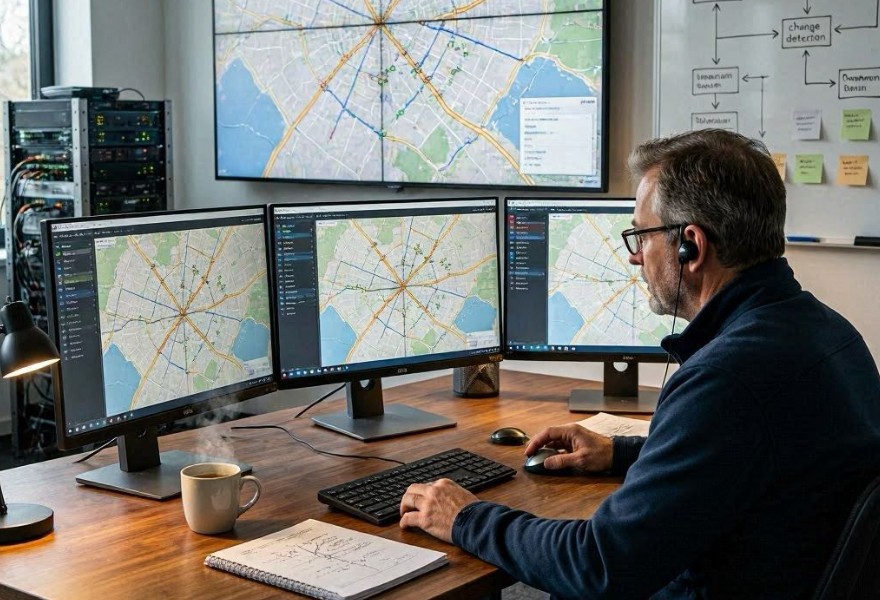
For most of the 20th century, cartography was a static and laborious profession. Road maps were printed on paper, inevitably becoming obsolete the moment a new highway opened or a traffic direction changed. Even in the early years of GPS navigation, map updates were infrequent, often requiring manual downloads or physical media replacements. Today, we are living in the era of the dynamic digital cartographer—a sophisticated, automated ecosystem that updates the world’s road networks daily, ensuring that navigation systems reflect the reality of our streets in near real-time.
This massive shift from static documentation to living, breathing digital maps is powered by a fusion of artificial intelligence, satellite imagery, and the "Internet of Things." The digital cartographer of today is not a person with a pen, but a complex algorithm capable of processing petabytes of data to keep the modern traveler on the correct path.
The Engine Behind Daily Updates
The ability to update global maps every twenty-four hours requires a relentless stream of data. The modern cartography pipeline relies on several high-tech sources that work in tandem to detect change.
Satellite Imagery and Change Detection
Satellite technology provides the "big picture" view of our planet. Modern constellations of satellites capture high-resolution imagery of urban areas with increasing frequency. Automated computer vision algorithms compare today’s imagery with yesterday’s baseline. When a new road surface is detected, or a highway expansion is identified, the system flags the area for verification. These AI models are trained to differentiate between permanent infrastructure and temporary construction debris, ensuring that only verified changes reach the final map.
Connected Vehicle Data (Telematics)
Perhaps the most potent tool in the digital cartographer’s arsenal is the modern automobile. Millions of vehicles are equipped with GPS-enabled telematics systems. As cars drive across the globe, they constantly transmit anonymous location data. If an algorithm detects a consistent stream of vehicles moving across an area where no road is documented on the map, it flags a "missing road." This crowdsourced movement data allows the system to discover new roundabouts, driveway connections, and street realignments faster than any human survey team could.

Refining the Details: Semantic Mapping
Mapping isn't just about where the road goes; it is about knowing what the road allows. The automated cartographer must understand the nuances of traffic flow to be truly useful.
AI and Traffic Sign Recognition
The daily update cycle includes semantic information, such as speed limits, turn restrictions, and one-way streets. Automated vehicles, equipped with cameras and LiDAR, capture road signs as they pass. Machine learning models extract this data and integrate it into the map database. If a street is suddenly converted to a one-way path, the system detects this change through the behavior of vehicles or by processing high-definition imagery, updating the map logic within hours.
Addressing Dynamic Constraints
- Temporary Road Closures: Integration with municipal authorities allows systems to import official closure notices instantly.
- Traffic Flow Trends: The map adjusts "turn-left" prohibitions based on daily traffic load analysis.
- Construction Zones: AI identifies construction cones and barriers via computer vision, temporarily adjusting the route until the project is marked complete.
The Impact on Autonomous Navigation
While daily map updates are a convenience for the average driver, they are a fundamental safety requirement for autonomous vehicles. Self-driving cars rely on High-Definition (HD) maps that must be precise down to the centimeter. A change in a lane line or the removal of a stop sign can have severe consequences for an AI-driven car. The automated cartographer ensures that the HD map is as fresh as possible, allowing autonomous systems to navigate with a high degree of confidence.
Challenges in the Age of Constant Change
Despite the automation, challenges remain. Privacy concerns regarding telematics data must be balanced with the need for accurate mapping. Furthermore, the sheer volume of data creates a "noise" problem; algorithms must be constantly refined to avoid "ghost roads"—errors in the map caused by faulty GPS signals or anomalous driver behavior. Continuous training of these models is essential to maintain the high standards of accuracy that users expect.
Conclusion
The automated digital cartographer has permanently replaced the era of paper maps. By leveraging satellite imagery, connected vehicle fleets, and advanced AI, we have created a global infrastructure that learns and updates itself every single day. This relentless pursuit of accuracy not only saves time for commuters but also forms the backbone of the future autonomous transport network. As technology advances, these daily updates will become even more seamless, ensuring that our digital representation of the world remains a perfect reflection of the physical one.