
In recent years, there has been a significant advancement in the field of Artificial Intelligence (AI) and Augmented Reality (AR). These technologies have become increasingly popular and have the potential to enhance virtual experiences in various fields such as gaming, education, healthcare, and...
A Digital Coach Corrects Swimming Technique Using Underwater Camera Footage
122
19.07.2026
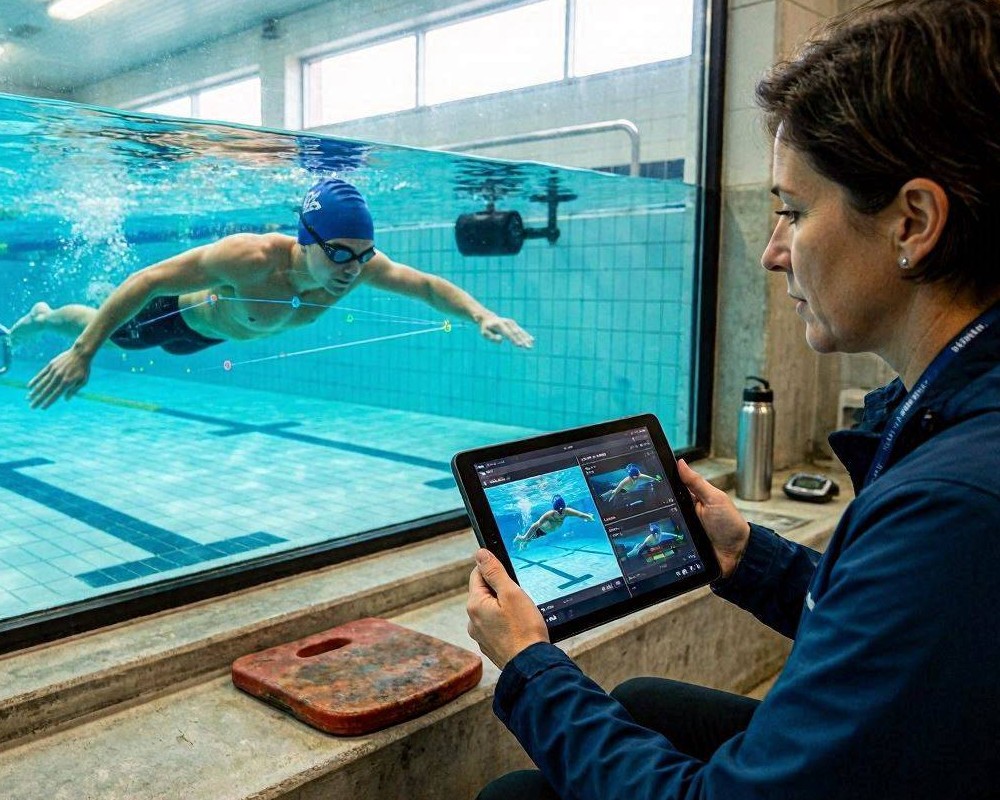
Swimming improvements rarely come from “trying harder.” They come from seeing what your body is actually doing—especially beneath the surface. That’s where a digital coach changes the game. By pairing underwater camera footage with structured feedback, analysis, and targeted drills, modern coaching can pinpoint technique issues that swimmers and even experienced partners often miss.
Why underwater footage makes coaching faster
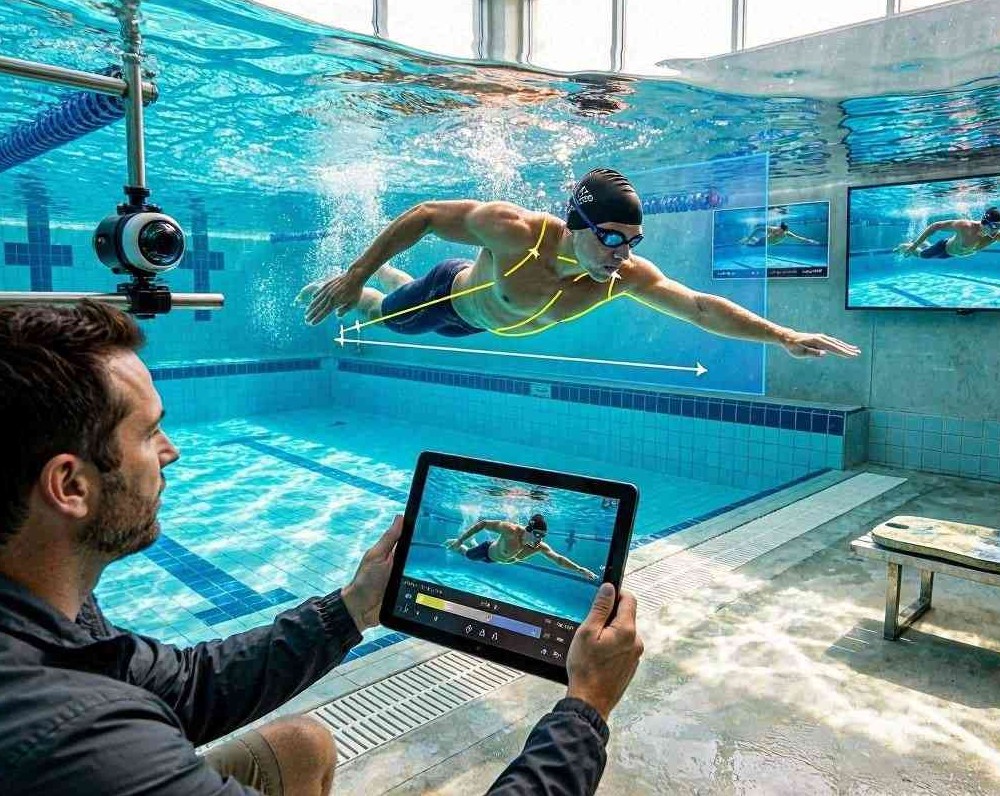
From the pool deck, it’s difficult to observe entry angles, body alignment, rotation timing, and kick patterns. Water hides the details. Underwater camera footage reveals them clearly, frame by frame, letting a coach connect specific mechanics to specific outcomes: speed, drag, breathing rhythm, and injury risk.
A digital coach doesn’t just watch the video once. The footage becomes a coaching tool that supports repeatable, measurable practice.
From recording to feedback: how the process works
1) Capture technique with consistent angles
Underwater cameras are positioned to record the swimmer’s most important phases—entry and catch for freestyle, sweep and scull timing for backstroke, and the moment of rotation for butterfly and breaststroke. Consistency matters: if the angle or distance changes between sessions, comparisons become less reliable.
Many coaches also record a short “baseline set” to understand current form without fatigue distortions.
2) Identify the mechanical bottleneck
After reviewing footage, the digital coach typically focuses on a few high-impact factors rather than trying to fix everything at once. Common bottlenecks include:
-
Overreaching or early hand entry that increases drag
-
Disconnected body line where hips drop and rotation is late
-
Catch misalignment causing weak propulsion
-
Kick timing that doesn’t match the stroke cycle
-
Breathing-related balance affecting streamlining
3) Deliver feedback in a swimmer-friendly way
The best feedback is specific and actionable. Instead of broad advice like “stay streamlined,” a digital coach translates observations into cues the swimmer can feel. For example, a coach may instruct you to adjust elbow angle at the catch or change hand path through the power phase.
Digital coaching often includes annotated clips, progress checkpoints, and clear drill selection—so you know exactly what to practice next, and why.
Key technique corrections made with underwater video
Freestyle: improving alignment, catch, and propulsion
Underwater footage is especially powerful for freestyle. It helps reveal whether your hips stay high, whether your hand enters too wide, and whether your forearm angles create a stable “hold” during the catch. When a digital coach spots excessive sculling or a slipping hand path, the response is usually a targeted drill—such as single-arm work, short catch drills, or alignment-focused kicking patterns.
Because you can compare before-and-after clips, you’re not guessing whether the correction took.
Backstroke: fixing rotation timing and reducing inefficient drag
In backstroke, underwater video helps measure how rotation supports the stroke rather than fighting it. A digital coach can identify delayed shoulder rotation, uneven head position relative to the spine, or a kick that loses rhythm during breathing transitions. The result is more consistent propulsion without “wasted” movement.
Coaches often recommend drills that reinforce the corrected sequence—like controlled rotation drills and streamline kick variations—then verify progress with new underwater takes.
Breaststroke and butterfly: tightening coordination and minimizing resistance
Breaststroke and butterfly require timing precision. Underwater footage shows whether the pull and recovery phases create unnecessary turbulence, whether the kick produces effective thrust, and how the body line breaks during the transition. A digital coach typically uses small technical constraints—tempo cues, pauses, or sequence drills—to rebuild coordination before increasing intensity.
How to use digital coaching effectively as a swimmer
Technology is only as good as the training inputs. To get meaningful improvements, swimmers should follow a few best practices:
-
Record similar conditions each session (lane, camera height, speed effort).
-
Warm up consistently before the filmed set to avoid misleading fatigue effects.
-
Practice the cue, not just the drill: connect what you see to what you feel.
-
Re-test after a short block (e.g., after 1–2 weeks) rather than waiting for months.
-
Track one priority at a time so technique changes actually stick.
The real payoff: better technique without guesswork
A digital coach using underwater camera footage turns swimming improvement into a visible, repeatable process. Instead of vague corrections, you receive evidence-based feedback, practice targeted mechanics, and confirm changes with new video. Over time, this approach builds a stronger connection between technique and performance—so your progress becomes faster, clearer, and more reliable.