

In recent years, there has been a significant advancement in the field of Artificial Intelligence (AI) and Augmented Reality (AR). These technologies have become increasingly popular and have the potential to enhance virtual experiences in various fields such as gaming, education, healthcare, and...
A Digital Compost Monitor Determines Fertilizer Readiness by Smell
122
13.07.2026
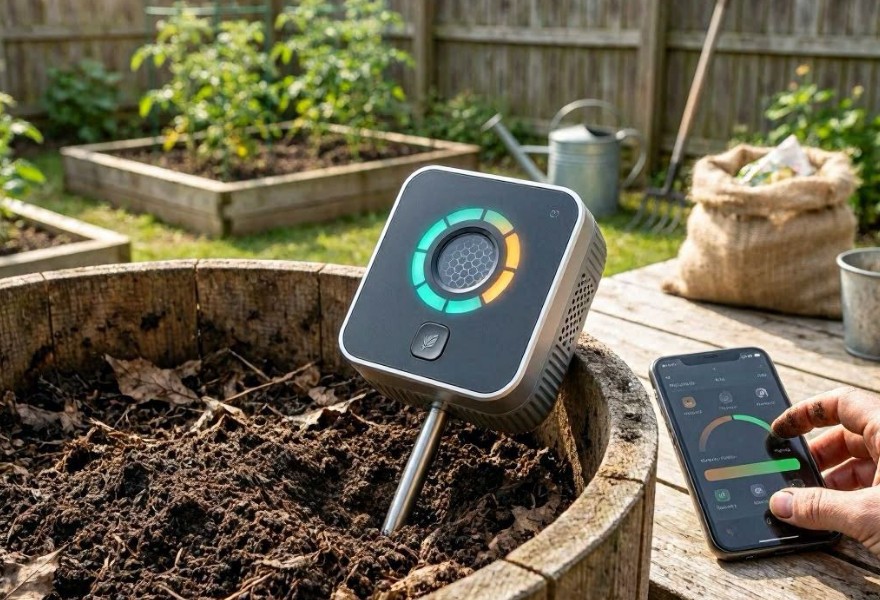
Composting is often described as nature’s way of recycling, a miraculous process where kitchen scraps, yard waste, and paper are transformed into "black gold"—a nutrient-rich soil amendment that powers gardens and farms. However, for the home gardener or the professional agriculturist, the process is notoriously difficult to manage. How do you know exactly when the material has fully stabilized and is ready to be used as fertilizer? Traditionally, the answer relied on visual inspection or the "earthy smell" test. Today, a new wave of digital technology is replacing guesswork with precision: digital compost monitors that determine fertilizer readiness by analyzing the gaseous emissions—or "smell"—of the decomposing heap.
The science behind this innovation lies in the volatile organic compounds (VOCs) and gases produced during the decomposition process. A digital monitor acts as a high-tech olfactory assistant, providing gardeners with the data needed to optimize their composting cycle and ensure that the final product is both safe and potent.
The Chemistry of Decomposition
Composting is essentially a biological digestion process carried out by bacteria, fungi, and actinomycetes. As these microorganisms break down organic matter, they release a variety of gases, including ammonia, methane, carbon dioxide, and various sulfur-based compounds. The composition and concentration of these gases change predictably as the pile moves through its phases: from the initial high-heat thermophilic stage to the final stabilization stage.
Gaseous Markers of Maturation
A digital monitor equipped with chemical sensors tracks these changes in real time. The key markers of maturity include:
- Ammonia Levels: High ammonia emissions early in the process indicate active nitrogen breakdown. As the pile matures, ammonia levels drop significantly, signaling that the material is nearing stabilization.
- Carbon Dioxide Ratios: A decrease in the rate of CO2 production indicates that the microbial activity is slowing down, suggesting the decomposition is entering the final curing phase.
- Sulfur-based VOCs: Often associated with "putrid" or "rotten" smells, a reduction in these compounds signifies that the pile is no longer experiencing anaerobic (oxygen-starved) conditions and is becoming truly ready for plant use.
How the Digital Monitor Operates
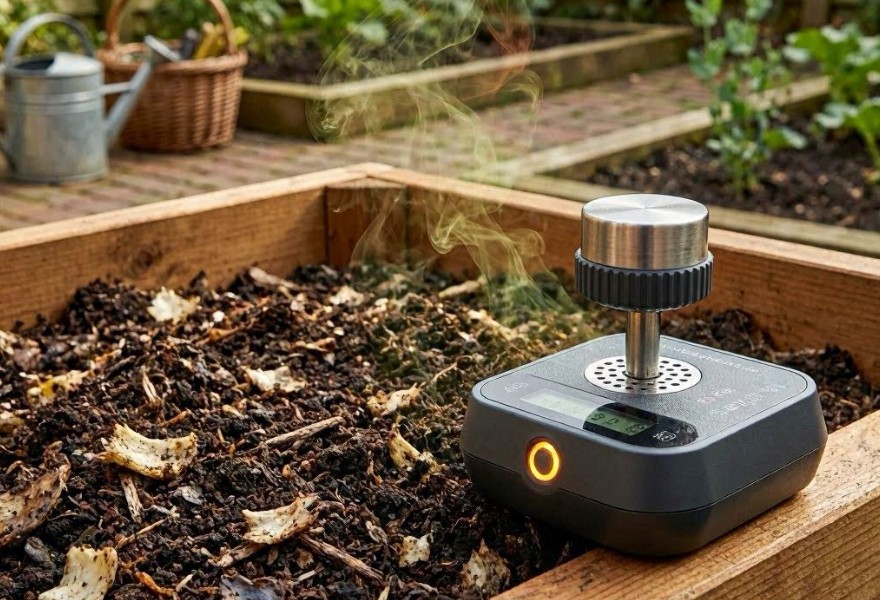
The monitor is typically a probe inserted directly into the compost heap, connected to a microcontroller that processes the sensor data. Because compost is a harsh, humid environment, the device must be robust and capable of differentiating between meaningful signals and environmental noise.
Algorithmic Interpretation
The monitor doesn't just display raw numbers; it runs a sophisticated algorithm that interprets the "scent" of the compost. By comparing the real-time gaseous output against a database of healthy decomposition patterns, the system calculates a "Readiness Score."
Key Functions of the Monitoring System
- Oxygen-Level Feedback: If the monitor detects gases associated with anaerobic breakdown (like methane), it alerts the user that the pile needs to be turned to introduce fresh oxygen.
- Moisture Integration: Many devices also measure moisture and temperature, using these as supplementary variables to confirm the gaseous data.
- Maturity Notification: Once the gaseous output stabilizes at a low, baseline level, the monitor sends a notification to the user's smartphone indicating that the compost is fully humified and ready for the garden.
The Benefits for Sustainable Agriculture
The use of digital monitoring transforms composting from an imprecise art into a reliable science. This has significant implications for both small-scale urban gardening and large-scale waste management.
- Preventing Nutrient Loss: Applying "unfinished" compost to soil can actually temporarily lock up nitrogen, harming plants. Digital monitoring prevents this by ensuring the product is truly mature.
- Maximizing Potency: By knowing the exact point of peak readiness, gardeners can ensure their fertilizer has the maximum possible concentration of bio-available nutrients.
- Environmental Impact: Proper monitoring ensures that piles don't become anaerobic, which is a major source of greenhouse gas emissions. Effectively managed compost piles are carbon-neutral or even carbon-negative soil boosters.
Conclusion: The Future of Soil Health
As we continue to seek ways to live more sustainably, the ability to turn our own waste into high-quality fertilizer has never been more important. The digital compost monitor is a perfect example of how technology can bridge the gap between human innovation and natural processes. By "listening" to the chemical story of our compost, we are better equipped to feed our plants, heal our soil, and reduce our reliance on synthetic alternatives. The future of a thriving garden might just be hidden in the invisible gases that tell us exactly when our waste has become our best resource.