

In recent years, there has been a significant advancement in the field of Artificial Intelligence (AI) and Augmented Reality (AR). These technologies have become increasingly popular and have the potential to enhance virtual experiences in various fields such as gaming, education, healthcare, and...
A Digital Dispatcher Manages Vessel Traffic in a Busy Port
130
20.07.2026
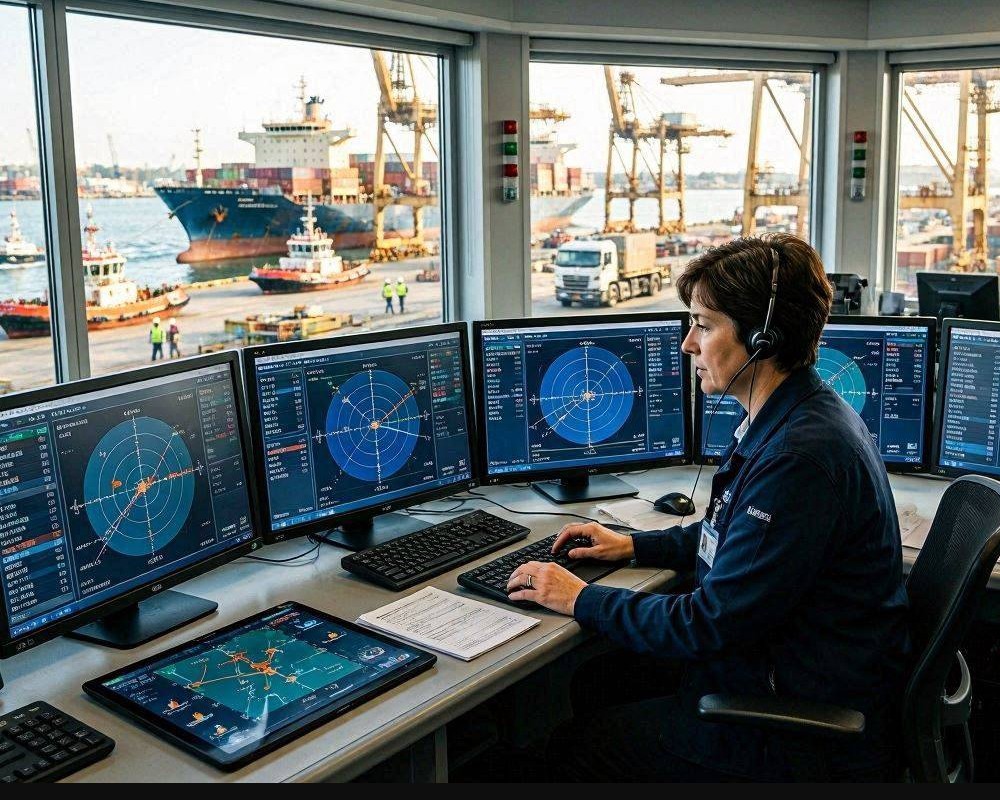
In a modern port, vessel traffic is rarely calm. Ships arrive in waves, berths fill quickly, weather changes can tighten navigational margins, and tug availability can fluctuate. At the center of this complexity stands the digital dispatcher—an operations tool and workflow that helps port authorities and pilots coordinate safe, efficient movement through channels, pilot stations, and berth areas.
Unlike traditional communication that relies heavily on manual plotting and radio calls, a digital dispatcher brings together real-time ship tracking, schedules, tidal and weather inputs, and local traffic rules. The result is a structured decision-making process that reduces uncertainty and improves throughput without compromising safety.
What a digital dispatcher actually does
A digital dispatcher manages the flow of vessels by turning scattered operational data into a consistent traffic plan. Its core purpose is to match traffic demand (arrivals, departures, workboats, and pilot transfers) with the port’s physical and procedural capacity (channel width, speed limits, berth availability, and pilot rotation).
Key responsibilities in day-to-day operations
- Monitoring real-time vessel positions and trajectories using AIS and radar feeds where available.
- Validating planned movements against navigational constraints such as traffic separation, draft limits, and channel geometry.
- Coordinating berthing windows with berth schedules, planned cargo operations, and tug assignments.
- Adjusting planned sequences when delays occur, e.g., due to equipment downtime or pilot availability.
- Supporting proactive communications by generating clear, time-stamped movement instructions for involved parties.
How live data turns into practical traffic decisions
Busy ports generate continuous signals: AIS updates, berth progress reports, tug status, meteorological feeds, and sometimes hydrodynamic data such as current and tide predictions. A digital dispatcher consolidates this information into a single operational picture.
Decision support for spacing, timing, and routing
One of the most important tasks is managing vessel spacing. Even when ships are properly identified, timing is what prevents congestion. The dispatcher uses dynamic assumptions—arrival forecasts, expected pilot boarding time, channel transit duration, and berth occupancy—to recommend sequences that keep safe distances and avoid bottlenecks at narrow segments.
In practice, the dispatcher may apply rules such as speed management, traffic direction constraints, and prioritized routing. When multiple vessels compete for the same pilot station or a single-berth throat, the system helps identify which changes deliver the best overall stability.
Risk awareness in dense traffic scenarios
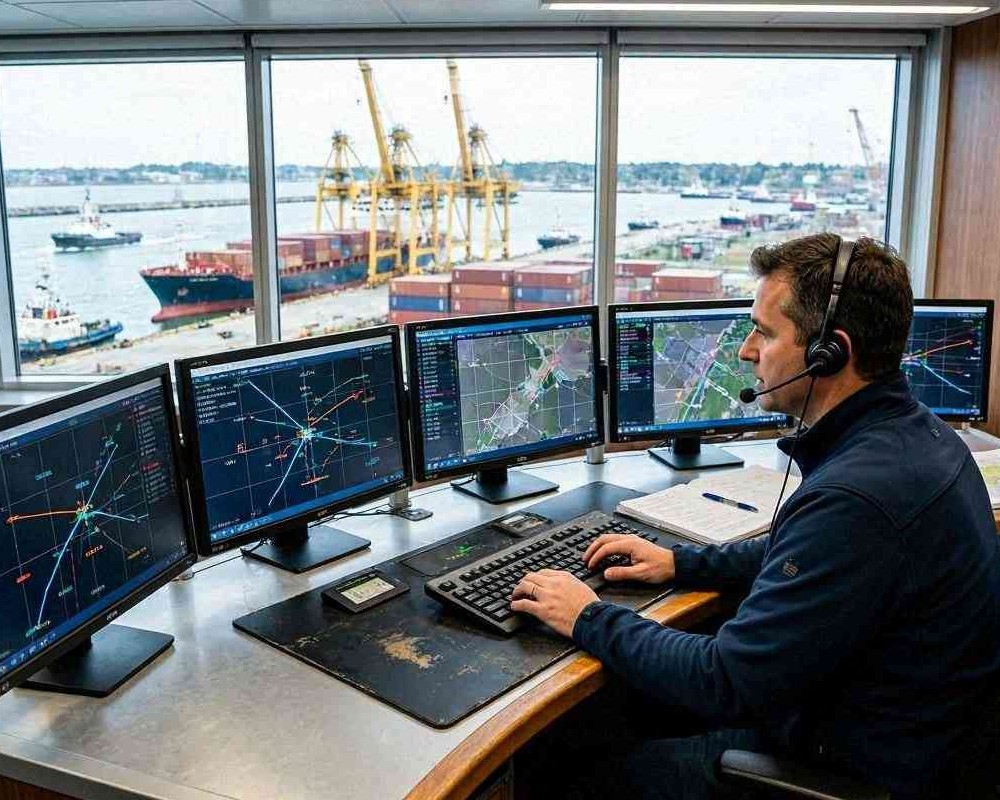
High traffic density is where small errors can cascade. A digital dispatcher supports risk-aware management by highlighting conflicts early and surfacing operational “pressure points.” These may include crossing movements, overtaking opportunities, reduced maneuvering room, or times when visibility and braking distance are effectively worse.
Common risk indicators handled by the system
- Potential collision or close-quarters situations based on projected paths and time gaps.
- Berth conflict risks where a vessel’s ETA overlaps with a berth’s next safe availability window.
- Channel capacity strain, such as too many simultaneous movements near a constricted bend.
- Environmental constraints, including tide-dependent under-keel clearance and wind-driven drift considerations.
Crucially, the digital dispatcher doesn’t replace professional judgment. It reduces the time spent searching for facts and helps operators focus on verification, escalation, and communication.
Coordination across pilots, tugs, and terminals
Efficiency in a busy port depends on cooperation. The digital dispatcher aligns different groups that operate on different rhythms. Pilots need clear boarding schedules; tug operators need reliable tasking and fuel planning; terminals need accurate ETAs to manage cranes, labor shifts, and stowage plans.
Operational workflow that keeps everyone aligned
- Arrival planning: the system proposes an order of movements based on forecasts and operational constraints.
- Pre-departure or pre-arrival confirmation: key parties confirm readiness and any changes in towing or cargo status.
- Execution monitoring: real-time updates detect deviations and trigger revised instructions.
- Post-movement feedback: outcomes feed back into future estimates, improving schedule accuracy over time.
Benefits for safety, throughput, and predictability
When implemented well, a digital dispatcher improves three outcomes simultaneously. Safety increases because conflicts and constraint violations are surfaced sooner. Throughput improves because vessels spend less time idling at anchor or waiting for pilot rotation. Predictability rises because ETAs become more reliable for terminals and stakeholders.
For ship operators, this can mean smoother passages and fewer schedule shocks. For port authorities, it means stronger control over capacity and clearer audit trails of operational decisions. For pilots and harbor control staff, it reduces cognitive load and helps maintain focus during peak periods.
In a busy port, traffic management is a living system. A digital dispatcher turns that living complexity into a coordinated, risk-aware flow—supporting confident decisions where every minute and every meter matter.