
In recent years, there has been a significant advancement in the field of Artificial Intelligence (AI) and Augmented Reality (AR). These technologies have become increasingly popular and have the potential to enhance virtual experiences in various fields such as gaming, education, healthcare, and...
A Digital Seismologist Warns Miners of Cave-Ins Minutes Before They Occur
136
19.08.2026
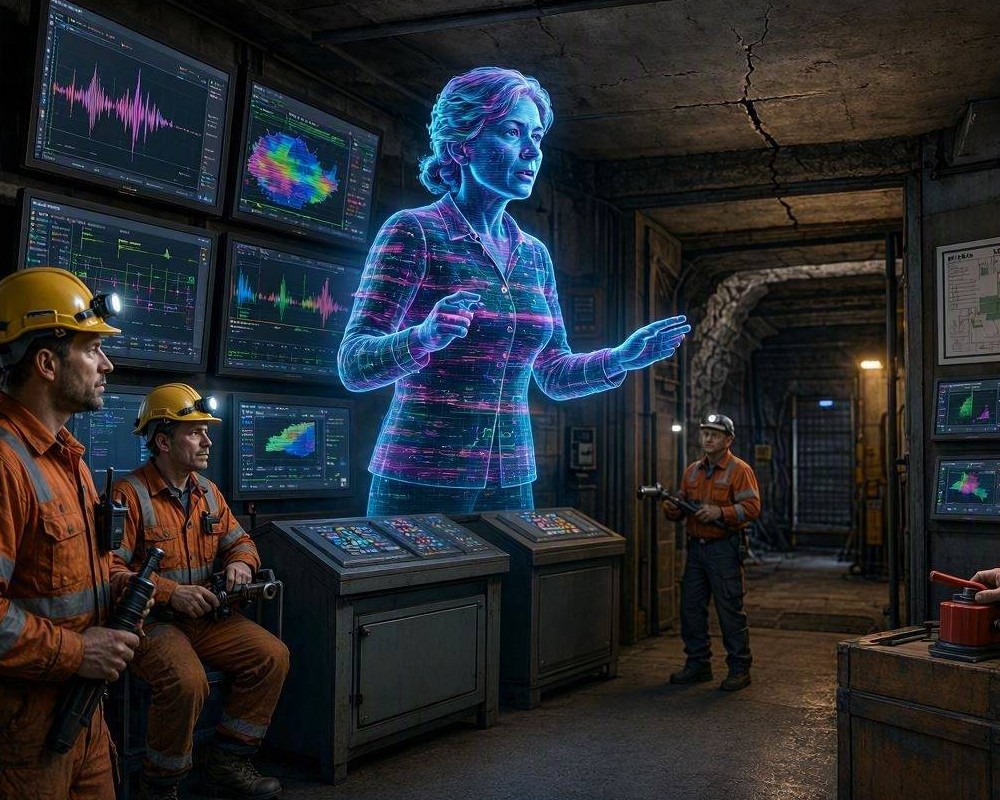
Deep underground, a few minutes of warning can separate an orderly evacuation from a deadly mining disaster. A digital seismologist provides that critical time by continuously monitoring vibrations inside a mine. Using sensitive instruments, real-time data processing, and machine learning, the system can identify patterns associated with unstable rock and alert workers before a major collapse occurs.
How Underground Seismic Monitoring Works
Rock surrounding a tunnel is never completely motionless. Excavation, blasting, drilling, groundwater, and changing pressure create small fractures that release seismic energy. Most of these events are harmless, but clusters of unusual signals may reveal that a roof, wall, or supporting pillar is approaching failure.
A Network of Sensitive Sensors
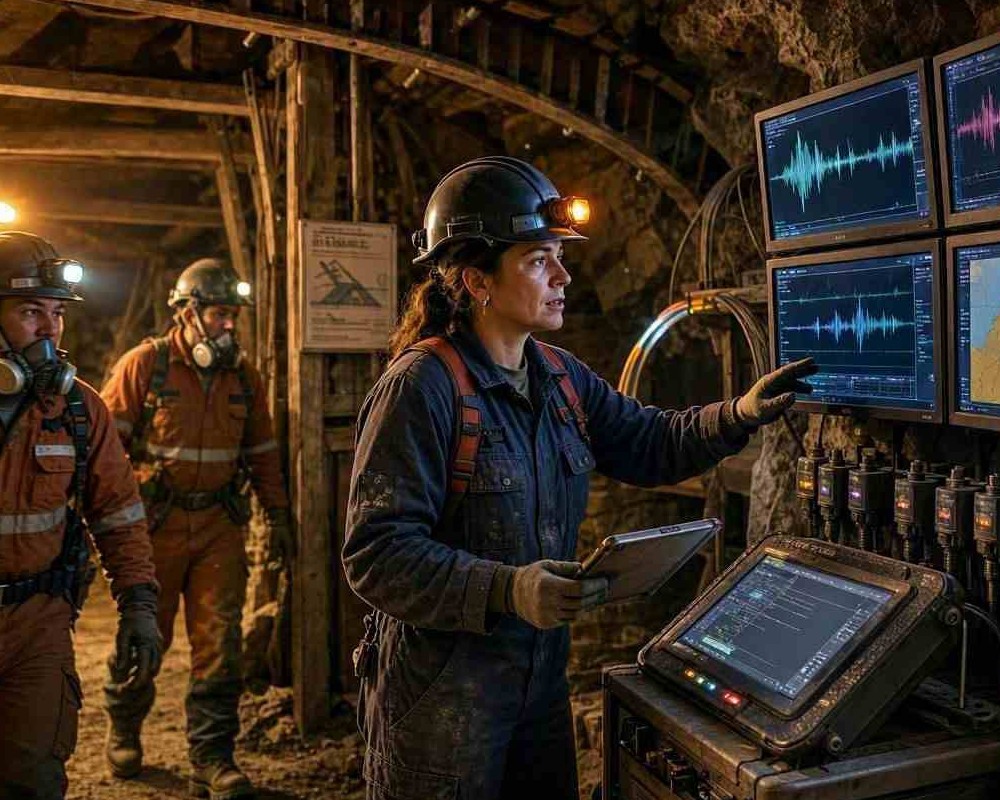
Geophones and accelerometers installed throughout the mine detect vibrations that people cannot feel. Each sensor records the strength, frequency, duration, and arrival time of a seismic wave. By comparing measurements from several locations, the monitoring platform estimates where an event originated and how the fracture developed.
The system acts like a digital seismologist because it performs many tasks traditionally handled by specialists. It filters machinery noise, distinguishes routine blasts from natural rock movement, maps active fracture zones, and evaluates how seismic behavior changes over time. Unlike periodic manual inspections, this analysis continues around the clock.
From Raw Vibrations to an Early Warning
A single tremor rarely proves that a cave-in is imminent. The strongest warnings come from combinations of indicators. Software may detect a rapid rise in microseismic activity, fractures moving closer to a tunnel, changes in signal frequency, or repeated events along the same geological structure.
- Sensor data is collected and synchronized in real time.
- Algorithms remove noise from vehicles, drills, and ventilation equipment.
- Events are located, classified, and compared with historical records.
- Risk thresholds trigger alerts for control-room staff and miners.
Why Machine Learning Improves Detection
Modern mines generate more seismic data than a human team can review immediately. Machine-learning models can examine thousands of signals and find subtle relationships between them. When trained on verified rock failures, geological surveys, and operational records, these models can estimate whether current activity resembles the conditions that preceded earlier collapses.
Predictions Must Remain Site-Specific
No universal algorithm can understand every mine. Coal seams, hard-rock deposits, tunnel designs, and extraction methods produce different vibration patterns. A reliable digital seismologist must therefore be calibrated with local data and updated as excavation changes the underground environment. Engineers should also test the system against known blasts and harmless structural movements to reduce false alarms.
Turning Minutes of Notice Into Action
An accurate forecast has little value without a clear response plan. Alerts should reach workers through cap lamps, radios, sirens, mobile devices, or underground communication terminals. The message must identify the threatened zone, the required evacuation route, and the urgency level without forcing miners to interpret technical seismic information.
Essential Safety Procedures
- Stop work and isolate equipment in the affected area.
- Move personnel toward designated refuge points or exits.
- Confirm worker locations through tracking systems.
- Inspect and stabilize the zone before allowing re-entry.
Benefits and Practical Limitations
Early-warning technology can reduce casualties, limit equipment losses, and help engineers identify sections requiring reinforcement. It also creates a detailed record of how the rock mass responds to excavation, supporting safer tunnel design and blast planning.
However, seismic monitoring cannot predict every cave-in. Some roof falls develop with weak or ambiguous vibration signals, while sensor failures and communication delays can reduce warning time. For this reason, a digital seismologist should complement—not replace—geotechnical inspections, ground-support systems, worker training, and conservative operating procedures.
A Safer Future Below Ground
Digital seismology transforms faint underground vibrations into practical safety intelligence. By combining dense sensor networks, automated analysis, and disciplined emergency planning, mines can recognize dangerous instability sooner. Even a warning measured in minutes gives workers a valuable opportunity to leave a hazardous zone before the rock finally gives way.