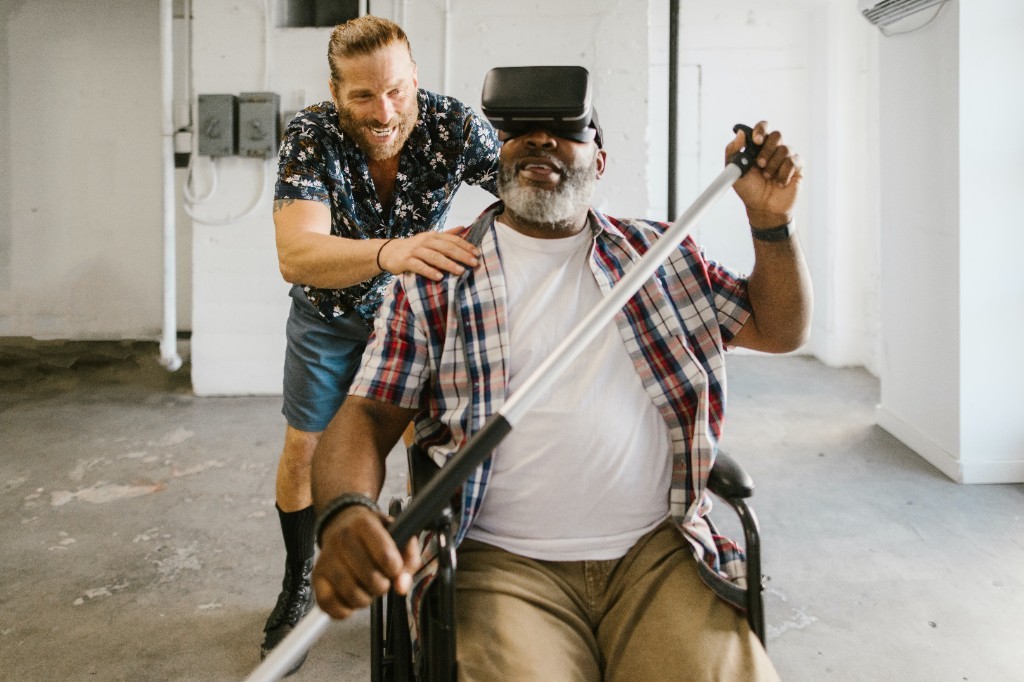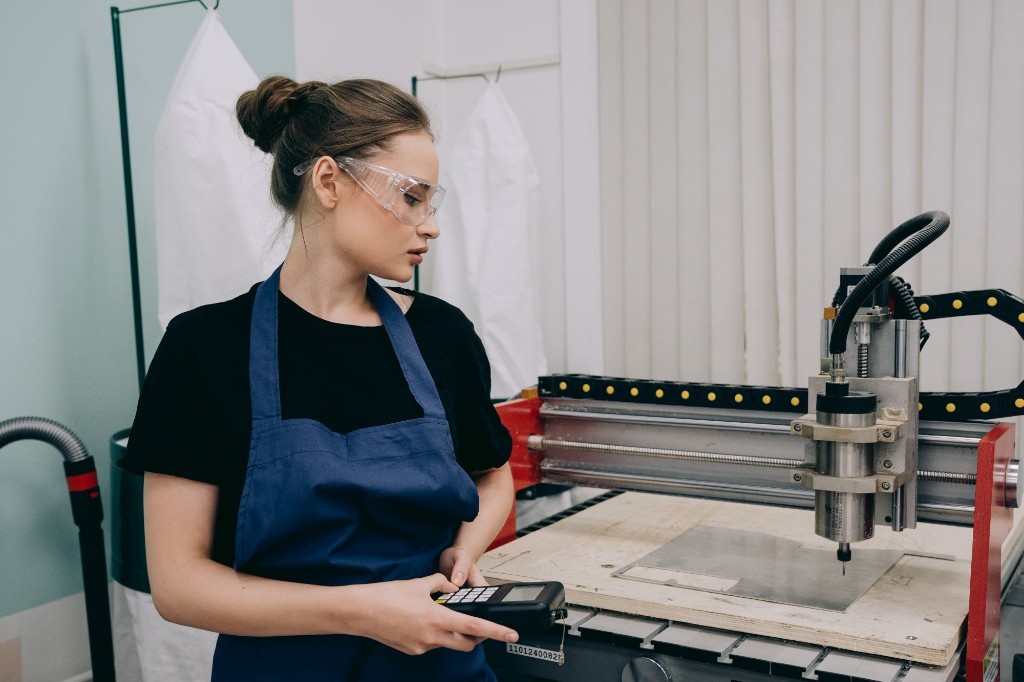
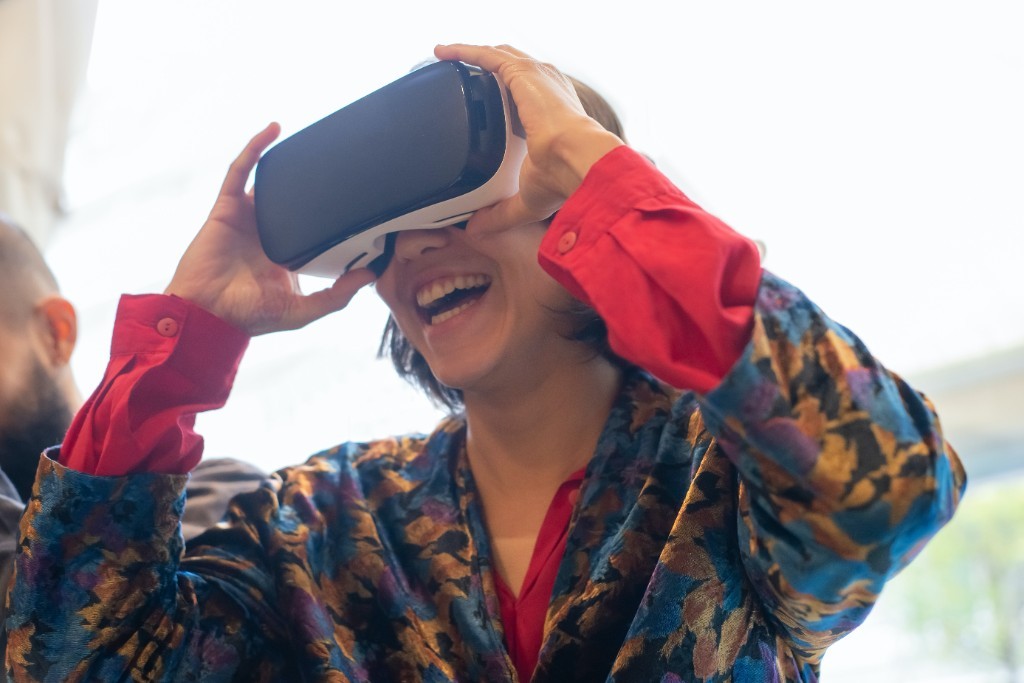
In recent years, there has been a significant advancement in the field of Artificial Intelligence (AI) and Augmented Reality (AR). These technologies have become increasingly popular and have the potential to enhance virtual experiences in various fields such as gaming, education, healthcare, and...
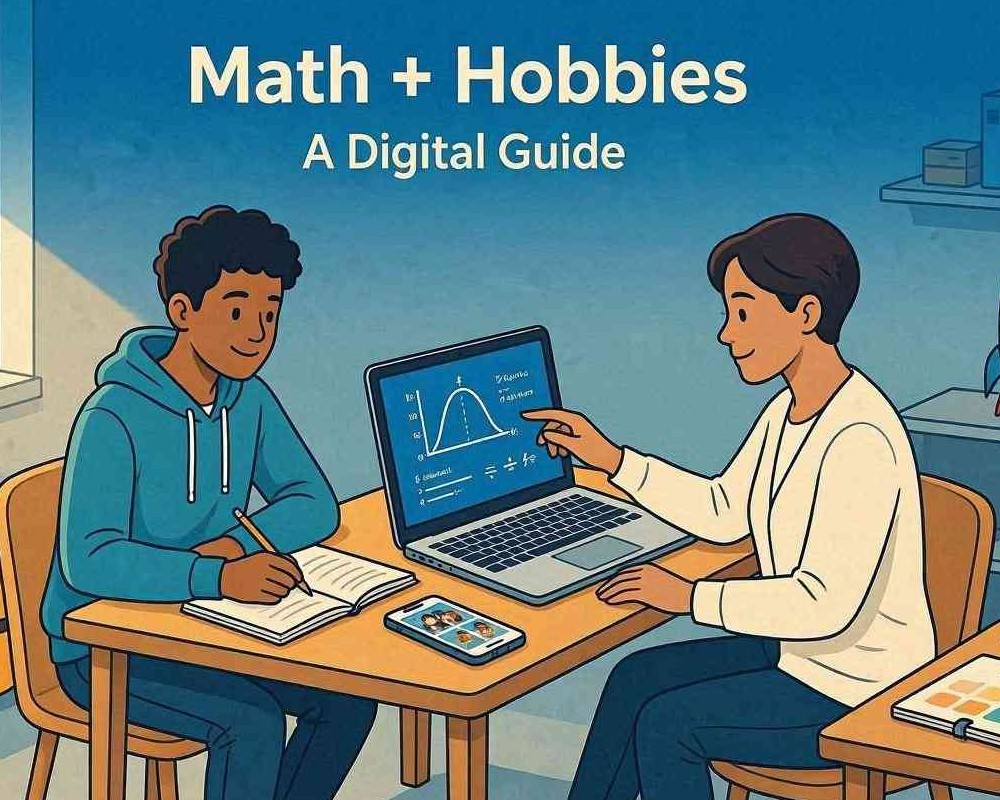
A Digital Tutor Explains Math Through a Student's Favorite Hobbies
140
22.07.2026
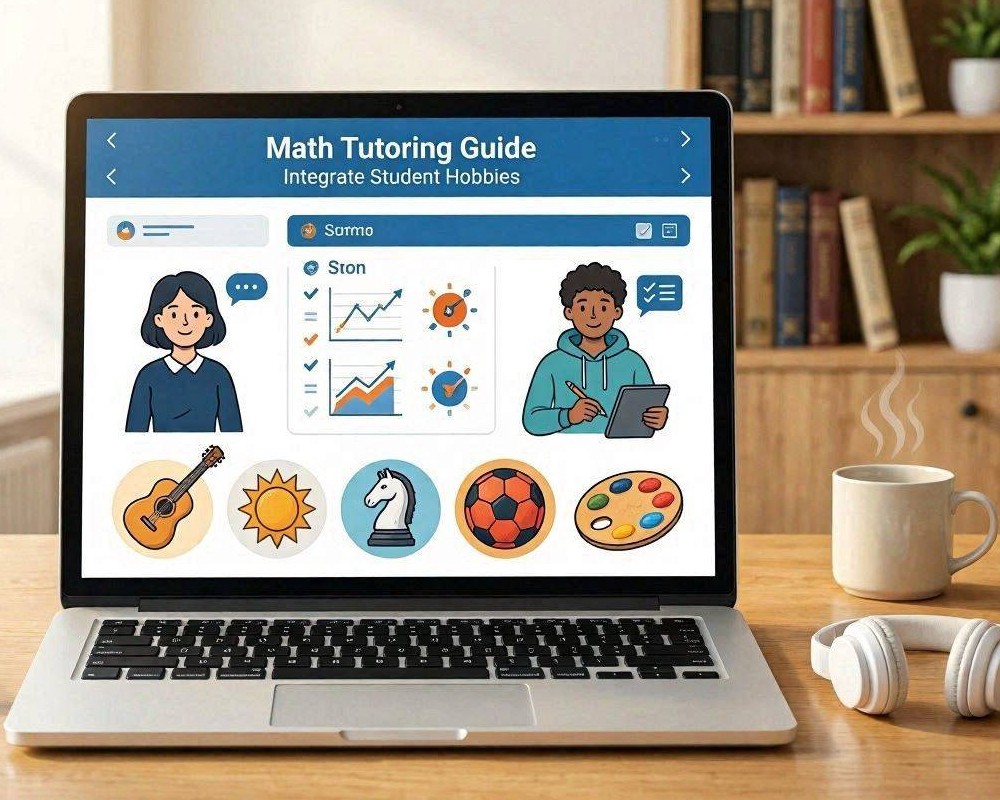
Math can feel like a separate subject-something you “do” for school and then forget. A digital tutor changes that by starting where motivation already lives: your favorite hobbies. Instead of memorizing formulas in isolation, you learn to see patterns, measure real things, and solve problems that look like the situations you enjoy.
In this approach, the tutor doesn’t just translate math into examples; it builds a clear path from hobby to concept to skill. Whether you skate, draw, code, cook, or play strategy games, math becomes a tool for understanding your world.
How hobby-based tutoring makes math stick
A strong tutoring session has three layers: engagement, accuracy, and practice. Hobby-based learning improves engagement because the student cares about the outcome. Accuracy matters because the tutor maps each hobby task to a specific math idea. Practice seals the learning by turning moments of curiosity into repeatable problem-solving.
For example, if a student loves rhythm games, the tutor can connect timing, beats, and speed to math concepts like rates and proportional reasoning. The goal is not to “make math fun” as a slogan, but to make it meaningful through structured thinking.
From favorite hobbies to math concepts
1) Building and designing: geometry you can see
Students who enjoy LEGO, model building, or digital design often think in shapes. A digital tutor can leverage that visual mindset to teach geometry without heavy memorization.
- Drawing a layout becomes a lesson on angles, scale, and coordinate planes.
- Comparing models introduces similarity and proportions.
- Measuring real parts supports unit conversion and estimation.
The tutor might ask the student to design a simple structure with a fixed footprint, then calculate the area, perimeter, and the impact of resizing. This converts geometry from abstract diagrams into decisions the student actually makes.
2) Gaming and puzzles: logic, probability, and strategy
Gaming provides built-in “math moments.” A digital tutor can use game mechanics to teach probability and combinatorics in a way that feels intuitive.
- Loot drops or card draws become probability practice.
- Choosing paths becomes graph thinking and optimization.
- Difficulty scaling becomes proportional reasoning and functions.
Instead of memorizing definitions, the student builds a small model: “If I try this strategy N times, what outcome do I expect?” The tutor then shows how to connect the expectation to math—clearly and step-by-step.
3) Art and music: patterns that explain themselves
Art students naturally notice rhythm, symmetry, and repetition. A digital tutor can turn those observations into mathematical explanations.
- Color gradients introduce sequences and linear change.
- Repeat patterns lead to understanding cycles and modular arithmetic.
- Creating beats supports rates, fractions, and scaling time intervals.
For music lovers, the tutor can model tempo as a rate and translate a beat pattern into fractions and conversions. The student learns that math isn’t “separate”—it’s how timing and structure behave.
What the digital tutor does during lessons
To keep the approach rigorous, the tutor follows a consistent tutoring workflow that the student can rely on.
- Start with the hobby task: identify a real activity the student already understands.
- Extract the math question: rewrite the hobby goal as a clear math problem.
- Teach the minimal concept: introduce only the necessary idea, then connect it back to the hobby.
- Work one example together: the tutor models the reasoning, not just the final answer.
- Practice with variations: similar problems appear in slightly different forms to build flexibility.
- Check understanding: short reflection questions confirm that the student can transfer skills.
This structure prevents the common pitfall of hobby-based learning becoming “extra stories” without mastery. Every session ends with a skill the student can use on any homework question, even one that doesn’t mention their hobby.
Example lesson: tailoring math to a student who loves sports
Imagine a student who loves basketball and wants to improve shooting consistency. The digital tutor turns that interest into a practical math plan:
- First, estimate shot distance and convert measurements between units.
- Then, use rates to analyze how shooting accuracy changes over time or after warm-up.
- Next, apply functions to model practice sessions and predict expected improvement.
- Finally, use data interpretation to compare two training routines objectively.
By the end, the student isn’t just “good at basketball math.” They can interpret graphs, work with equations, and reason from data—skills that transfer across algebra, statistics, and real-world problem solving.
Why this approach works for motivation and grades
When students see that math explains the systems inside their hobbies, their confidence rises. They stop asking, “When will I ever use this?” and start asking better questions: “How does this work?” and “What changes the result?” A digital tutor strengthens that curiosity with precise teaching, guided practice, and frequent feedback.
Over time, math becomes less of a memorization task and more of a language for describing patterns. And once it’s a language, students can speak it anywhere.