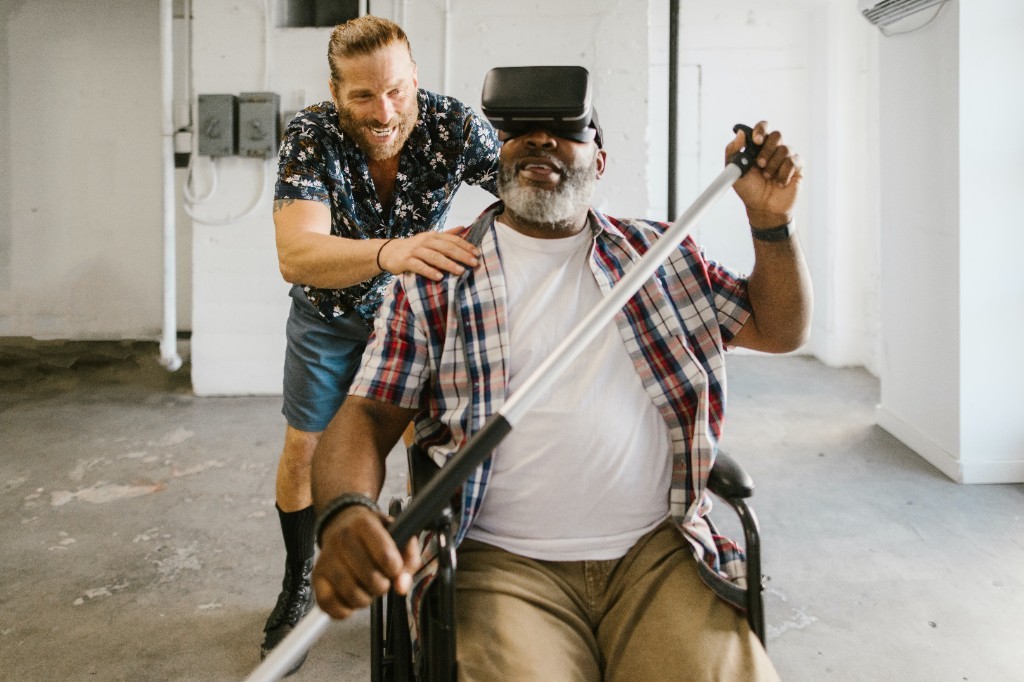
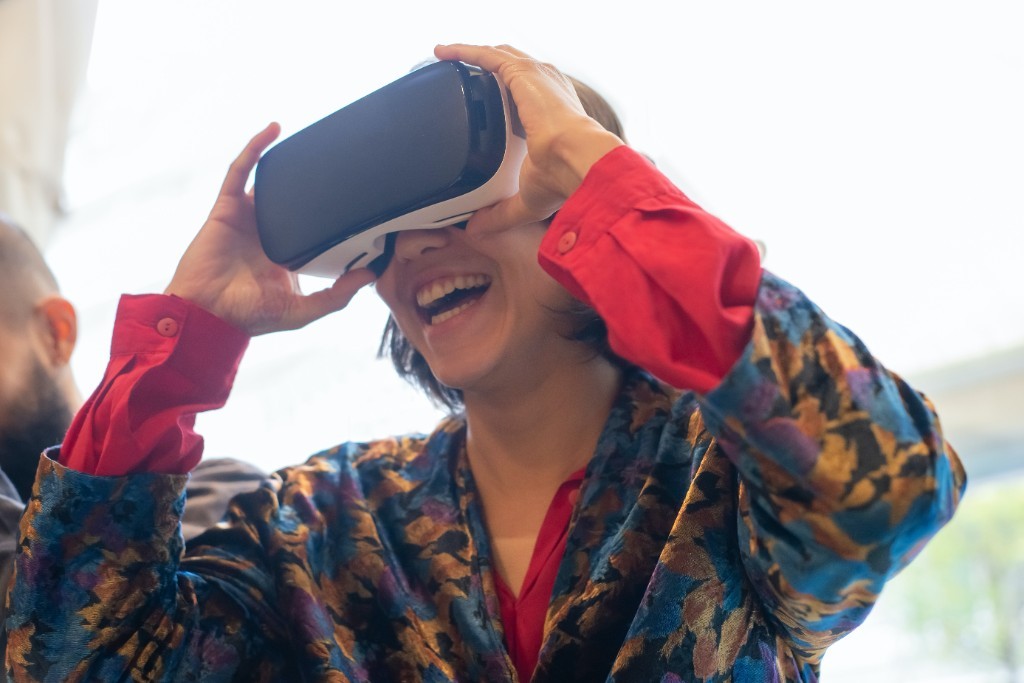
In recent years, there has been a significant advancement in the field of Artificial Intelligence (AI) and Augmented Reality (AR). These technologies have become increasingly popular and have the potential to enhance virtual experiences in various fields such as gaming, education, healthcare, and...
A Neural Network Creates Personalized Rehabilitation Programs for Patients
182
03.06.2026
Why rehabilitation needs personalization
Rehabilitation after injury, surgery, or neurological events is highly variable. Two patients with the same diagnosis can recover at very different rates depending on age, baseline fitness, neural plasticity, and motivation.
Standard rehabilitation programs are often built as fixed protocols, which may not adjust quickly enough to individual progress or setbacks.
This can lead to undertraining for some patients and excessive strain for others, slowing overall recovery.
How a neural network builds a rehabilitation program
A neural network-based system analyzes patient data and generates a dynamic recovery plan that evolves over time. Instead of prescribing a static set of exercises, it continuously adapts intensity, frequency, and type of therapy.
The model is trained on large datasets of rehabilitation outcomes to identify which interventions are most effective for specific patient profiles.
Main data inputs
- Medical diagnosis and injury type
- Physical performance metrics (strength, mobility, coordination)
- Patient age, weight, and health history
- Recovery progress over time
- Feedback from therapists and patients
How the system designs a personalized plan
The neural network maps patient characteristics to an optimal sequence of rehabilitation activities. It selects exercises, sets difficulty levels, and schedules sessions based on predicted recovery trajectories.
The program is not static; it updates daily or even in real time depending on patient performance.
Planning workflow
- Initial patient assessment and baseline modeling
- Matching with similar recovery profiles
- Generation of customized exercise plan
- Continuous monitoring of performance
- Adaptive adjustment of therapy intensity
Role of real-time feedback in recovery
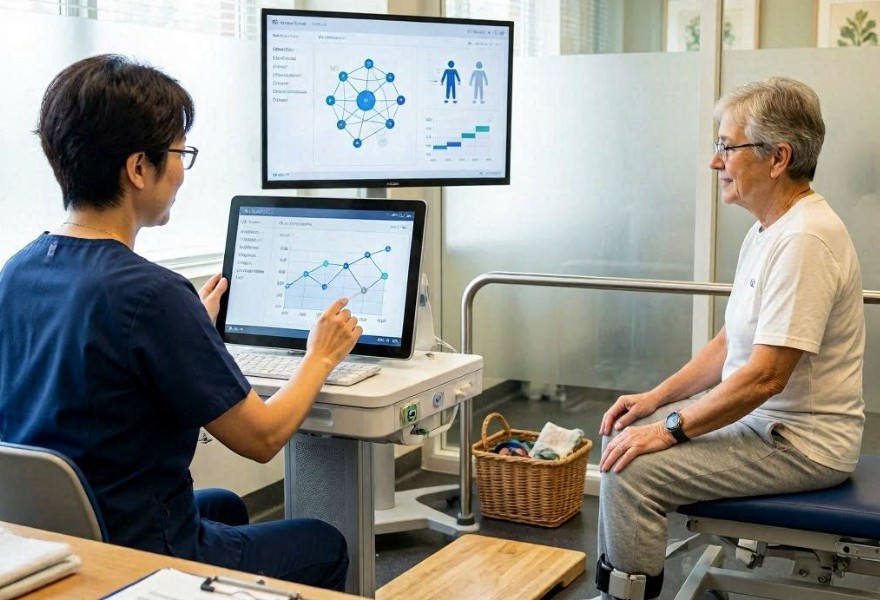
Wearable sensors, motion tracking systems, and mobile apps provide continuous feedback on patient performance. The neural network uses this data to evaluate whether exercises are too easy, too difficult, or appropriately challenging.
This feedback loop allows the system to respond quickly to changes in patient condition.
Key monitored signals
- Range of motion and joint mobility
- Muscle activation and strength output
- Balance and coordination metrics
- Completion time and accuracy of tasks
Types of rehabilitation supported
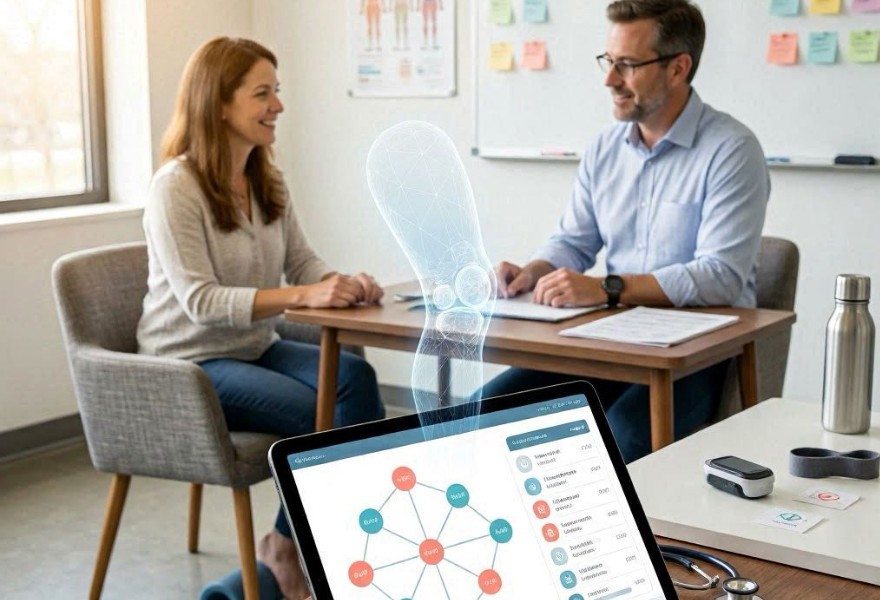
The system can generate programs for a wide range of conditions, including orthopedic injuries, stroke recovery, and post-surgical rehabilitation.
Examples of therapy domains
- Neurological rehabilitation for stroke patients
- Musculoskeletal recovery after injury
- Post-operative mobility restoration
- Chronic pain management programs
Why neural networks improve rehabilitation outcomes
Unlike fixed protocols, neural networks can detect subtle patterns in recovery speed and adjust therapy accordingly. This reduces the risk of stagnation and helps maintain optimal challenge levels for neuroplasticity and physical adaptation.
They also help identify when a patient is deviating from expected recovery patterns, enabling early intervention by clinicians.
Benefits of AI-driven rehabilitation
Main advantages
- Highly individualized recovery plans
- Faster adaptation to patient progress
- Improved engagement and motivation
- Better allocation of clinical resources
Limitations of the approach
AI-generated rehabilitation plans still require oversight from medical professionals. Incorrect sensor data or unusual patient responses can lead to suboptimal recommendations if not reviewed.
Additionally, emotional and psychological factors influencing recovery are harder to quantify and may not be fully captured by the model.
Future of intelligent rehabilitation systems
Future systems may integrate robotic assistance, virtual reality environments, and brain-computer interfaces to create fully immersive and adaptive rehabilitation ecosystems.
Conclusion
Neural networks are transforming rehabilitation by enabling personalized, data-driven recovery programs that adapt continuously to each patient’s progress and needs.