
In recent years, there has been a significant advancement in the field of Artificial Intelligence (AI) and Augmented Reality (AR). These technologies have become increasingly popular and have the potential to enhance virtual experiences in various fields such as gaming, education, healthcare, and...
A Neural Network Detects Early Signs of Diabetes from Blood Test Results
31
27.10.2026
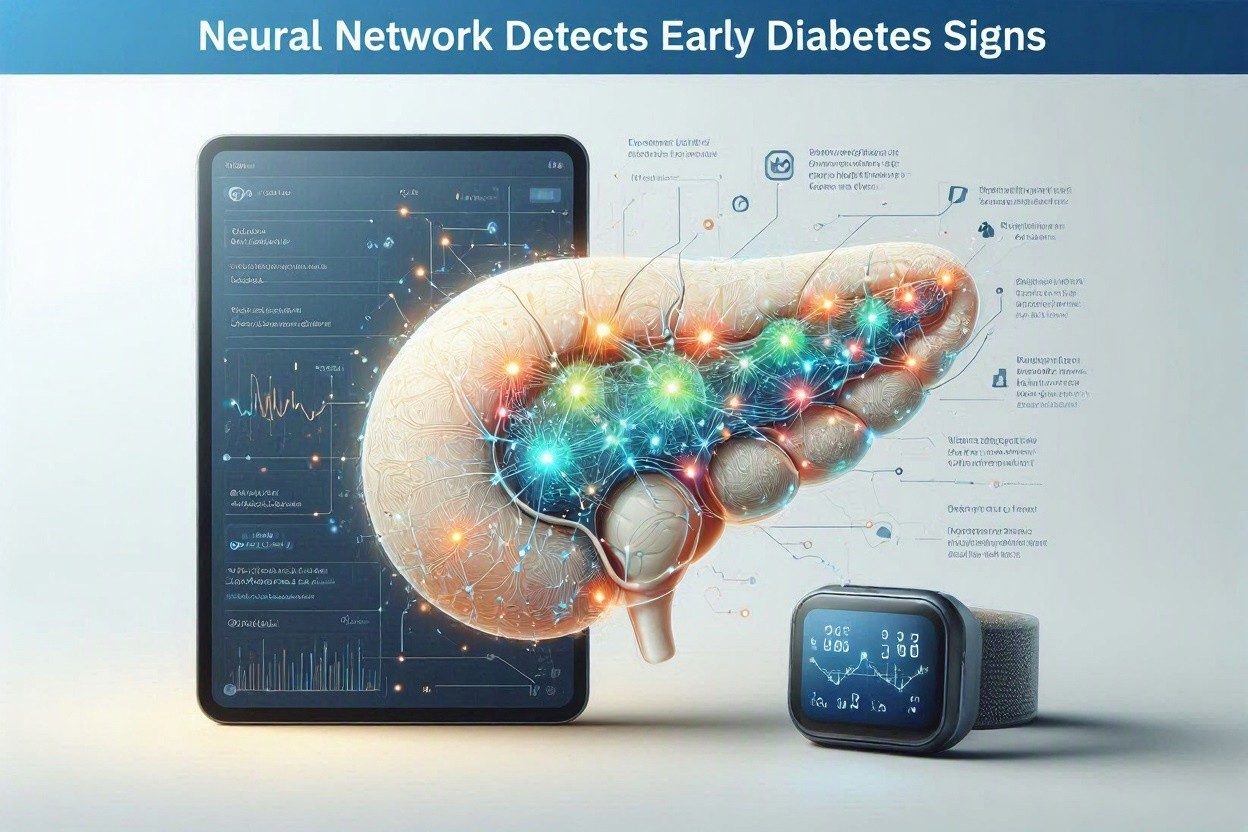
Diabetes often develops silently. Long before a person receives a diagnosis, subtle changes may appear in routine blood test results: fasting glucose may drift upward, lipid patterns may shift, inflammatory markers may rise, and liver enzymes may reflect metabolic stress. A neural network trained on large clinical datasets can identify these early patterns and estimate a person’s risk of developing diabetes before symptoms become obvious.
This approach does not replace a physician or standard diagnostic criteria. Instead, it can work as a screening and decision-support tool, helping clinicians notice weak signals that may be easy to overlook during a busy appointment. When used responsibly, artificial intelligence can make preventive care more precise, timely, and accessible.
How a Neural Network Reads Blood Test Data
A neural network is a machine learning model designed to recognize complex relationships in data. In diabetes screening, it can analyze combinations of blood test values rather than focusing on one marker at a time. This is important because early metabolic dysfunction is rarely reflected by a single abnormal result.
Common Inputs Used by the Model
Depending on the dataset and clinical purpose, the model may consider several routine laboratory indicators, including:
- Fasting plasma glucose and HbA1c levels
- Triglycerides, HDL cholesterol, and LDL cholesterol
- Liver enzymes such as ALT and AST
- Markers related to kidney function, including creatinine
- Complete blood count parameters
- Age, sex, body mass index, and blood pressure, when available
The strength of a neural network lies in its ability to detect nonlinear patterns. For example, a fasting glucose level that is still technically “normal” may become more concerning when combined with elevated triglycerides, low HDL cholesterol, and increased body mass index. The model can assign weight to these interactions and produce a risk score.
Why Early Detection Matters
Type 2 diabetes is closely linked to insulin resistance, cardiovascular disease, kidney problems, and nerve damage. The earlier metabolic risk is identified, the greater the opportunity to intervene with lifestyle changes, targeted monitoring, and, when appropriate, medication.
Prevention Before Diagnosis
Many people pass through a stage of prediabetes before developing type 2 diabetes. During this period, blood sugar regulation is impaired, but damage may still be reduced or delayed. A neural network can help identify patients who may benefit from a glucose tolerance test, repeat HbA1c measurement, nutrition counseling, or closer follow-up.
For healthcare systems, AI-based screening may also improve resource allocation. Instead of testing every patient with the same intensity, clinicians can prioritize those whose blood work suggests higher risk, even if no single value has crossed a diagnostic threshold.
Benefits for Patients and Clinicians
When integrated into electronic health records, a neural network can analyze blood test results automatically and generate a clear risk estimate. This can support faster decisions and encourage more proactive conversations between patients and medical professionals.
Practical Advantages
- Earlier risk recognition: The system can highlight suspicious patterns before symptoms appear.
- Use of existing tests: Many inputs come from routine blood panels, reducing the need for expensive initial testing.
- Personalized follow-up: Risk scores can guide the frequency of monitoring and preventive recommendations.
- Clinical consistency: AI can help reduce variation in how subtle laboratory changes are interpreted.
For patients, the main advantage is not a label, but an opportunity. A risk alert can prompt action: improving diet quality, increasing physical activity, losing excess weight, sleeping better, and managing blood pressure. These steps may significantly lower the likelihood of progression.
Accuracy, Validation, and Limitations
A neural network is only as reliable as the data used to train and validate it. High-quality models require diverse patient populations, standardized laboratory measurements, and careful comparison with established outcomes. Performance should be measured using sensitivity, specificity, positive predictive value, and calibration, not accuracy alone.
What AI Cannot Do
AI cannot diagnose diabetes without appropriate clinical evaluation. It cannot understand symptoms, medications, pregnancy status, acute illness, or laboratory errors unless those factors are included in the data. It may also perform poorly in populations that were underrepresented during training.
Another concern is transparency. Some neural networks are difficult to interpret, which can make clinicians hesitant to trust their output. For medical use, models should provide explainable signals whenever possible, such as which blood markers contributed most to the risk score.
The Future of AI-Based Diabetes Screening
As healthcare data grows, neural networks may become increasingly effective at detecting metabolic risk from ordinary blood tests. The most valuable systems will not simply issue warnings; they will fit naturally into clinical workflows, present results clearly, protect patient privacy, and support evidence-based care.
The goal is not to replace medical judgment, but to strengthen it. By finding early signs hidden in routine blood results, neural networks can help shift diabetes care from late diagnosis to early prevention. For millions of patients, that shift could mean fewer complications, better quality of life, and a longer period of healthy living.