

In recent years, there has been a significant advancement in the field of Artificial Intelligence (AI) and Augmented Reality (AR). These technologies have become increasingly popular and have the potential to enhance virtual experiences in various fields such as gaming, education, healthcare, and...
A neural Network Detects Metal Fatigue in Aircraft Before Engineers Do
135
24.07.2026
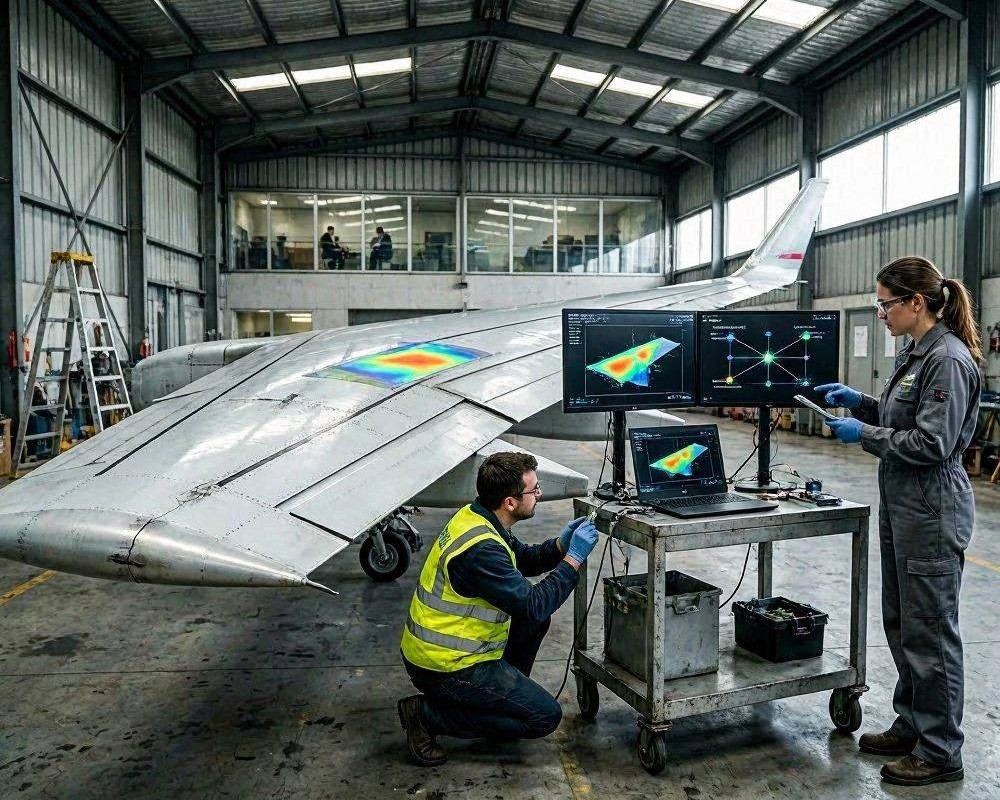
Airframe reliability has always depended on careful inspection schedules and conservative engineering margins. Yet metal fatigue is sneaky: it accumulates gradually, often invisible to conventional testing until it becomes a serious maintenance event. Now, a new approach combining sensor data with machine learning shows a promising shift—systems that can flag early fatigue patterns before engineers would otherwise detect them.
Why metal fatigue is hard to catch early
Metal fatigue originates from cyclic loading. Each takeoff, turbulence encounter, pressurization cycle, and landing stress slightly alters the material’s microstructure. Over time, microscopic cracks may form and grow, sometimes faster than planned inspection intervals. The challenge is that the early stages can be subtle, influenced by manufacturing variability, load history, environmental factors, and even changes in operating patterns.
Traditional methods—visual inspection, scheduled nondestructive testing, and conservative crack-growth models—remain essential. However, they can be limited by access constraints, sampling frequency, and the fact that fatigue progression is not always linearly correlated with a single measurable parameter.
How the neural network detects fatigue sooner
The core idea is to teach a neural network to recognize fatigue signatures hidden inside complex sensor and flight-history signals. Instead of relying on one indicator, the model learns relationships among multiple variables such as vibration characteristics, strain responses, temperature and humidity conditions, and the temporal sequence of loads.
Training on real degradation patterns
To perform reliably, the network must be trained on data that reflects different stages of fatigue. In practice, this typically includes ground-test results, instrumented component histories, and datasets where fatigue severity is confirmed by later inspection outcomes. By learning from these labels, the model becomes sensitive to patterns that precede visible damage.
Sequence learning for fatigue “storylines”
Fatigue is inherently time-dependent, so the system benefits from architectures designed for sequential signals. When fed a time window of sensor measurements, the network can infer progression trends—capturing not just peaks but the shape and evolution of stress responses across cycles.
Once deployed, the workflow is straightforward: incoming flight or structural health monitoring data is transformed into features and passed through the model. The output is a fatigue likelihood score and, depending on the implementation, a severity estimate tied to specific structural zones.
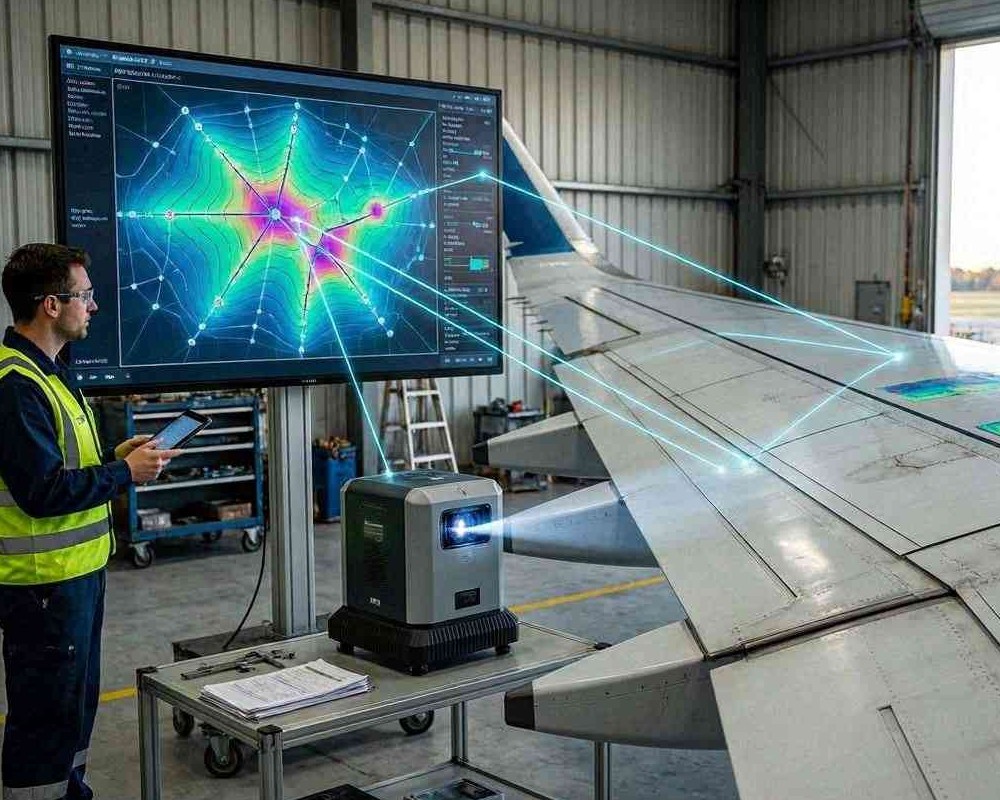
What engineers gain from AI-assisted detection
Importantly, the goal is not to replace engineering judgment. Instead, the neural network acts as an early-warning system, helping teams prioritize where to look and when to schedule more detailed inspections.
- Earlier flagging: Identify fatigue trends during normal operations, reducing time spent waiting for scheduled access.
- Smarter prioritization: Focus nondestructive testing on the most likely risk areas first.
- Better maintenance planning: Align part replacement and repair windows with actual degradation signals.
- Lower inspection burden: Reduce unnecessary checks where the model indicates low risk.
From “calendar maintenance” to condition-based decisions
Aircraft maintenance often relies heavily on calendar and flight-hour intervals. AI detection can support a more condition-based strategy: inspections become responsive to what the structure is actually experiencing, not only to time passing.
Challenges and responsible deployment
For aviation-grade adoption, accuracy and trustworthiness are critical. A model that performs well on historical data may degrade if sensor configurations change, aircraft models differ, or operating profiles shift. Therefore, robust validation is required, including cross-aircraft testing and evaluation under diverse conditions.
Validation, uncertainty, and explainability
Organizations typically measure performance using both classification accuracy and error costs—misidentifying a safe state as risky is one type of error, while missing an early fatigue stage is far more consequential. Many deployments also incorporate uncertainty estimates to avoid overconfident alerts. While deep models are not inherently interpretable, engineering teams can use feature attribution methods and diagnostics to understand which signal patterns drive decisions.
Data governance and safety processes
Because aviation systems operate under stringent safety standards, the AI model must be integrated into existing maintenance workflows with clear thresholds, review procedures, and documentation. Alerts should trigger defined actions—such as additional inspections or targeted nondestructive testing—rather than ad hoc responses.
The bigger impact: safer fleets and lower lifecycle costs
If implemented carefully, neural-network fatigue detection can reduce the gap between damage onset and human recognition. Earlier identification means repairs can occur before cracks reach critical sizes, improving safety margins. At the same time, more precise maintenance scheduling can lower lifecycle costs by avoiding both premature part replacement and unexpected findings during late-stage inspections.
In the end, the most valuable outcome is speed without risk: a system that listens continuously to structural behavior and alerts engineers when fatigue starts to become real—sometimes before it shows up in the traditional ways.