

In recent years, there has been a significant advancement in the field of Artificial Intelligence (AI) and Augmented Reality (AR). These technologies have become increasingly popular and have the potential to enhance virtual experiences in various fields such as gaming, education, healthcare, and...
A Neural Network Determines Fruit Ripeness by Scent Without Touching It
148
07.07.2026
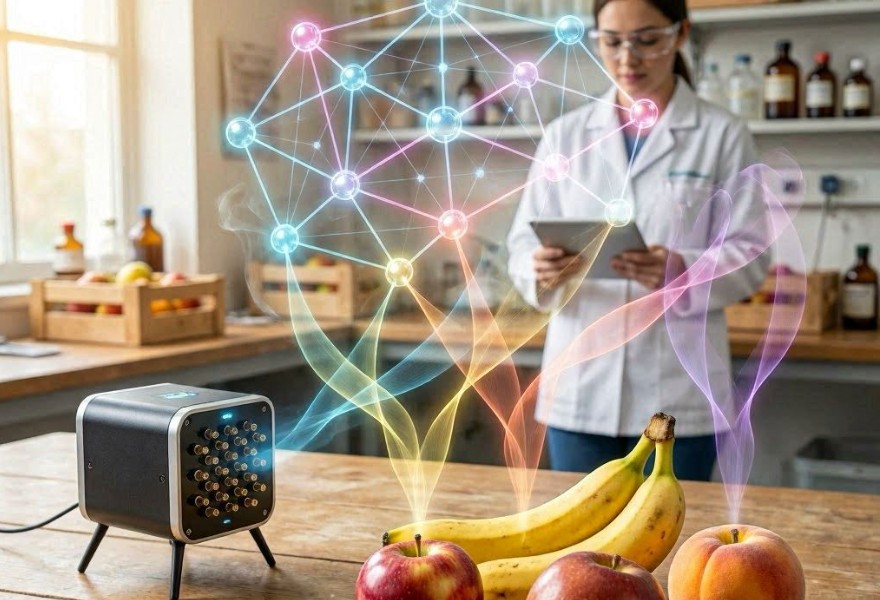
In the global supply chain of fresh produce, timing is everything. From the moment a piece of fruit is harvested, it begins a complex biochemical process of ripening, leading to an inevitable peak of quality followed by rapid decay. For retailers and consumers alike, determining exactly when a fruit is at its most delicious has historically been a manual, subjective, and often destructive process—involving physical handling, squeezing, or even cutting samples to check for maturity. However, a revolutionary technological advancement is changing this: neural networks that can detect the precise stage of fruit ripeness by "smelling" the invisible volatile organic compounds (VOCs) released into the air, all without ever touching the fruit.
This innovation merges the field of chemical sensing with artificial intelligence, creating what researchers call an "electronic nose" or "e-nose." By teaching a machine to interpret the chemical signatures of ripening, we are creating a more efficient, less wasteful, and higher-quality food distribution system.
The Chemistry of Ripening
As fruit ripens, it undergoes a transformation in its chemical makeup. Starches convert into sugars, acidity levels drop, and the cell walls soften. Crucially for this technology, the fruit releases specific volatile organic compounds—gases that are responsible for the fruit's characteristic aroma. For example, the scent of a banana changing from green to yellow is accompanied by the production of esters like isoamyl acetate. A neural network trained on these chemical signatures can identify the exact ripeness stage by analyzing the concentration of these gases in the air surrounding the fruit.
How the Neural Network Learns the "Scent"
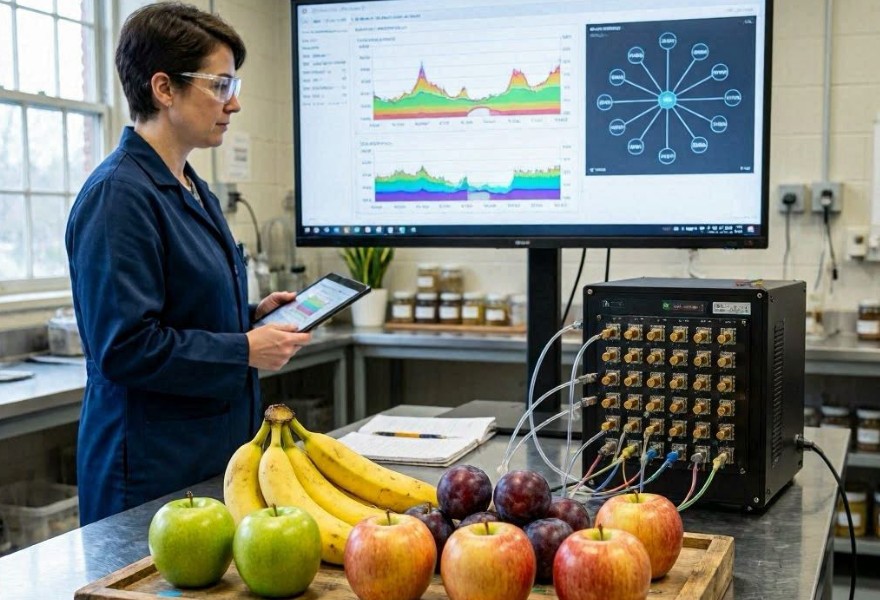
The system relies on an array of chemical gas sensors that function much like the olfactory receptors in a human nose. However, because these sensors produce complex, messy data, they require a powerful neural network to interpret them.
Pattern Recognition in Volatile Data
The neural network is trained using a massive dataset of "scent profiles" linked to known ripeness stages verified by laboratory testing. The training involves several layers of analysis:
- Feature Extraction: The system isolates individual chemical signatures from the complex "cocktail" of gases in the air.
- Temporal Mapping: The AI learns how the scent profile evolves over time, allowing it to predict not only current ripeness but also the "shelf-life remaining" for a specific batch of produce.
- Environmental Calibration: The algorithm is trained to filter out background noise, such as the smell of nearby packaging, humidity, or other produce, ensuring the reading is accurate in a real-world warehouse environment.
Advantages of Non-Invasive Sensing
The move toward scent-based AI analysis offers transformative benefits for the agricultural and retail sectors.
Reducing Food Waste
One of the largest contributors to food waste is the damage caused by manual handling and "sample testing." By eliminating the need for physical contact, we preserve the shelf life of the produce. Furthermore, retailers can use this data to prioritize shipping batches that are ripening faster, ensuring that consumers receive fruit at the peak of freshness, which dramatically reduces the amount of produce thrown away at the store level.
Quality Assurance at Scale
In a large warehouse, human inspectors cannot possibly check every crate. An e-nose system integrated into a conveyor belt system can scan thousands of fruits per minute. If the neural network detects a crate that is ripening too quickly, it can automatically divert it to a nearby local market, while directing slower-ripening batches to long-distance distribution centers.
The Future of Smart Agriculture
As these neural networks become more compact and sensitive, we can envision a future where this technology is embedded into smart refrigerators or even handheld consumer devices. Imagine a smartphone app paired with a tiny sensor that tells you exactly when your avocados are ready to eat or alerts you if your fruit bowl is nearing the end of its life. This integration of AI and olfactory sensing is a leap forward in our ability to manage our food supply with precision and care.
Conclusion
The ability of an AI to determine fruit ripeness by scent is more than just a clever engineering feat; it is a vital step toward a more sustainable future. By replacing the imprecise and destructive methods of the past with the invisible, accurate language of chemistry, we are gaining unprecedented control over our food quality. This technology reminds us that even in an increasingly digital world, the most profound insights into our health and sustenance can often be found in the subtle, invisible scents that surround us.