In recent years, there has been a significant advancement in the field of Artificial Intelligence (AI) and Augmented Reality (AR). These technologies have become increasingly popular and have the potential to enhance virtual experiences in various fields such as gaming, education, healthcare, and...
A Neural Network Helps Customs Officers Detect Concealed Cargo in Containers
61
24.10.2026
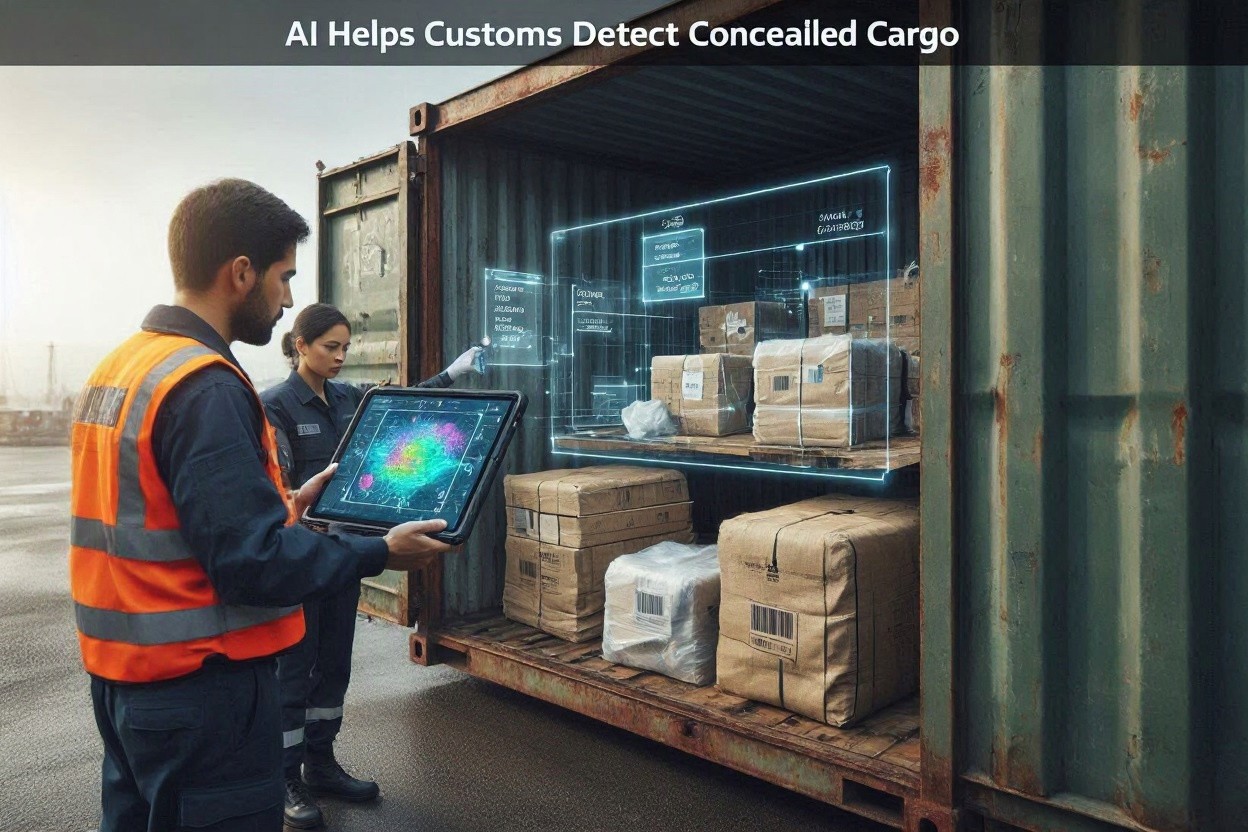
Global trade depends on millions of cargo containers moving quickly through seaports, rail terminals, and border checkpoints. Inside this flow, customs officers must identify illicit goods, undeclared merchandise, weapons, narcotics, counterfeit products, and other concealed cargo without delaying legitimate shipments. A neural network designed for container inspection can make this task faster, more consistent, and more accurate.
Modern customs authorities increasingly rely on non-intrusive inspection systems, especially X-ray and gamma-ray scanners. These systems generate detailed images of container contents, but interpreting them is difficult. A single scan may contain dense overlapping objects, mixed materials, unusual shapes, and incomplete documentation. Artificial intelligence helps by analyzing these images and flagging suspicious areas for human review.
How Neural Networks Analyze Container Scans
A neural network learns patterns from large datasets of scanned containers. During training, it studies examples of normal cargo, declared goods, and cases where items were hidden, misclassified, or arranged to avoid detection. Over time, the model learns to recognize visual signals that may be too subtle for rapid manual inspection.
Image Recognition for Complex Cargo
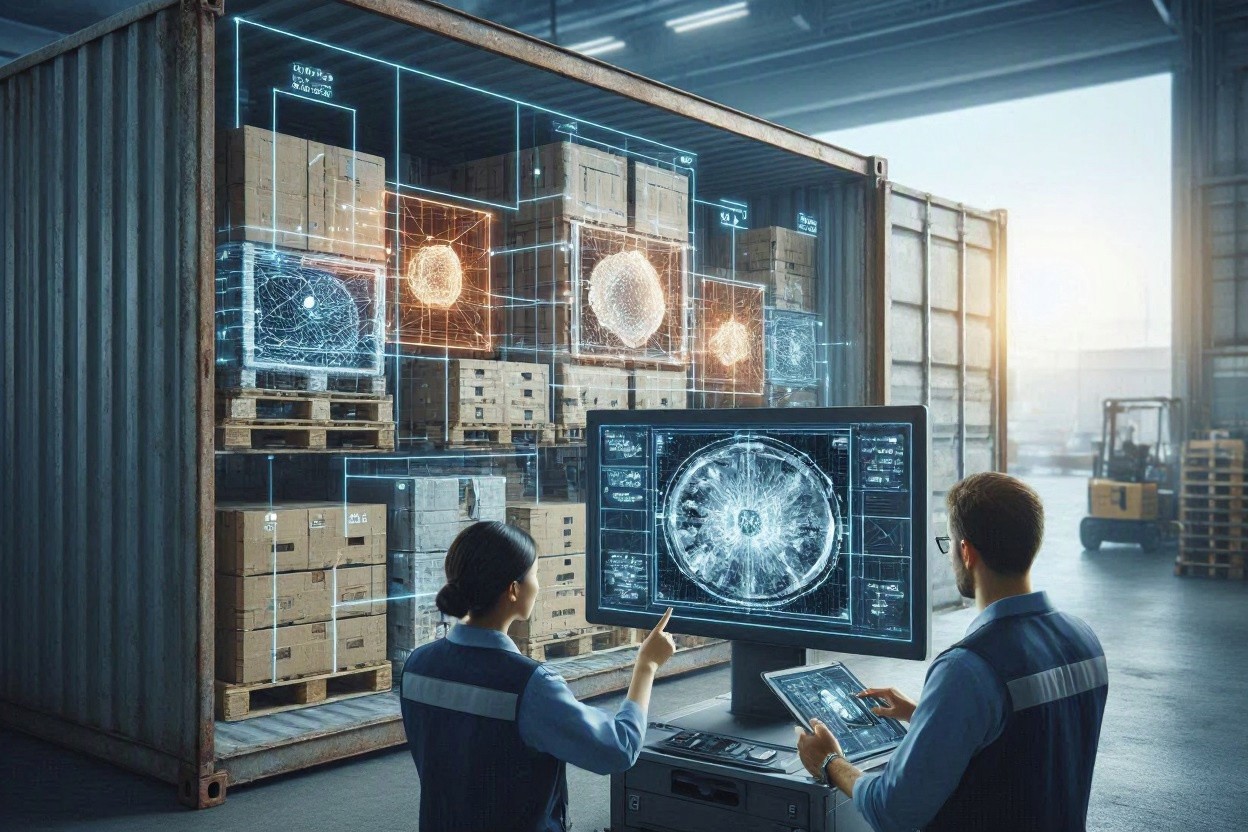
Container scans are not ordinary photographs. They show density, material composition, and object outlines through layers of packaging, pallets, machinery, or consumer goods. Neural networks, especially convolutional models, can detect shapes and density changes that suggest concealed compartments or goods placed behind legitimate cargo.
For example, if a shipment is declared as textiles but the scan shows dense metallic structures, the system can generate an alert. If a container of furniture includes hidden rectangular cavities or repeated objects inconsistent with the manifest, the model can mark those zones for closer inspection.
Combining Scan Data with Documents
The strongest systems do not rely on images alone. They compare scanner output with shipping documents, customs declarations, route history, importer records, and risk profiles. This combination helps customs officers distinguish between unusual but legal cargo and genuinely suspicious shipments.
- Declared cargo type and weight can be compared with scan density.
- Container route and transshipment points can affect risk scoring.
- Past compliance records can help prioritize inspections.
- Image anomalies can be matched against known concealment methods.
Benefits for Customs Officers
Neural networks do not replace customs officers. They support decision-making by reducing the volume of routine image analysis and highlighting containers that deserve attention. This is especially valuable in busy ports where thousands of containers may arrive in a single day.
Faster Screening
Manual review of every scan is time-consuming. AI can pre-screen images in seconds and rank containers by risk level. Officers can then focus on the most suspicious shipments instead of spending equal time on low-risk cargo. This improves throughput while maintaining security.
More Consistent Detection
Human performance can vary because of fatigue, workload, lighting conditions, or the complexity of a scan. A trained neural network applies the same analytical criteria to every image. While final decisions remain with trained personnel, AI provides a consistent second layer of review.
Better Use of Inspection Resources
Physical inspections require time, labor, specialized equipment, and space. Opening a container can disrupt supply chains and create costs for operators. By improving targeting, neural networks help authorities choose inspections more carefully and reduce unnecessary delays for compliant businesses.
What the Technology Can Detect
A neural network can be trained to identify many types of suspicious indicators. Its effectiveness depends on data quality, scanner resolution, model design, and the expertise of the customs agency using it.
- Hidden compartments inside walls, floors, machinery, or packaging.
- Objects with density or shape inconsistent with declared goods.
- Unusual voids, shielding materials, or repeated concealed patterns.
- Potential narcotics, weapons, cash, counterfeit goods, or restricted items.
- Discrepancies between cargo weight, image structure, and documentation.
Challenges and Limitations
AI-based inspection is powerful, but it is not flawless. False positives can occur when legal goods look unusual. False negatives are also possible if smugglers use methods not represented in training data. For this reason, customs agencies must treat neural networks as decision-support tools, not automatic enforcement systems.
Another challenge is data governance. Container scans and trade documents may contain sensitive commercial information. Agencies must protect this data, control access, and comply with legal standards. Model transparency is also important, because officers need to understand why a shipment was flagged.
The Future of AI in Border Security
As global trade grows, customs services need technologies that combine speed with accuracy. Neural networks will likely become more integrated with port management systems, risk assessment platforms, and real-time intelligence databases. Future models may also learn from international case data, enabling faster recognition of emerging smuggling tactics.
The most effective approach will remain a partnership between technology and human expertise. AI can process scans, compare records, and identify anomalies at scale. Customs officers bring judgment, legal authority, investigative experience, and contextual understanding. Together, they can detect concealed cargo more efficiently while keeping legitimate trade moving.