
In recent years, there has been a significant advancement in the field of Artificial Intelligence (AI) and Augmented Reality (AR). These technologies have become increasingly popular and have the potential to enhance virtual experiences in various fields such as gaming, education, healthcare, and...
A Neural Network Helps Drone Operators Avoid Unexpected Obstacles
181
09.07.2026
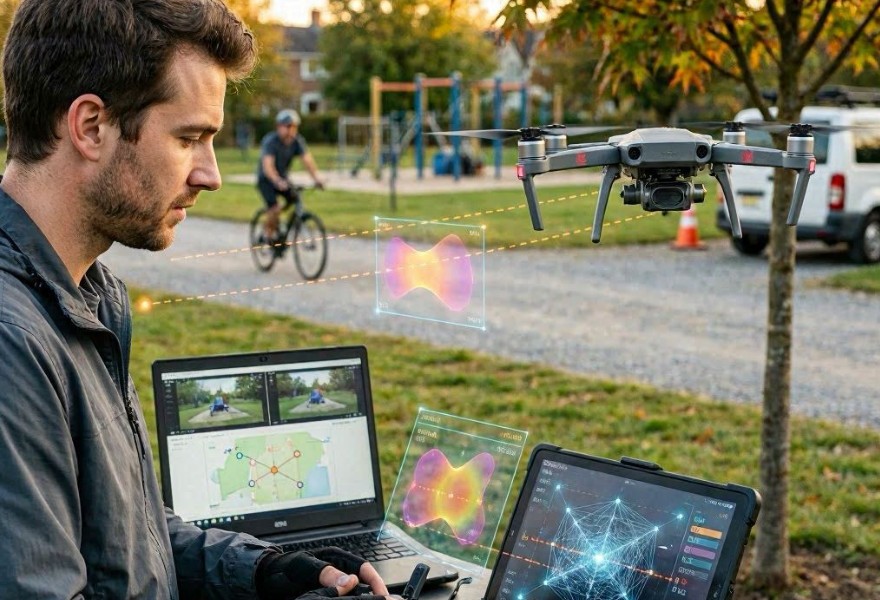
The rise of unmanned aerial vehicles (UAVs) has transformed industries ranging from agriculture and search-and-rescue to filmmaking and infrastructure inspection. However, despite their increasing autonomy, drones remain vulnerable to the chaotic reality of the physical world. Unexpected obstacles—such as sudden gusts of wind pushing a drone toward a power line, a bird strike, or hidden overhead wiring—pose significant risks to equipment and safety. To address these challenges, engineers have turned to neural networks, creating an intelligent "co-pilot" that allows drones to detect, track, and avoid obstacles in real time, often far faster than any human operator could react.
This leap in capability is powered by deep learning architectures capable of processing visual and spatial data at the edge. By integrating neural networks into a drone’s onboard computer, we are moving beyond simple proximity sensors toward a future of truly autonomous, hazard-aware flight.
The Architecture of Spatial Awareness
The drone’s ability to "see" is not merely about capturing images; it is about understanding the 3D geometry of the environment. Neural networks enable this through a multi-layered approach to environmental perception.
Computer Vision and Semantic Segmentation
At the heart of the system is a Convolutional Neural Network (CNN) that performs semantic segmentation. This process classifies every pixel in the drone’s camera feed, identifying objects like "tree," "building," "power line," or "human." By recognizing what an object is, the drone can better determine its behavior. For example, the drone knows that a cloud is permeable and can be flown through, while a power line requires immediate evasive maneuvers.
Predictive Depth Estimation
Even with high-resolution cameras, depth perception is difficult for a single-lens system. Neural networks compensate for this by estimating depth from monocular or stereoscopic video feeds. By comparing current frames to previous ones (Optical Flow) and applying deep learning-based depth estimation, the drone creates a real-time 3D map of the space around it, identifying "dead zones" where it cannot safely fly.
Dynamic Obstacle Avoidance in Real Time
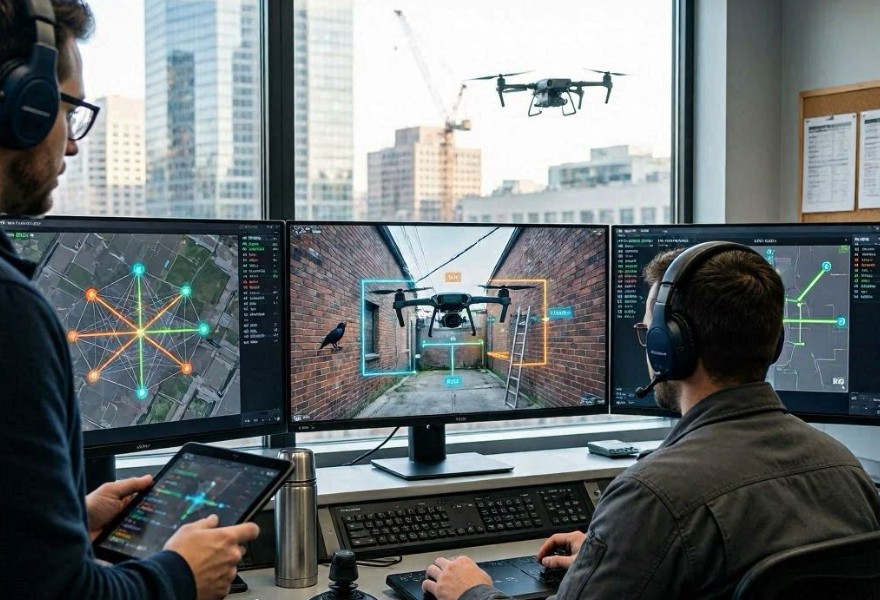
Static obstacle avoidance is relatively easy; the true challenge is avoiding *unexpected* obstacles—those that are moving or suddenly appearing in the drone's path. This is where Recurrent Neural Networks (RNNs) and transformer-based architectures excel.
Anticipatory Path Planning
The network does not just react to what it sees; it predicts where the drone should go next. By maintaining a temporal memory of the environment, the drone can "anticipate" a collision before it happens. If a bird enters the frame, the neural network calculates the bird’s trajectory and adjusts the drone’s flight path milliseconds before a potential impact.
Handling Sensor Fusion
- Lidar and Radar Integration: The neural network fuses visual data with Lidar (light detection) and radar inputs, ensuring that the drone can avoid obstacles in low-light, fog, or smoke conditions where visual cameras might fail.
- Confidence Intervals: The network assigns a "confidence score" to every identified object. If the confidence is low (e.g., in heavy rain), the drone automatically defaults to a more conservative flight mode, slowing down or hovering to re-evaluate its surroundings.
Impact on Industry and Safety
The implementation of neural-network-driven avoidance is democratizing drone usage by lowering the skill floor for operators while increasing the ceiling for safety. In professional sectors, this means fewer crashes, lower insurance premiums, and the ability to operate in more complex environments.
Key Operational Advantages
- Infrastructure Inspection: Drones can fly dangerously close to bridges or wind turbines to inspect for microscopic cracks, with the neural network acting as a safety buffer against accidental collisions.
- Search and Rescue: In disaster zones where visibility is poor and environments are structurally unsound, AI-guided drones can navigate through wreckage to find survivors without the operator needing to see every single piece of debris.
The Road to Full Autonomy
While current systems are highly effective, the goal is "level 5" drone autonomy, where a drone can perform a mission from takeoff to landing with no human intervention at all. The main hurdle remains computational efficiency; running complex neural networks requires significant power, which can drain a drone's battery. Current research is focusing on "lightweight" networks that can run on specialized mobile hardware without sacrificing accuracy.
Conclusion
Neural networks are fundamentally changing the flight characteristics of drones. By providing an intelligent layer of obstacle avoidance, we are ensuring that these powerful tools can be used with confidence even in the most unforgiving environments. As the underlying models grow faster and more compact, the line between "drones" and "intelligent aerial robots" will continue to blur, ushering in an era where the sky is not just a path, but a safely navigable space for all.