
In recent years, there has been a significant advancement in the field of Artificial Intelligence (AI) and Augmented Reality (AR). These technologies have become increasingly popular and have the potential to enhance virtual experiences in various fields such as gaming, education, healthcare, and...
A Neural Network Identifies Mineral Types Using a Smartphone Without a Lab
193
21.06.2026
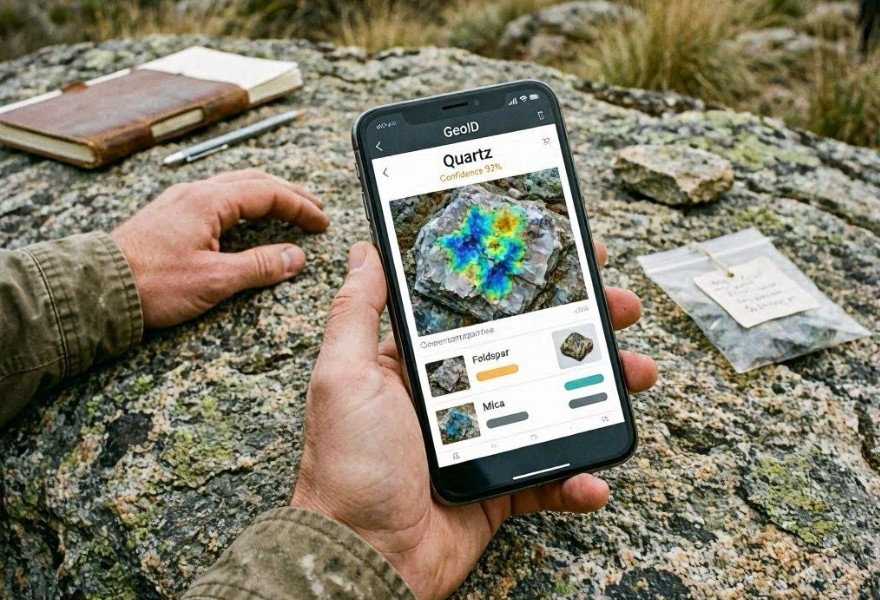
For generations, the identification of mineral samples was a task reserved for trained geologists working in specialized laboratory environments. To distinguish between look-alike minerals, experts relied on expensive equipment like X-ray diffraction (XRD) analyzers, mass spectrometers, or time-consuming chemical titration tests. These methods, while highly accurate, are geographically limiting—a field researcher must collect samples, transport them, and wait days or even weeks for results. This slow feedback loop has long been a bottleneck in geological exploration, mining, and educational field research.
The landscape of mineralogy is currently undergoing a radical transformation. With the advent of sophisticated computer vision and deep learning models, a new generation of mobile applications allows users to identify mineral types instantly using only a smartphone camera. This breakthrough leverages the processing power of neural networks to bring laboratory-grade analytical capabilities directly into the hands of amateurs and professionals alike, anywhere in the world.
The Technology Behind the Lens
The ability of a smartphone to perform complex geological identification rests on the integration of convolutional neural networks (CNNs) and high-resolution imaging. A neural network is a form of artificial intelligence that mimics the human brain’s ability to recognize patterns. By being fed tens of thousands of labeled images of known minerals under varying light conditions, the model learns the intricate visual markers that define a specific crystal structure.
Pattern Recognition in Crystalline Structures
A smartphone-based neural network analyzes several key visual features simultaneously to determine a mineral's identity:
- Color and Luster: The algorithm differentiates between subtle variations in color, such as the specific hue of a copper-based mineral compared to iron-stained quartz.
- Crystal Habit and Cleavage: It recognizes the geometric shapes—whether cubic, hexagonal, or massive—and the way the mineral fractures.
- Reflectivity and Transparency: By analyzing how light bounces off the mineral surface, the AI determines the specimen's mineralogical class.
[Image of convolutional neural network architecture for image classification]
Overcoming Field Challenges
Fieldwork presents significant obstacles that do not exist in the sterile environment of a laboratory. Variable lighting, dirt on the sample, and background noise are all factors that could easily confuse a simpler algorithm. However, modern neural networks are trained with "noise augmentation," meaning they are exposed to messy, poorly lit, and partially obscured images during their training phase. This robustness allows the AI to perform reliably even when the user is standing in a dusty pit under the harsh midday sun.
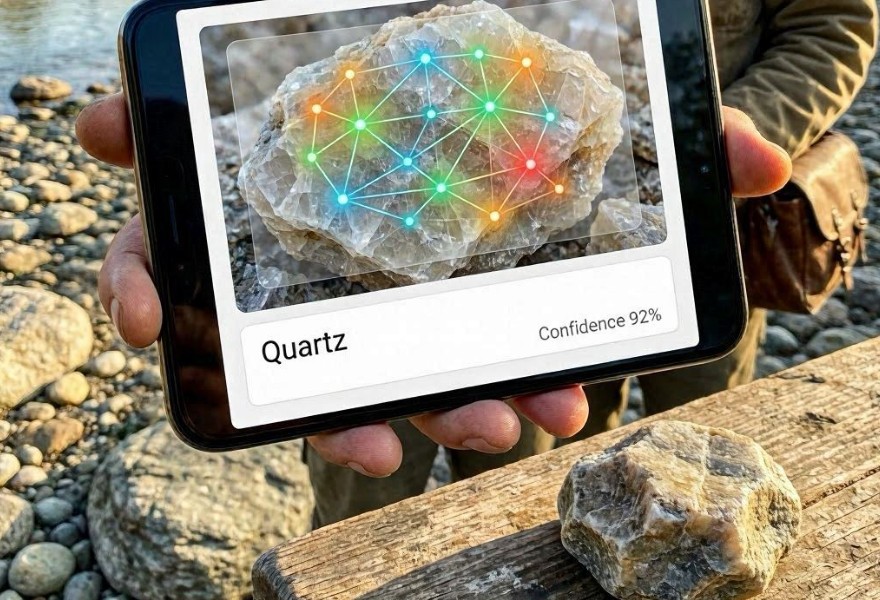
Augmented Reality and Real-Time Feedback
The user experience is designed for seamless operation. As the user points their camera at a rock, the neural network continuously runs a classification loop. It provides an immediate, real-time probability score for the mineral type. If the AI is uncertain, it may prompt the user to change the angle or clean the surface of the sample, acting much like a digital geological mentor.
Democratizing Geology and Resource Exploration
The implications of lab-free identification are profound, particularly for resource-constrained environments. Small-scale miners in developing nations can now gain immediate insight into the value of the rocks they extract, preventing exploitation. Additionally, this technology is a powerful educational tool. Students in remote schools can explore their local geography with the same technological advantages as professional researchers, fostering a new generation of geoscientists.
Limitations and Future Outlook
While neural networks are incredibly powerful, they are not yet a complete replacement for wet-chemistry labs. Current models can struggle with minerals that share identical chemical compositions but differ in trace element concentration, or specimens that are deeply weathered. However, the field is evolving quickly. Researchers are currently working on integrating smartphone-mounted multispectral sensors, which will allow the AI to "see" beyond the visible light spectrum, further increasing identification accuracy.
Conclusion
The integration of neural networks into smartphone technology marks the end of the era where geological analysis was tethered to the laboratory bench. By digitizing the expertise of veteran mineralogists and condensing it into an app, we have made the secrets of the Earth’s crust accessible to everyone. While the technology will continue to mature, it already stands as a testament to how artificial intelligence can bridge the gap between complex science and practical, real-world utility.