

In recent years, there has been a significant advancement in the field of Artificial Intelligence (AI) and Augmented Reality (AR). These technologies have become increasingly popular and have the potential to enhance virtual experiences in various fields such as gaming, education, healthcare, and...
A Neural Network Predicts Forest Fires by Measuring Moss Humidity
194
22.05.2026
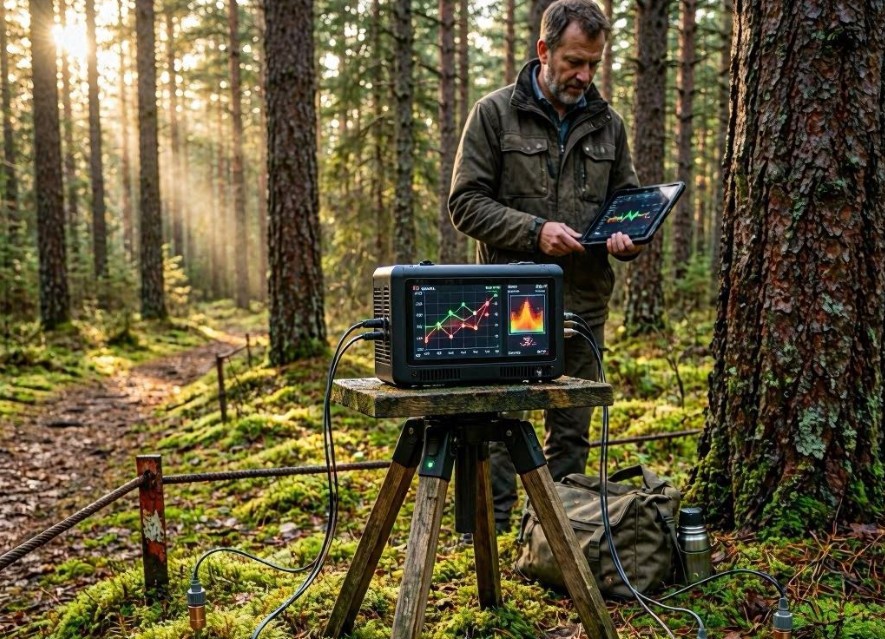
Why forest fires are difficult to predict
Wildfires depend on a complex combination of factors: temperature, wind, vegetation type, soil dryness, and long-term climate patterns. Traditional fire risk models often rely on weather data alone, which may not capture micro-level conditions in forests.
One of the most sensitive natural indicators of fire risk is moisture in ground-level vegetation, especially moss.
Moss reacts quickly to changes in humidity and temperature, making it a reliable early signal of drying forest conditions.
How moss humidity becomes a predictive signal
Moss acts like a natural sponge, absorbing and releasing moisture depending on the environment. When the air becomes dry and warm, moss loses water rapidly, reflecting increased fire susceptibility in surrounding areas.
By continuously measuring moss humidity, sensors provide a real-time indicator of how flammable a forest ecosystem is becoming.
Key environmental indicators
- Moisture content in moss and ground cover
- Air temperature and relative humidity
- Wind speed and direction
- Soil dryness levels
How the neural network works
The neural network combines moss humidity readings with satellite imagery and meteorological data to predict the likelihood of fire outbreaks.
It identifies patterns that precede historical wildfire events and continuously refines its predictions using new environmental data.
Data processing stages
- Collection of sensor and satellite data
- Normalization of environmental variables
- Pattern recognition based on historical fires
- Risk scoring for specific forest zones
- Continuous model updating
Why neural networks improve fire prediction
Unlike traditional models that rely on fixed thresholds, neural networks can detect complex, nonlinear relationships between environmental variables.
This allows them to identify subtle combinations of conditions that may not appear dangerous individually but become critical together.
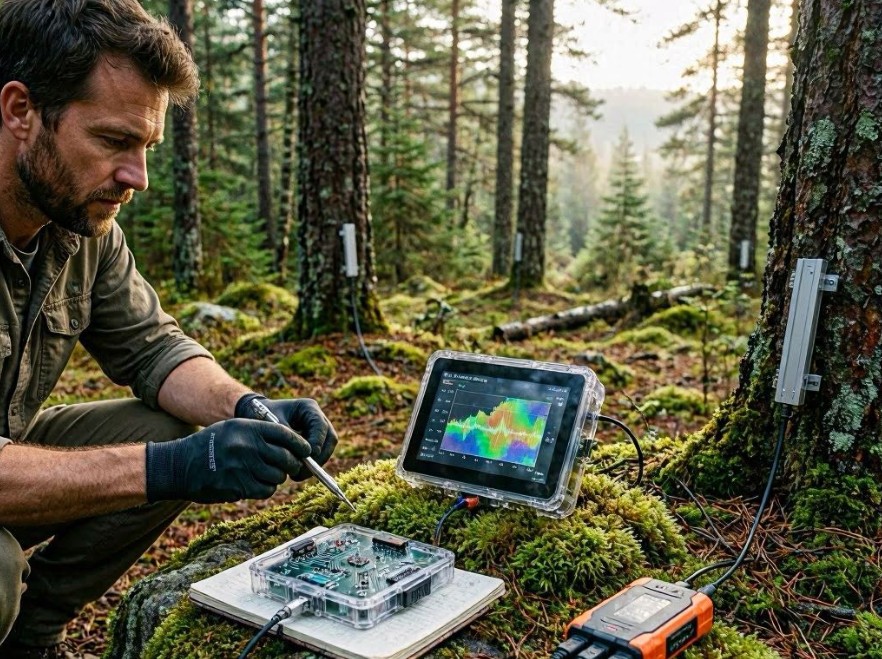
Early warning system applications
The predictions generated by the system can be used to trigger early warnings for fire services, allowing preventive measures such as controlled burns, evacuation planning, and resource allocation.
Practical uses
- Real-time wildfire risk mapping
- Early alerts for emergency services
- Monitoring remote forest regions
- Support for climate research
Advantages of moss-based prediction systems
Key benefits
- High sensitivity to microclimate changes
- Early detection of drying conditions
- Improved accuracy in forested environments
- Low-cost sensor deployment
Limitations of the approach
Sensor coverage is not always uniform, especially in remote or inaccessible forest areas. This can create gaps in data collection.
Additionally, moss humidity is only one of many factors influencing wildfire risk and must be combined with broader climate data for reliable predictions.
Future of AI-driven wildfire prevention
Future systems may integrate drone surveillance, satellite thermal imaging, and real-time atmospheric modeling to create fully automated wildfire prevention networks.
Conclusion
Neural networks that analyze moss humidity demonstrate how even subtle ecological signals can be transformed into powerful tools for predicting and preventing forest fires.