

In recent years, there has been a significant advancement in the field of Artificial Intelligence (AI) and Augmented Reality (AR). These technologies have become increasingly popular and have the potential to enhance virtual experiences in various fields such as gaming, education, healthcare, and...
A Neural Network Predicts Pest Infestations in Gardens Two Months in Advance
120
27.07.2026

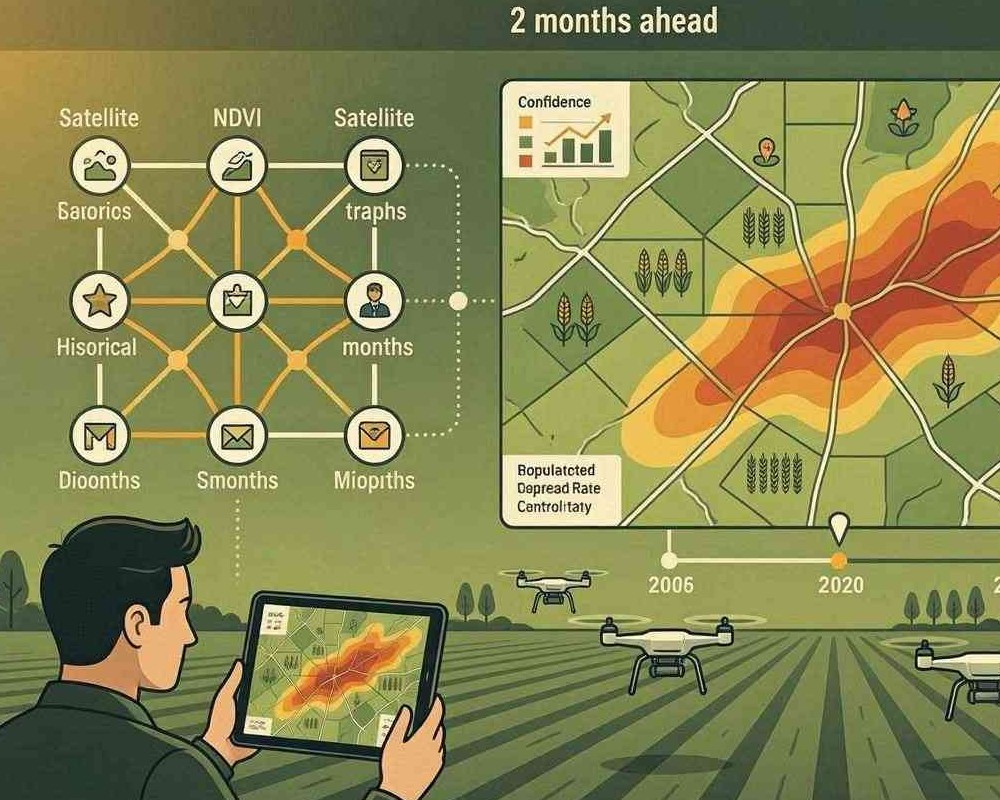
Gardeners often discover pest problems only after damage is visible. By then, eggs have hatched, larvae have fed, and control measures become more costly and less effective. A new approach-using a neural network to forecast infestations two months ahead-aims to change that timeline. Instead of reacting, growers can prepare: adjust monitoring, fine-tune irrigation, and schedule interventions when risk is highest.
Why predicting pests matters in real-world gardens
Pest outbreaks rarely appear out of nowhere. They are shaped by temperature patterns, rainfall, plant stress, and seasonal life cycles. Many pests, such as aphids, caterpillars, and certain beetles, respond quickly to favorable conditions. When those conditions emerge consistently, populations can rise rapidly.
A two-month forecasting window is particularly valuable because it gives enough time to:
- Increase scouting frequency at the right moment
- Strengthen preventive measures before egg hatching peaks
- Coordinate biological controls and compatible treatments
- Reduce unnecessary spraying by targeting high-risk periods
How a neural network makes a forward-looking forecast
The core idea is to map environmental signals and garden context to a probability of pest infestation occurring in the future. A neural network can learn complex, non-linear relationships that traditional rule-based models may miss.
Key inputs the model can use
While exact features depend on the dataset, effective pest prediction models commonly incorporate:
- Weather history (temperature, humidity, rainfall, wind)
- Seasonal indicators (day length, seasonal trends)
- Plant-related factors (crop type, growth stage, known host preferences)
- Garden conditions (soil moisture proxies, irrigation schedules)
- Past pest observations (trap counts, scouting notes, damage ratings)
Training from labeled pest outcomes
To forecast infestation two months ahead, the model must be trained on historical episodes where pest levels were recorded over time. Labels might represent whether infestation reached a threshold (for example, “high risk” versus “low risk”) during the target future window. During training, the network learns patterns linking earlier conditions to later outcomes.
After training, it can evaluate new garden data and output a risk score. Gardens with higher scores can be treated as priority zones for monitoring and intervention.
Turning predictions into practical actions
A forecast is only useful if it guides decisions. The most effective strategy combines the model’s predictions with integrated pest management (IPM) principles. The goal is to intervene early and proportionally, not to chase every signal.
Recommended workflow for gardeners
- Set a scouting schedule based on risk: increase checks during weeks when the forecasted probability rises.
- Use targeted diagnostics: verify pest presence with trap counts, leaf inspections, or pheromone lures rather than visual guessing.
- Match control measures to timing: apply controls when they align with vulnerable life stages (e.g., early instars).
- Record outcomes: log observations to improve future recommendations for the specific garden.
Best practices that complement the model
Even with strong predictions, garden management still matters. Healthy plants and stable watering reduce stress that can make infestations worse. Maintaining diversity, supporting beneficial insects, and removing heavily infested material can all improve outcomes while the model helps time the efforts.
Benefits and limitations to keep in mind
Early prediction can deliver measurable benefits: fewer surprises, more efficient use of treatments, and improved compatibility with biological controls. However, the model’s accuracy depends on data quality and local representativeness. Microclimates, unusual weather events, and changes in garden practices can shift pest dynamics beyond historical patterns.
For best results, treat the forecast as a decision-support tool. Validate with on-the-ground scouting and adjust strategies when actual observations diverge from the predicted risk.
The future of pest prediction for home and commercial growers
As more sensors, standardized scouting data, and weather integrations become available, neural networks can become more precise at neighborhood and even plot level. In the long term, the most impactful systems will likely personalize predictions by integrating your crop choices, planting dates, and prior infestation history.
For gardeners, that means fewer reactive problems and more planned, informed pest management—moving from “catch it when it’s too late” to “prevent it before it spreads.”