

In recent years, there has been a significant advancement in the field of Artificial Intelligence (AI) and Augmented Reality (AR). These technologies have become increasingly popular and have the potential to enhance virtual experiences in various fields such as gaming, education, healthcare, and...
A Program Automatically Detects Conflicts of Interest in Government Procurement
1
30.09.2026
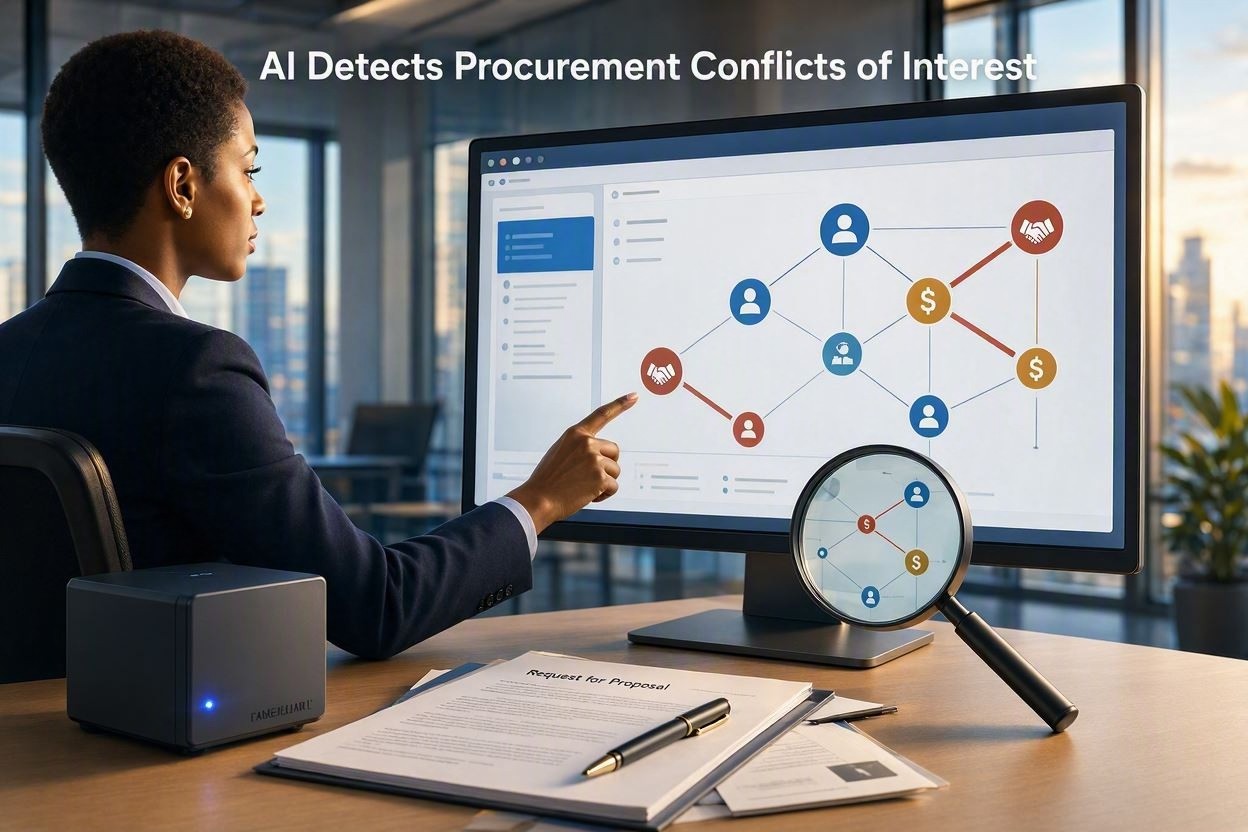
Government procurement involves large budgets, complex procedures, and multiple stakeholders. When a public official has a hidden connection to a supplier, the result can be unfair competition, inflated prices, or misuse of public funds. To reduce these risks, public institutions are increasingly using software that automatically detects conflicts of interest in government procurement before contracts are awarded.
Such a program does not replace auditors, lawyers, or procurement officers. Instead, it gives them a faster and more reliable way to identify suspicious links, prioritize checks, and document compliance decisions. In an environment where thousands of tenders may be published every year, automation can make integrity controls more practical and consistent.
How Automated Conflict Detection Works
An automated conflict detection system compares procurement data with information from corporate registries, tax databases, asset declarations, beneficial ownership records, sanctions lists, and previous contract histories. The program looks for patterns that may indicate a personal, financial, or organizational connection between decision-makers and bidders.
Data Sources Used by the Program
The quality of detection depends heavily on the quality of the data. A strong system may analyze several categories of information, including:
- Names of company founders, directors, shareholders, and beneficial owners
- Public officials involved in procurement planning, evaluation, or approval
- Family ties, employment history, and declared assets where legally available
- Past contracts, repeated awards, bid prices, and tender participation patterns
- Addresses, phone numbers, bank details, and other identifiers that may link entities
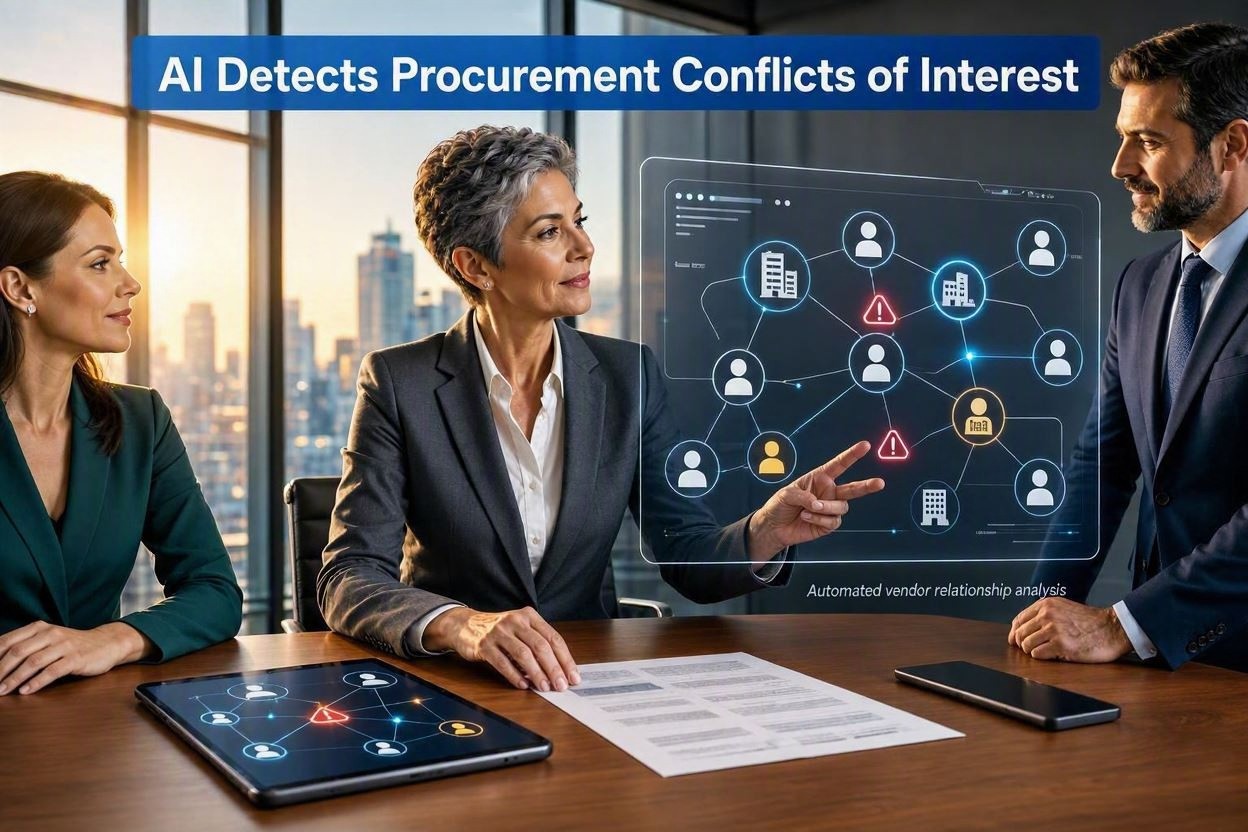
By combining these datasets, the program can reveal connections that would be difficult to notice manually. For example, it may identify that a bidder is owned by a relative of a procurement committee member, or that two competing companies share the same registered address and management structure.
Risk Scoring and Alerts
Most systems do not simply label a case as corrupt. Instead, they generate risk scores. A low score may indicate no obvious issue, while a high score signals that the tender should be reviewed by a compliance specialist. This approach helps avoid unnecessary delays while still focusing attention on the most serious risks.
Why Conflict Detection Matters in Public Procurement
Conflicts of interest do not always mean that a crime has occurred. However, even the appearance of favoritism can damage public trust. When suppliers believe that procurement decisions are influenced by personal relationships, fewer companies participate in tenders. Reduced competition often leads to higher prices and lower quality.
Automated monitoring supports transparency by creating a documented, repeatable process. Instead of relying only on complaints or random inspections, authorities can screen every tender using the same criteria. This makes enforcement more objective and helps procurement teams prove that they took reasonable steps to prevent abuse.
Key Benefits for Government Agencies
Faster Review of Large Procurement Volumes
Manual checks are time-consuming, especially in national or regional procurement systems where thousands of contracts are processed. A program can scan records in seconds and highlight cases that require human review. This saves staff time and reduces the risk that important warning signs will be missed.
Better Compliance and Audit Readiness
Automated tools create a trail of alerts, checks, decisions, and supporting evidence. This is valuable during internal audits, external inspections, or investigations. Agencies can show when a risk was detected, who reviewed it, and what action was taken.
Stronger Public Trust
When citizens see that procurement is monitored systematically, confidence in public spending improves. Transparent conflict detection also protects honest officials and suppliers by separating legitimate competition from suspicious behavior.
Challenges and Limitations
Although automated conflict detection is powerful, it has limitations. Incomplete registries, outdated ownership records, spelling variations, and missing declarations can reduce accuracy. The system may also produce false positives, where a connection appears suspicious but has a lawful explanation.
For this reason, the program should be treated as a decision-support tool, not as a final judge. Human experts must verify alerts, consider legal context, and decide whether recusal, additional disclosure, tender suspension, or investigation is necessary.
Best Practices for Implementation
To make automated conflict detection effective, public agencies should follow a structured approach:
- Define clear legal criteria for conflicts of interest and related-party risks.
- Connect the system to reliable and regularly updated data sources.
- Use transparent risk indicators that can be explained to auditors and suppliers.
- Protect personal data through lawful access controls and retention policies.
- Train procurement officers to interpret alerts and document decisions.
The Future of Transparent Procurement
As procurement systems become more digital, automated conflict detection will become a standard integrity tool. Advanced programs may use machine learning to identify unusual bidding behavior, hidden ownership networks, and repeated patterns of favoritism. However, the strongest results will come from combining technology with clear rules, accountable institutions, and professional oversight.
A program that automatically detects conflicts of interest in government procurement is not just a technical innovation. It is a practical mechanism for protecting public money, encouraging fair competition, and strengthening trust in government decisions.