In recent years, there has been a significant advancement in the field of Artificial Intelligence (AI) and Augmented Reality (AR). These technologies have become increasingly popular and have the potential to enhance virtual experiences in various fields such as gaming, education, healthcare, and...
A Program Creates Narrated Museum Guides in Any Language
23
26.08.2026
Museums often welcome visitors from around the world, yet their interpretation remains limited to a few major languages. Producing professional audio guides traditionally requires translators, editors, voice actors, recording studios, and repeated updates. A new generation of language technology can simplify that process by converting approved museum content into narrated guides in almost any language.
How the Multilingual Guide Program Works
The program begins with reliable source material supplied by curators. This may include catalog records, exhibition labels, scholarly notes, artist biographies, or an existing tour script. Natural language processing tools organize the information, identify essential facts, and adapt the text for spoken delivery. The resulting script is translated and narrated with a synthetic voice.
Content Is Adapted for Listening
A wall label does not automatically make an effective audio guide. Visitors need clear descriptions, short sentences, useful transitions, and enough time to observe an object. The software can restructure dense academic writing while preserving names, dates, cultural context, and specialist terminology. Museums can also create versions for children, general audiences, or expert visitors.
Translation and Narration Are Connected
Instead of treating translation and recording as separate tasks, the system manages them within one workflow. After producing a translated script, it generates speech with suitable pronunciation, pacing, and pauses. Curators or native-language reviewers can revise individual passages before publication. If an exhibit changes, staff can update one section without recording the entire tour again.
Why Museums Need Flexible Language Support
Printed translations are expensive to maintain and provide limited space for interpretation. Human-recorded tours offer a richer experience but may be practical only in languages spoken by large visitor groups. Automated production reduces the cost and time required to serve smaller communities, international tourists, exchange students, and newly arrived residents.
A More Accessible Visitor Experience
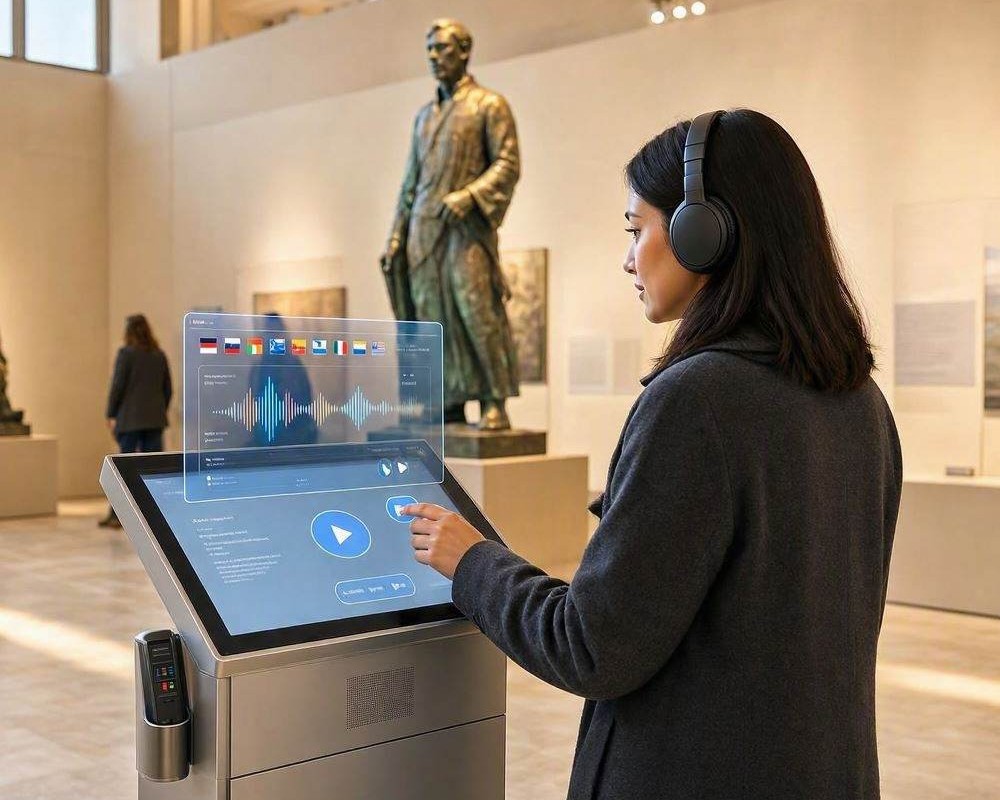
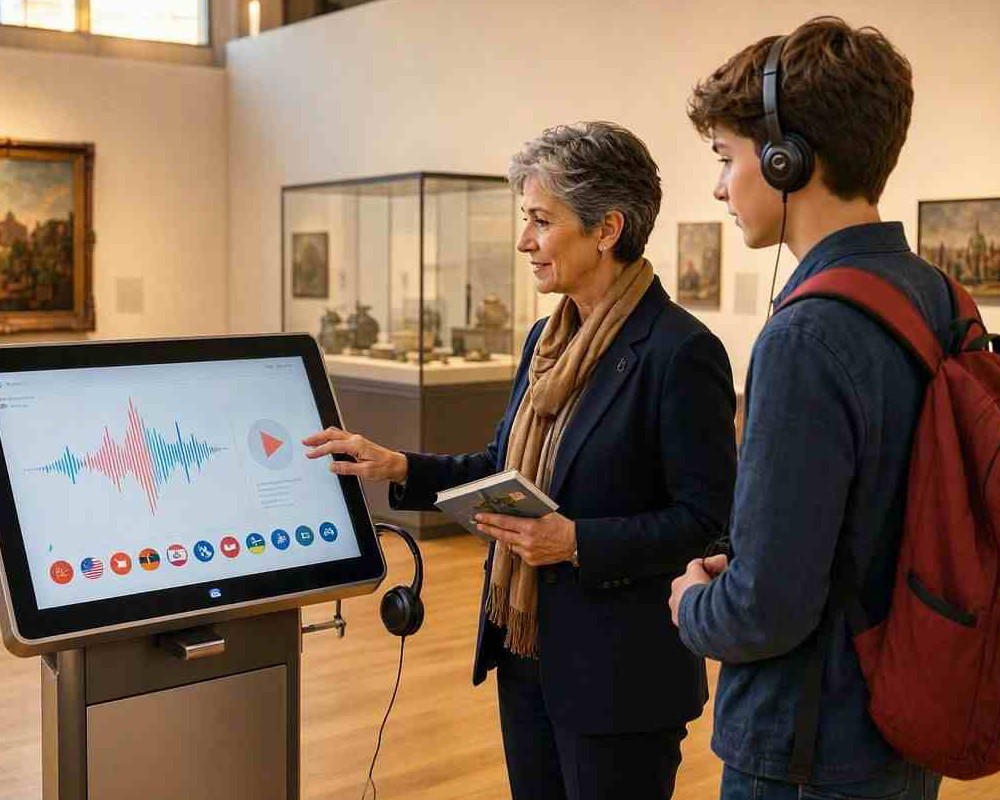
Visitors can open a guide on a museum device or scan a QR code with their own phone. They may select a language, adjust playback speed, replay a description, or read a synchronized transcript. These options can also help people with low vision, reading difficulties, or different levels of language proficiency.
Faster Updates for Changing Exhibitions
Temporary exhibitions create demanding production schedules. Labels may be revised shortly before opening, while loans and gallery layouts can change unexpectedly. A centralized program allows museums to edit the source script, approve new translations, and publish updated audio quickly. This flexibility is especially valuable for institutions with limited staff or recording budgets.
Quality Control Remains Essential
Automation does not remove the need for human expertise. Historical interpretation can involve contested language, sacred knowledge, regional identities, and names that speech systems may pronounce incorrectly. Every guide should pass through a documented review process before visitors hear it.
Recommended Review Steps
- Use curator-approved facts and clearly identify the source version.
- Ask native speakers to assess meaning, tone, grammar, and cultural sensitivity.
- Verify pronunciations of people, places, artworks, and Indigenous terms.
- Test audio in galleries where noise and connectivity may affect listening.
- Provide a simple way for visitors to report errors or unclear passages.
Practical Benefits for Museum Teams
A multilingual guide platform can create a reusable content system rather than a collection of disconnected recordings. Staff can track revisions, maintain consistent terminology, and distribute the same approved material across mobile guides, websites, kiosks, and accessibility tools. Analytics may also reveal which languages and exhibits receive the most engagement, helping teams plan future interpretation.
Technology That Supports, Not Replaces, Curators
The strongest model combines automated speed with professional oversight. The program handles repetitive production tasks, while curators, translators, educators, and community representatives protect accuracy and meaning. Museums should also explain when voices are synthetic and follow privacy rules if the service collects visitor data.
When implemented responsibly, narrated guides in many languages can make collections more understandable and welcoming. The technology gives even small museums a practical way to share local history, art, and science with a wider audience without sacrificing editorial control.