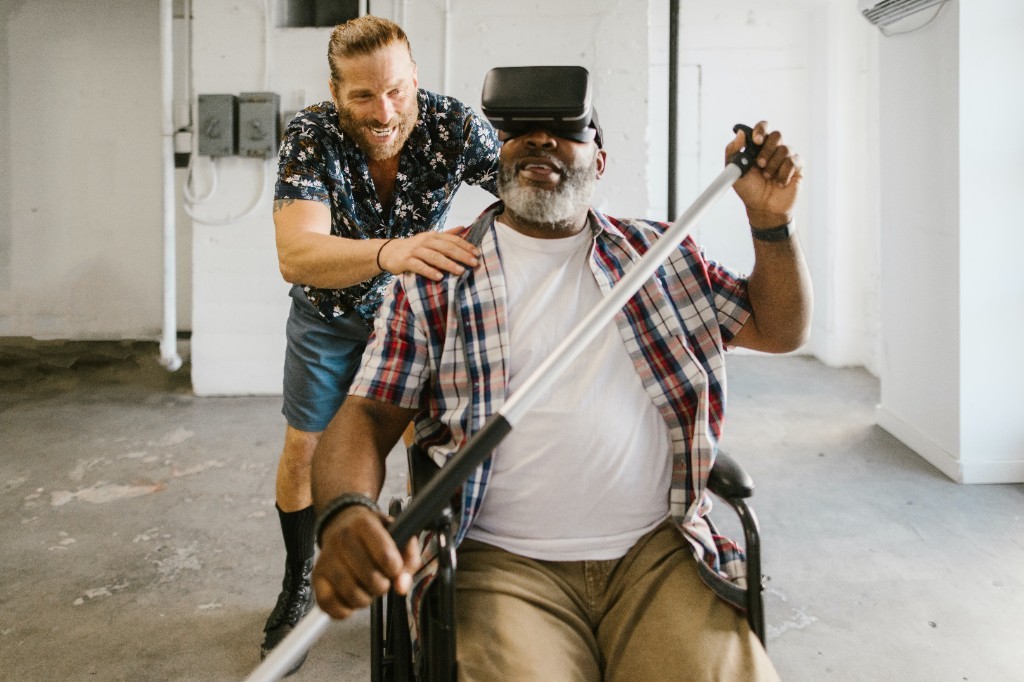

In recent years, there has been a significant advancement in the field of Artificial Intelligence (AI) and Augmented Reality (AR). These technologies have become increasingly popular and have the potential to enhance virtual experiences in various fields such as gaming, education, healthcare, and...
A Program Creates Virtual Patient Twins for Drug Testing
23
27.08.2026
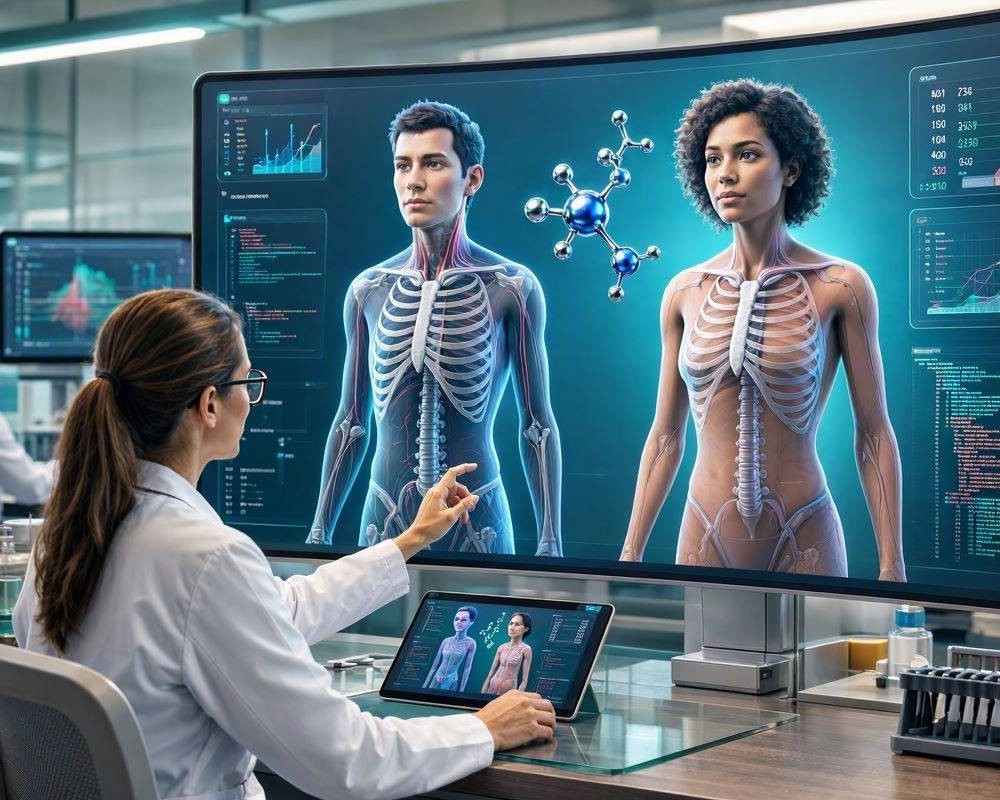
A new generation of medical software is changing how researchers evaluate experimental drugs. Instead of relying exclusively on laboratory models and human volunteers, the program creates virtual patient twins: detailed computational representations of real or hypothetical patients. Researchers can use these digital models to simulate treatment responses, compare doses, and identify potential safety concerns before or during a clinical trial. The technology could make drug development faster and more precise, although it does not eliminate the need for carefully controlled human studies.
What Is a Virtual Patient Twin?
A virtual patient twin is a dynamic computer model designed to reproduce relevant aspects of a person’s biology. Depending on the program and its intended use, the model may include age, sex, body weight, genetic markers, laboratory results, medical history, organ function, and current medications.
Unlike a static patient record, a virtual twin can estimate how biological measurements may change over time. The program applies mathematical models, clinical evidence, and machine learning to predict how a drug is absorbed, distributed, metabolized, and removed from the body.
Data Used to Build the Model
Creating a reliable twin requires high-quality information from several sources. These may include electronic health records, medical imaging, genomic tests, wearable devices, clinical trial databases, and published pharmacology research. The software integrates these inputs to produce a model tailored to a disease, treatment, or research question.
How Drug Simulations Work
Researchers can give the virtual patient a simulated dose and observe the predicted outcome. They may test different schedules, drug combinations, or treatment durations without exposing a person to immediate risk. Thousands of twins can also form a virtual population representing differences in age, ethnicity, disease severity, or genetic background.
Potential Benefits for Drug Development
Drug development is expensive and uncertain. Many candidates fail because they lack effectiveness, produce unacceptable side effects, or behave differently across patient groups. Virtual patient programs can help research teams investigate these problems earlier.
- Safer trial planning: Simulations can highlight doses or combinations that may create unnecessary risk.
- Better participant selection: Researchers can identify biological characteristics associated with a stronger response.
- More efficient studies: Virtual control groups may supplement conventional data when scientifically and ethically appropriate.
- Personalized predictions: Models can explore why the same medicine benefits one patient but not another.
- Reduced development costs: Earlier evidence may help teams stop weak candidates before large trials begin.

Supporting Rare Disease Research
The approach may be particularly valuable for rare diseases, where recruiting enough participants is difficult. A validated virtual population could help researchers compare possible trial designs or interpret limited clinical data. However, predictions remain dependable only when the underlying disease model and patient data are sufficiently representative.
Limitations and Regulatory Challenges
A digital twin is an approximation, not a perfect biological copy. Human health is influenced by behavior, environment, social conditions, and complex molecular interactions that software may not fully capture. Poor-quality or biased training data can also generate misleading predictions, especially for underrepresented populations.
Validation Is Essential
Before simulations can influence major clinical decisions, developers must show that the program produces consistent and accurate results. Predictions should be compared with laboratory findings, historical trial data, and prospective human outcomes. Regulators also need transparent documentation explaining the model’s assumptions, intended use, uncertainty, and limitations.
Patient privacy presents another challenge. Because virtual twins may use sensitive medical and genetic information, organizations need strong consent procedures, secure data storage, restricted access, and clear policies governing secondary use.
The Future of Virtual Drug Testing
Virtual patient twins are unlikely to replace clinical trials, physicians, or real-world monitoring. Their more realistic role is to complement these methods. As biological models improve and diverse health data become available, simulations could guide dose selection, refine trial protocols, and support treatment decisions for individual patients.
The program represents an important shift toward predictive medicine. Its long-term impact will depend not only on computing power, but also on rigorous validation, responsible data governance, regulatory oversight, and honest communication about uncertainty.