
In recent years, there has been a significant advancement in the field of Artificial Intelligence (AI) and Augmented Reality (AR). These technologies have become increasingly popular and have the potential to enhance virtual experiences in various fields such as gaming, education, healthcare, and...
A Program Creates Voice Portraits of Historical Figures Based on Their Writings
179
05.07.2026
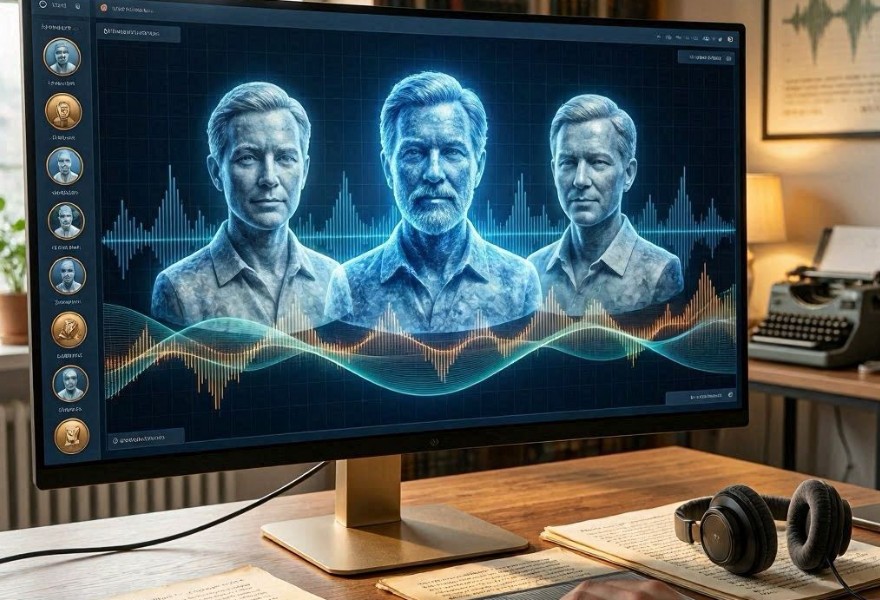
For generations, our connection to the giants of history—philosophers, scientists, poets, and statesmen—has been mediated by static text. We read their diaries, their treatises, and their letters, yet we are left to imagine the cadence of their speech, the warmth of their tone, and the unique rhythm of their delivery. History, by its very nature, is silent. However, the emergence of advanced artificial intelligence, specifically in the fields of computational linguistics and neural speech synthesis, is beginning to bridge this temporal gap. New software programs are now capable of creating "voice portraits" of historical figures, reconstructed entirely from their surviving written works.
This process is far more complex than simple text-to-speech conversion. It is a fusion of forensic historical research and cutting-edge deep learning, aimed at giving a voice back to those who have been mute for centuries. By analyzing the stylistic nuances of their writing, AI can now simulate not just what a historical figure might have said, but exactly how they would have sounded saying it.
The Methodology: Deconstructing the Written Word
To create a voice portrait, the program must first understand the "linguistic personality" of the subject. The software treats a historical figure's collected writings as a massive dataset, analyzing them for patterns that reflect not just intelligence, but the physical reality of how they spoke.
Analyzing Stylistic and Structural Markers
The AI model examines the text for several key indicators that hint at vocal delivery:
- Sentence Structure and Rhythm: Short, clipped sentences suggest a different speaking pace than long, complex, nested clauses. The AI models these patterns to determine the tempo of the simulated voice.
- Vocabulary and Emotive Punctuation: The presence of frequent rhetorical questions, exclamations, or specific archaic vocabulary gives the algorithm cues regarding the inflection and emphasis a speaker would place on certain words.
- Contextual Influence: By comparing a figure's personal letters to their public speeches, the AI identifies different "registers" of speech, allowing it to generate both an intimate, quiet voice and a resonant, authoritative one.
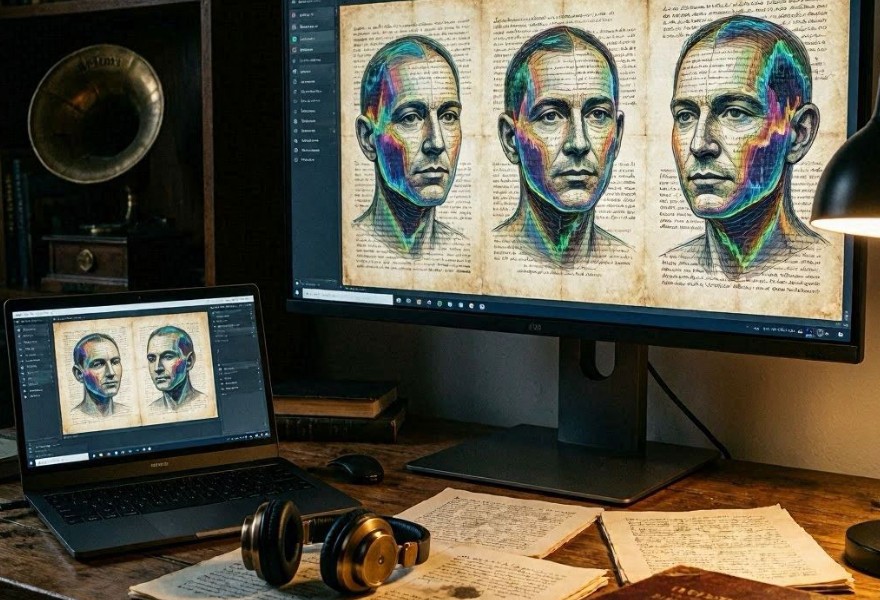
Bridging the Gap with Generative Models
Once the linguistic analysis is complete, the program uses a Generative Adversarial Network (GAN) or a similar deep learning architecture to synthesize the voice. While we lack audio recordings of figures like Jane Austen or Marcus Aurelius, the AI utilizes a technique called "voice transfer." It identifies modern speakers whose vocal anatomy and natural cadence match the historical figure’s documented physical traits (such as height, build, or era-typical accent) and modulates that speaker’s voice to align with the detected stylistic markers of the historical figure.
Adding Authenticity through Acoustic Context
- Era-Appropriate Phrasing: The model is trained on the broader lexicon of the subject's era to ensure that even the synthesized pauses and fillers sound authentic.
- Acoustic Restoration: To make the experience immersive, the output is often processed to mimic the ambient characteristics of the time—perhaps the echo of a cathedral for a cleric or the quiet scratch of a quill in a dimly lit study.
The Ethical Dimensions of Reanimation
The ability to create voice portraits carries profound ethical responsibility. When we "reanimate" a historical figure, we are inevitably making interpretative choices. There is a risk of romanticizing a person, or conversely, attributing traits to them that they never possessed. Critics argue that these AI-generated voices could distort our historical perception, transforming complex, contradictory individuals into polished, one-dimensional characters. To combat this, researchers are focused on "explainable AI," where the program explicitly cites the written sources used for each inflection or emphasis, ensuring that the voice portrait remains grounded in historical fact.
The Future of Historical Education
The educational potential for this technology is staggering. Imagine a student of literature hearing the voice of a poet reading their own work, or a history student listening to a simulated debate between two figures who never met. These voice portraits transform history from a flat, abstract record into a visceral, human experience. They invite us to engage with the past as a conversation, not just a lecture.
Conclusion
Creating voice portraits of historical figures is an ambitious project that sits at the intersection of technology and humanity. While these programs can never provide the literal, historical truth of a voice captured in the moment, they provide a powerful new way to connect with the echoes of those who shaped our world. As AI continues to refine its understanding of the human voice, we move closer to a future where history is not just something we read, but something we can truly listen to, bringing the silent past into the vibrant, vocal present.