

In recent years, there has been a significant advancement in the field of Artificial Intelligence (AI) and Augmented Reality (AR). These technologies have become increasingly popular and have the potential to enhance virtual experiences in various fields such as gaming, education, healthcare, and...
A Program Detects Anomalies in Industrial Meter Readings
33
04.10.2026
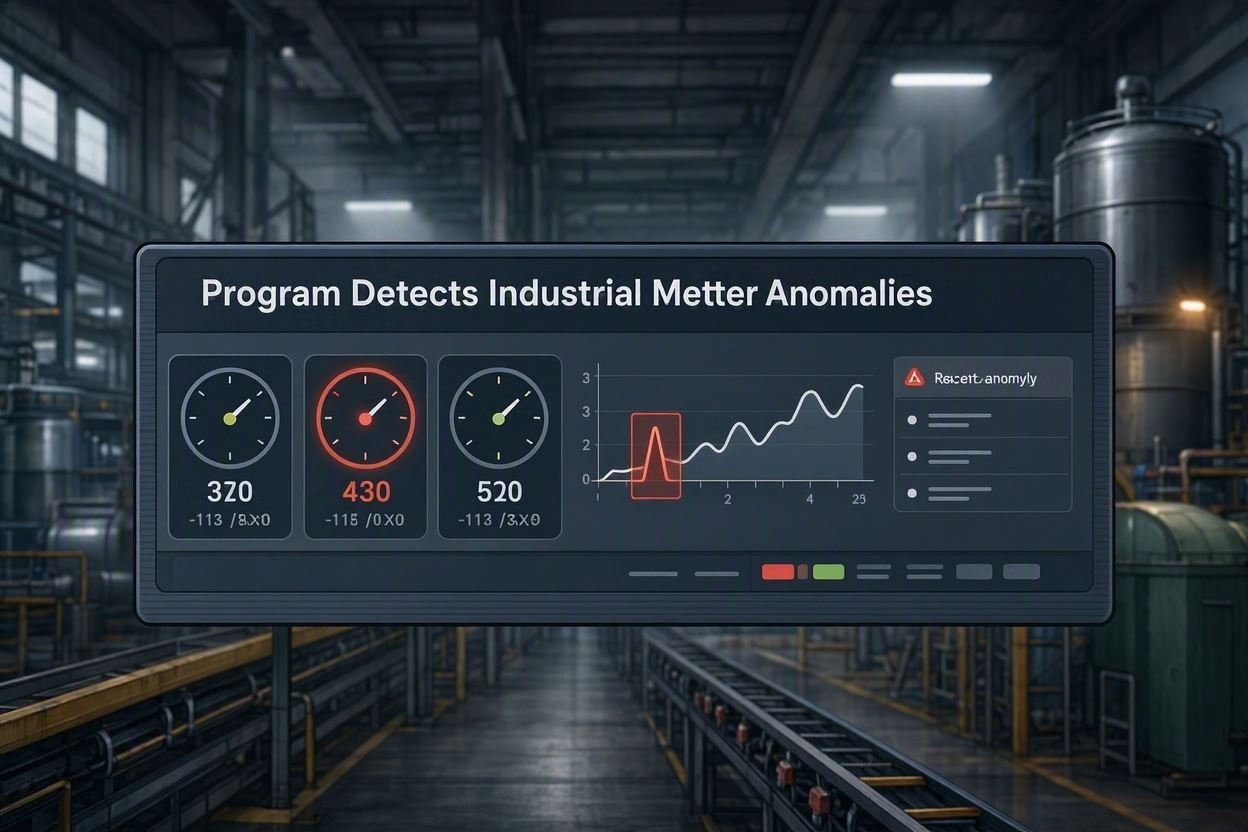
Industrial meters record the pulse of a facility: electricity demand, gas flow, steam consumption, water usage, pressure, temperature, and other critical values. When these readings shift unexpectedly, the cause may be harmless, such as a production change, or serious, such as a leaking pipe, faulty sensor, unauthorized consumption, or equipment failure. A program designed to detect anomalies in industrial meter readings helps teams identify these events early, before they become expensive incidents.
Why Industrial Meter Anomalies Matter
In large plants, utilities and process resources are consumed continuously. Even a small measurement error can distort billing, maintenance planning, emissions reporting, or energy efficiency calculations. Manual review is rarely enough because industrial meters may generate thousands or millions of data points each day.
An anomaly detection program turns raw measurements into operational intelligence. It flags unusual behavior, ranks issues by severity, and gives engineers a focused list of readings that need attention. This improves response time and reduces the risk of overlooking weak signals hidden in routine data.
Common Causes of Abnormal Readings
- Sensor drift, calibration errors, or communication failures
- Leaks in compressed air, steam, gas, or water systems
- Unexpected machine shutdowns or abnormal start-up loads
- Incorrect meter installation or reversed flow direction
- Unauthorized use, bypasses, or energy theft
- Production schedule changes not reflected in expected consumption
How the Program Works
A reliable anomaly detection solution begins with clean, time-stamped meter data. The program collects readings from supervisory systems, data historians, smart meters, IoT gateways, or enterprise platforms. It then checks data quality, removes duplicates, handles missing values, and aligns readings to a consistent interval.
Baseline Modeling
The core task is to understand what “normal” looks like. For a factory, normal consumption may depend on hour of day, day of week, product batch, weather, operating mode, or production volume. The program builds a baseline from historical patterns and updates it as conditions change.
Simple systems may use thresholds, moving averages, or statistical control limits. More advanced programs apply machine learning methods, such as regression models, clustering, isolation forests, or neural networks. The best choice depends on data volume, process complexity, and the cost of false alarms.
Real-Time Detection and Scoring
When a new reading arrives, the program compares it with the expected value. If the deviation is unusual, it assigns an anomaly score. A minor spike may be logged for trend analysis, while a critical deviation can trigger an immediate alert to operators, maintenance engineers, or energy managers.
Context is essential. A sudden electricity increase during a scheduled production ramp is not the same as a similar increase on a closed line. Effective software connects meter data with equipment status, production plans, maintenance records, and environmental information.
Key Features of an Effective Detection Program
- Automated data validation: The program should identify missing readings, frozen values, impossible measurements, and timestamp errors.
- Adaptive thresholds: Fixed limits often fail in dynamic facilities, so thresholds should adjust to seasonal and operational patterns.
- Root-cause support: Alerts should include related meters, recent events, and probable explanations.
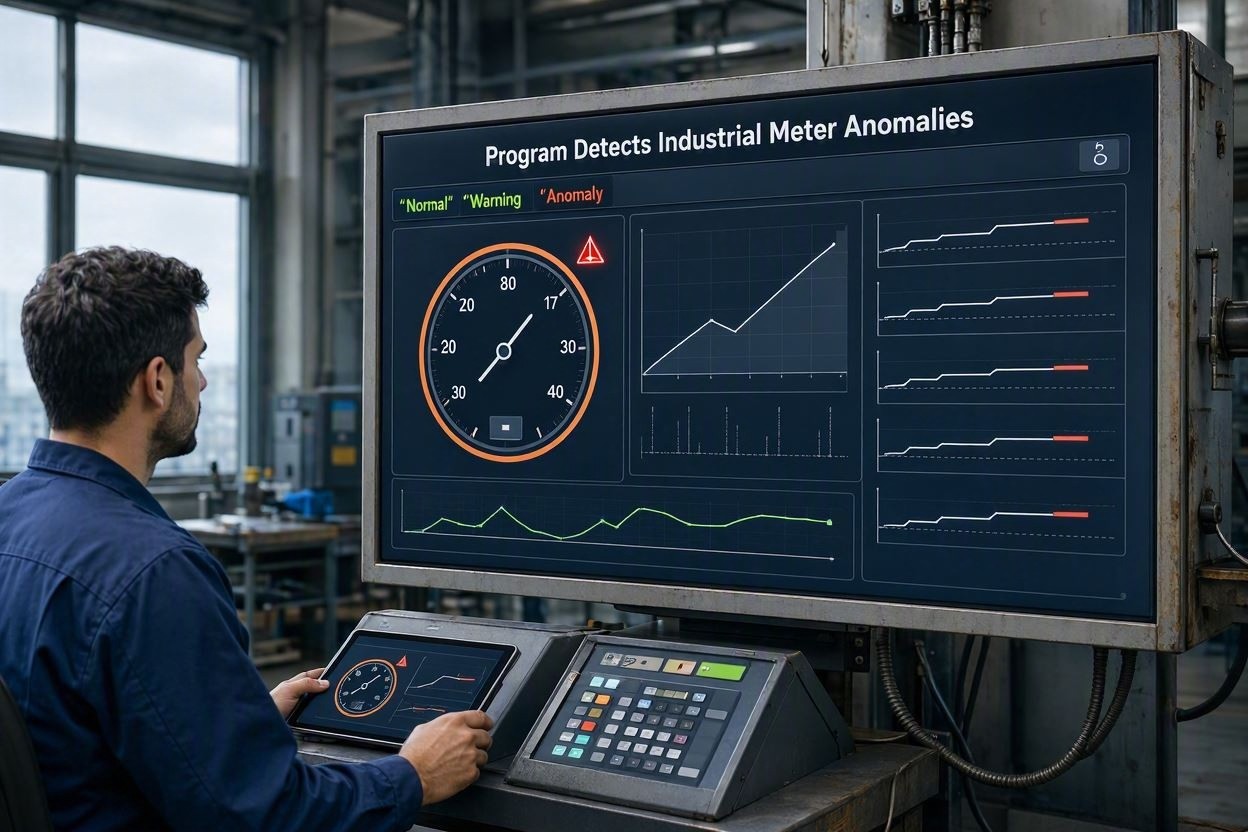
- Clear visualization: Engineers need trend charts, comparison views, and anomaly timelines to investigate quickly.
- Integration options: The system should connect with SCADA, MES, CMMS, ERP, and energy management platforms.
Business Benefits
The main value of anomaly detection is not the alert itself, but the action it enables. Early detection of abnormal steam consumption can reveal a failed trap. Unusual water flow during non-production hours may expose a leak. A sudden drop in meter output can indicate a sensor fault that would otherwise corrupt performance reports.
By improving data trust, the program supports better energy purchasing, maintenance scheduling, sustainability reporting, and operational planning. It also helps reduce waste, protect assets, and maintain compliance with internal and regulatory requirements.
Reducing False Alarms
False alarms can damage confidence in any monitoring system. To avoid alert fatigue, the program should learn from operator feedback, suppress known maintenance events, and group related anomalies into a single incident. A practical detection system must be accurate enough to be trusted and flexible enough to reflect real industrial conditions.
Implementation Best Practices
Successful deployment starts with a focused use case. Instead of monitoring every meter at once, many organizations begin with high-cost utilities or critical production lines. They define what counts as abnormal, estimate the financial impact, and involve the people who will respond to alerts.
Data governance is equally important. Meter names, units, locations, and relationships must be documented. Without this foundation, even sophisticated algorithms may produce confusing results. Regular model review also ensures that the program remains accurate as equipment, products, and operating schedules evolve.
Conclusion
A program that detects anomalies in industrial meter readings is a practical tool for modern operations. It combines data validation, statistical analysis, machine learning, and process context to identify problems faster than manual review. When implemented with clear objectives and reliable data, it helps facilities reduce losses, improve reliability, and make smarter decisions based on trustworthy measurements.