
In recent years, there has been a significant advancement in the field of Artificial Intelligence (AI) and Augmented Reality (AR). These technologies have become increasingly popular and have the potential to enhance virtual experiences in various fields such as gaming, education, healthcare, and...
A Program Detects Plagiarism in Student Papers Across Seven Languages Simultaneously
46
04.11.2026
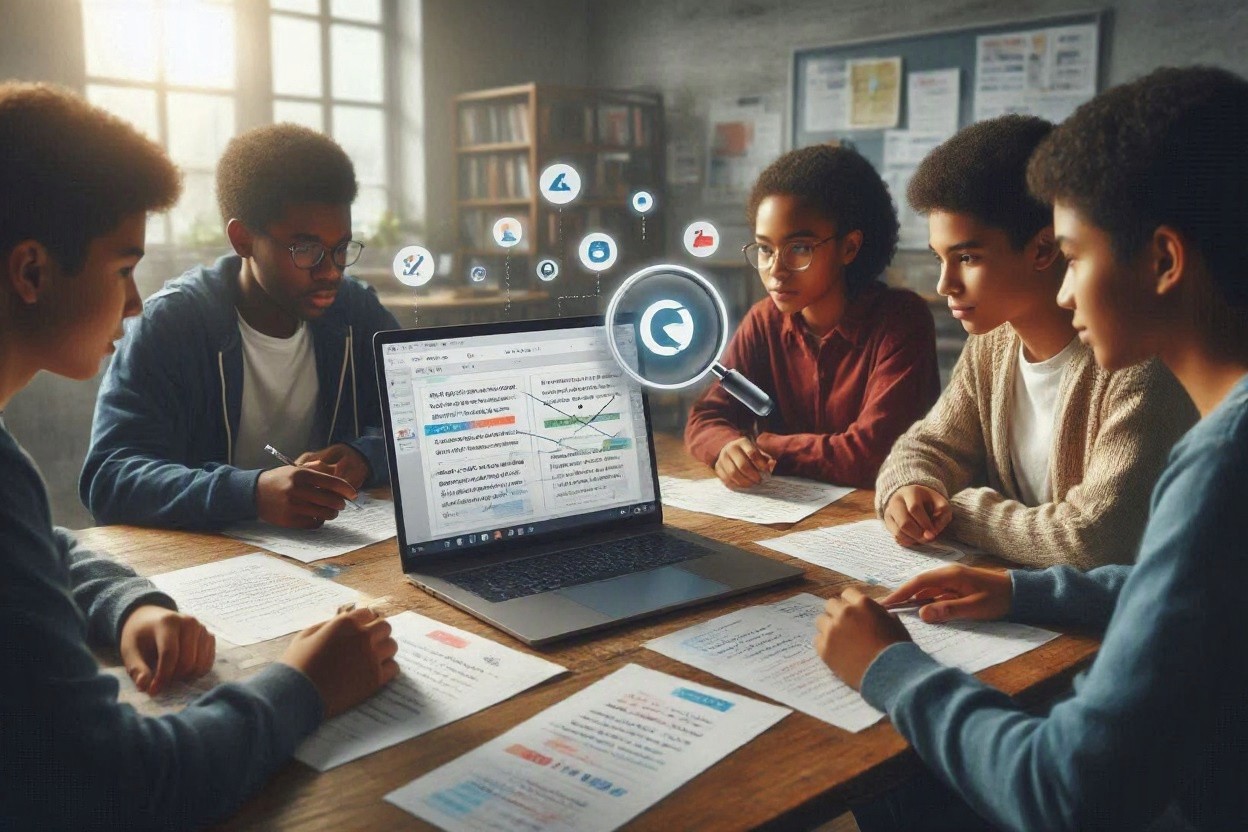
Universities increasingly receive student papers written with support from international sources, translation tools, and multilingual research databases. As a result, traditional plagiarism checkers that compare only same-language texts are no longer enough. A modern plagiarism detection program can now analyze student papers across seven languages simultaneously, helping educators identify copied, translated, paraphrased, or improperly cited content with greater accuracy.
Why Multilingual Plagiarism Detection Matters
Academic plagiarism is not limited to copying and pasting from a visible online source. A student may translate a paragraph from another language, lightly rewrite it, and present it as original work. Without cross-language analysis, this type of misconduct can remain unnoticed, especially in courses where students use foreign-language journals, websites, and digital libraries.
A multilingual plagiarism program addresses this gap by comparing meaning rather than relying only on identical wording. This is particularly valuable for universities with international students, bilingual programs, exchange courses, and research assignments that require global sources.
Common Scenarios the Program Can Detect
- Direct copying from online articles, essays, and reports in another language.
- Machine-translated passages submitted without citation.
- Paraphrased foreign-language sources that preserve the same structure and ideas.
- Repeated submission of similar papers across different courses or institutions.
- Improper use of multilingual academic databases and open-access publications.
How the Technology Works
The core of the system is semantic comparison. Instead of checking only exact word matches, the software converts text into language-independent meaning patterns. These patterns allow the program to compare a paper written in one language with sources written in another. For example, an English student essay can be compared with Spanish, French, German, Italian, Portuguese, Russian, and another supported language at the same time.
The program usually combines natural language processing, translation models, citation analysis, and database matching. It reviews sentence structure, key concepts, terminology, and the order of arguments. When suspicious overlap is found, the system highlights the relevant passages and provides a similarity report for the instructor.
What Makes Seven-Language Checking Different
Checking seven languages simultaneously saves time and reduces blind spots. An instructor does not need to run separate reports for each language or guess which source language might have been used. The software automatically searches across all supported languages in one workflow, making the review process faster and more consistent.
Benefits for Teachers and Universities
For educators, the main benefit is better evidence. A high-quality report does not simply label a paper as plagiarized; it shows where overlap appears, which sources are involved, and whether the similarity is likely to be acceptable quotation, common terminology, or problematic borrowing.
- Fairer grading: Teachers can evaluate originality using clearer data.
- Improved academic integrity: Students understand that translated copying is also detectable.
- Efficient review: Large classes can be screened without manual multilingual searching.
- Better feedback: Instructors can explain citation problems with specific examples.
- Institutional consistency: Departments can apply the same standards across programs.
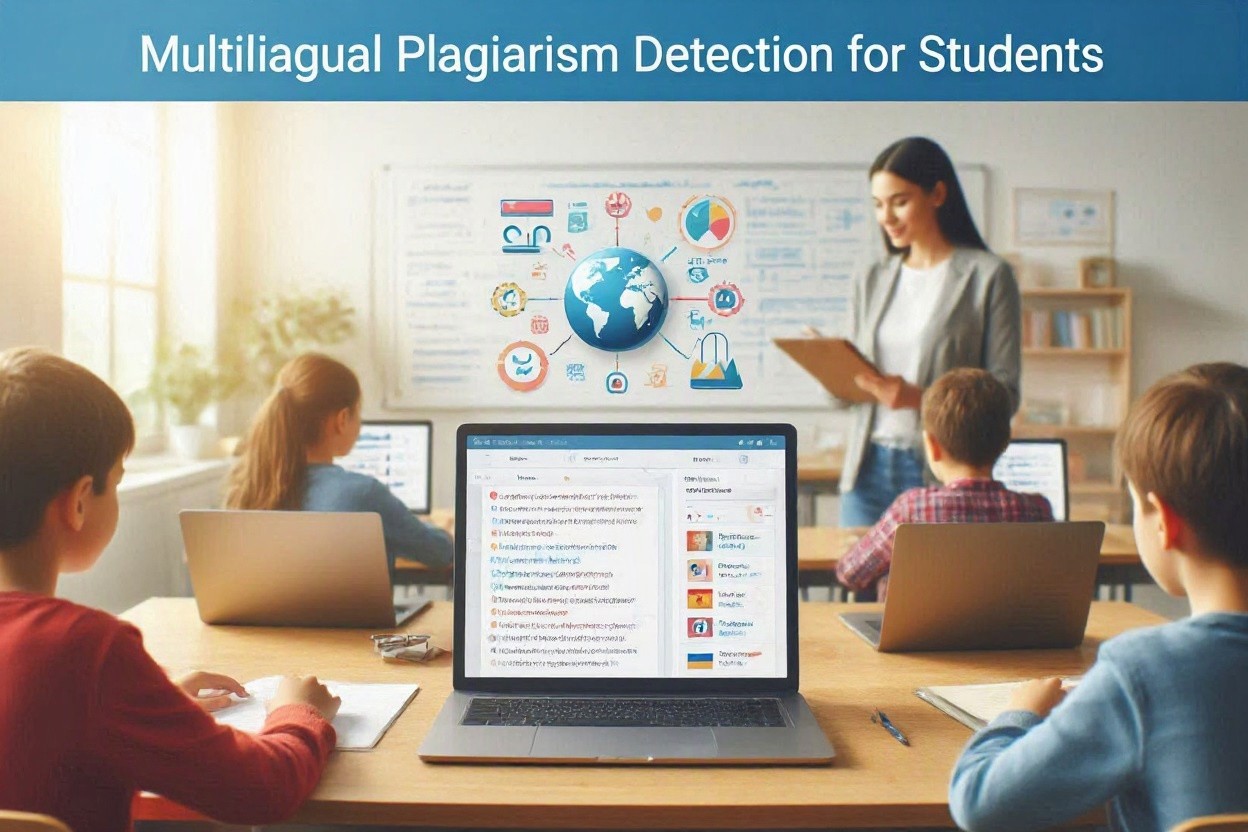
Benefits for Students
Although plagiarism detection is often viewed as a control tool, it can also support learning. Students can use similarity feedback to understand the difference between acceptable research, weak paraphrasing, and academic misconduct. When used transparently, the program encourages better note-taking, stronger citation habits, and more independent writing.
Promoting Responsible Research
Students working with sources in multiple languages may not always know how to cite translated ideas correctly. A clear report helps them see that meaning must be credited even when the wording changes. This is especially important in graduate research, where international literature is common and originality standards are strict.
Limitations Educators Should Consider
No plagiarism detection program should replace professional judgment. Similarity scores can be misleading if a paper includes technical terms, legal references, standard definitions, or properly quoted material. Cross-language matching may also produce false positives when two sources discuss the same widely known concept.
For this reason, instructors should review highlighted passages carefully. The best practice is to use the report as evidence for investigation, not as an automatic verdict. Context, assignment instructions, citation style, and student intent all matter.
Choosing the Right Program
When selecting multilingual plagiarism detection software, institutions should look beyond the number of supported languages. The quality of semantic analysis, source database coverage, privacy safeguards, report clarity, and integration with learning management systems are equally important.
A reliable program should protect student data, allow secure document storage, and provide transparent explanations of how similarity is calculated. It should also support teachers with readable reports rather than overwhelming them with raw percentages.
Conclusion
A program that detects plagiarism in student papers across seven languages simultaneously offers a practical answer to a growing academic challenge. By comparing meaning across languages, it helps uncover translated copying and poorly credited ideas that older tools might miss. Used responsibly, this technology strengthens academic integrity, supports fair assessment, and teaches students how to research ethically in a multilingual world.