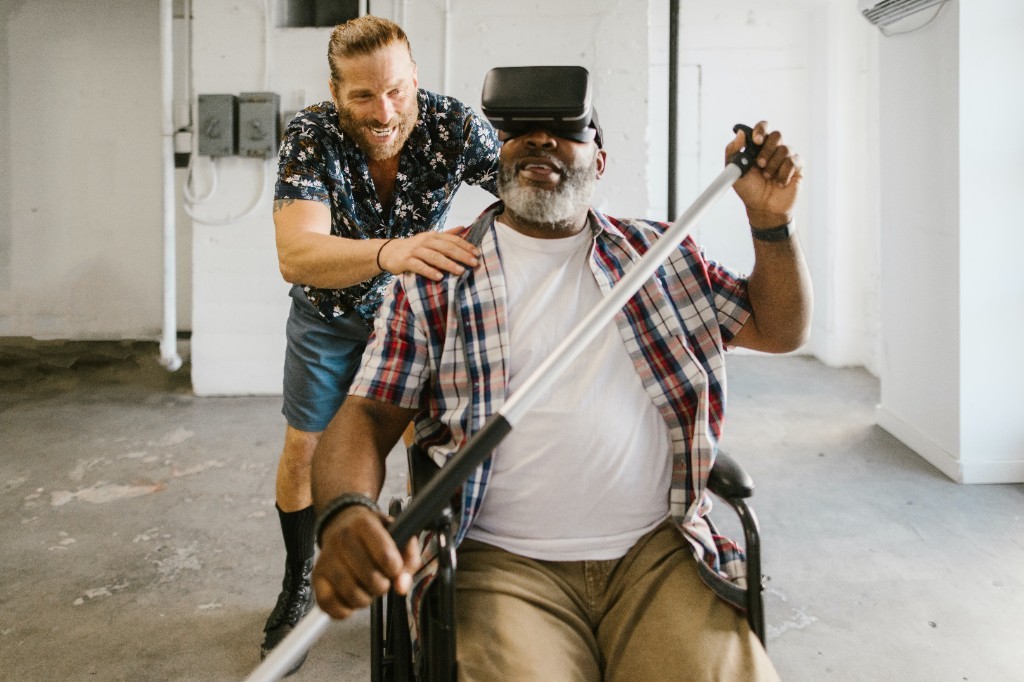

In recent years, there has been a significant advancement in the field of Artificial Intelligence (AI) and Augmented Reality (AR). These technologies have become increasingly popular and have the potential to enhance virtual experiences in various fields such as gaming, education, healthcare, and...
A Program Helps Actors Memorize Roles Through Associative Imagery
148
13.06.2026

Why memorizing scripts is challenging
Actors must often memorize large volumes of dialogue while also maintaining emotional authenticity, timing, and character consistency. Traditional memorization relies on repetition, rehearsal, and emotional interpretation.
However, long scripts can still be difficult to retain, especially when scenes are complex or non-linear.
This creates demand for tools that support faster and more durable memory formation.
What associative imagery means in memorization
Associative imagery is a cognitive technique where abstract information—such as lines of dialogue—is linked to vivid mental images. These images act as memory anchors, making recall easier during performance.
The more emotionally or visually distinctive the association, the stronger the memory retention tends to be.
How the program supports actors
The program analyzes a script and transforms it into a structured set of visual and emotional cues. It generates personalized imagery suggestions that help actors connect dialogue with meaningful mental representations.
These associations are tailored to each character’s psychology, tone, and narrative context.
Main system inputs
- Full script text and scene structure
- Character profiles and emotional arcs
- Actor preferences and learning style
- Scene pacing and dialogue intensity
How associative memory is generated
The system breaks down dialogue into meaningful units and links each unit to symbolic imagery. For example, a line expressing anger might be associated with a storm or breaking objects, depending on the character context.
These images are designed to reinforce emotional intent as well as verbal recall.
Memory generation workflow
- Script segmentation into dialogue units
- Emotion and intent analysis of each line
- Mapping of lines to symbolic imagery
- Generation of personalized memory cues
- Reinforcement through repetition and visualization

Role of artificial intelligence in memorization
Machine learning models analyze large datasets of scripts, performances, and cognitive research to determine which types of imagery are most effective for memory retention.
The system adapts its suggestions based on how well the actor recalls lines during practice sessions.
What the AI optimizes
- Strength of memory associations
- Emotional resonance of imagery
- Recall speed during rehearsal
- Reduction of line confusion
Why associative imagery improves performance
Human memory is highly visual and contextual. By linking dialogue to vivid mental scenes, actors can retrieve lines more naturally, especially under performance pressure.
This technique also helps maintain emotional continuity between rehearsals and live performances.
Benefits of AI-assisted script learning
Main advantages
- Faster script memorization
- Improved emotional consistency
- Reduced rehearsal time
- Better recall under stage pressure
Limitations of the system
Not all actors respond equally to visual memory techniques, and some may prefer auditory or kinesthetic learning styles. Over-reliance on generated imagery may also reduce creative interpretation if not balanced properly.
Future of performance training tools
Future systems may integrate augmented reality rehearsal environments, real-time prompting, and biometric feedback to further enhance acting preparation and performance accuracy.
Conclusion
AI-driven associative imagery systems offer a new approach to script memorization, helping actors transform dialogue into vivid mental structures that improve recall and emotional delivery.