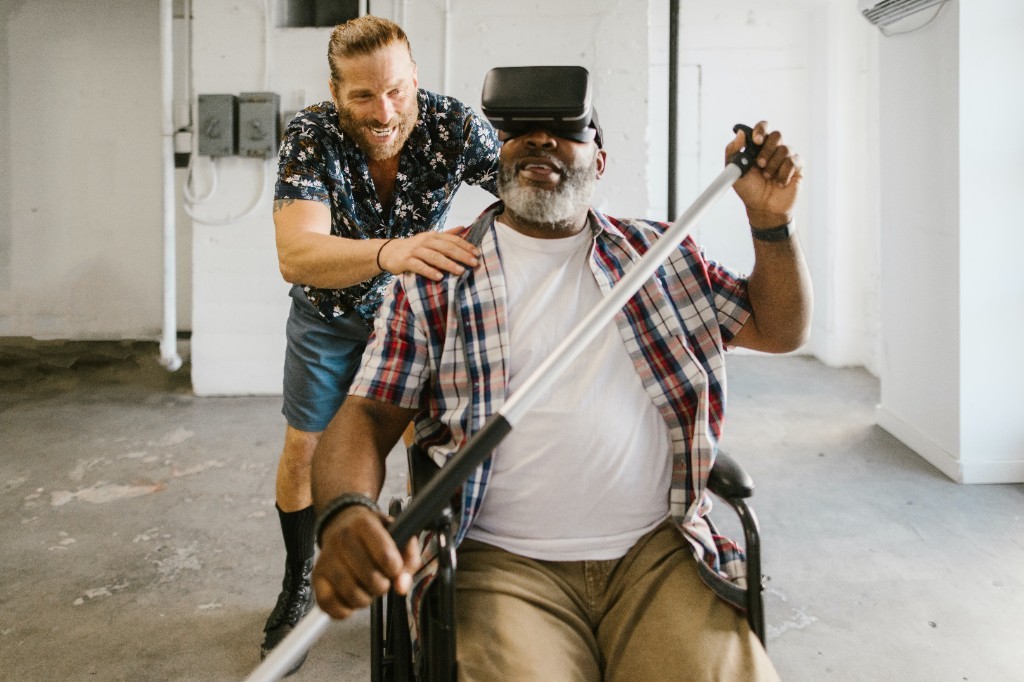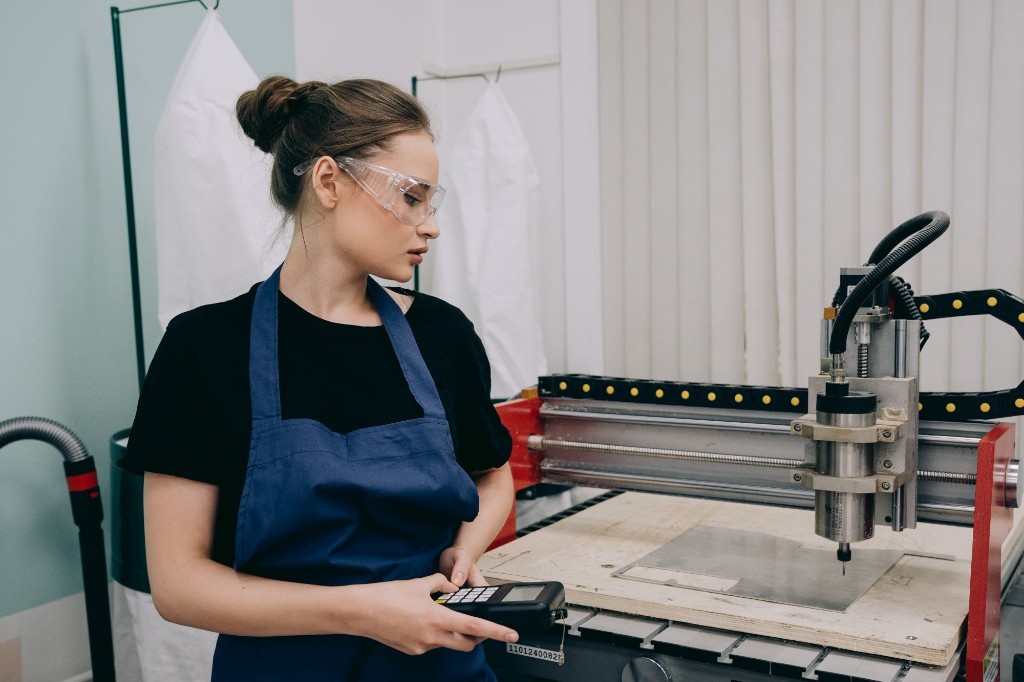
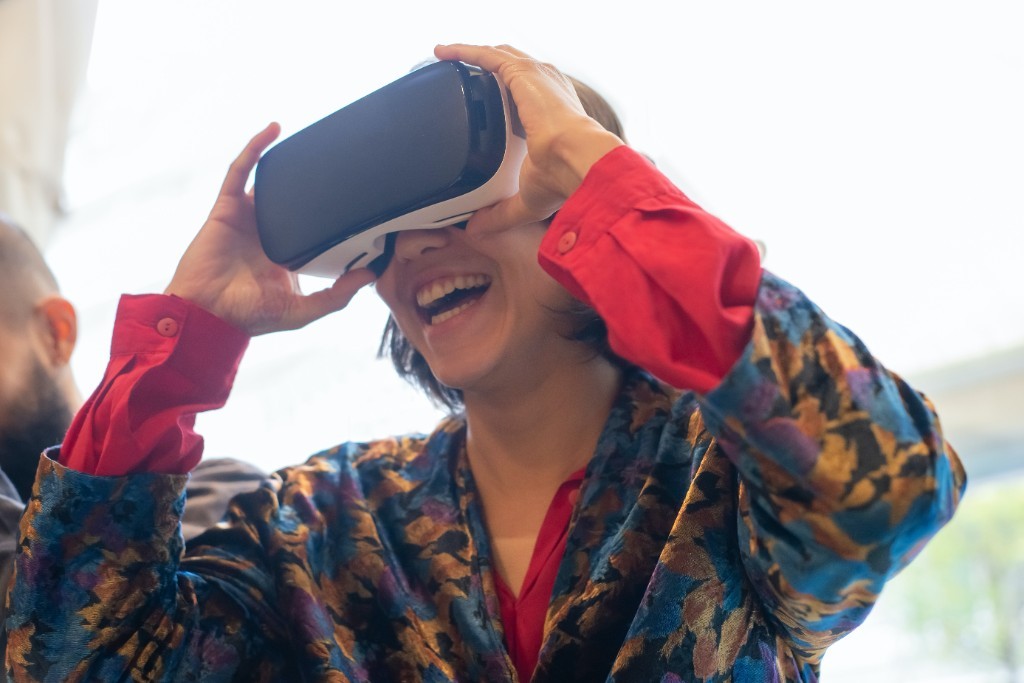
In recent years, there has been a significant advancement in the field of Artificial Intelligence (AI) and Augmented Reality (AR). These technologies have become increasingly popular and have the potential to enhance virtual experiences in various fields such as gaming, education, healthcare, and...
A Program Helps Stroke Patients Recover Through Music Therapy
209
20.05.2026
Why stroke recovery requires rehabilitation beyond medicine
Stroke often damages areas of the brain responsible for movement, speech, and coordination. While emergency medical treatment saves lives, long-term recovery depends heavily on rehabilitation.
Patients frequently face difficulties with motor skills, language, and cognitive functions. Traditional therapy focuses on repetitive physical and speech exercises, but progress can be slow and emotionally challenging.
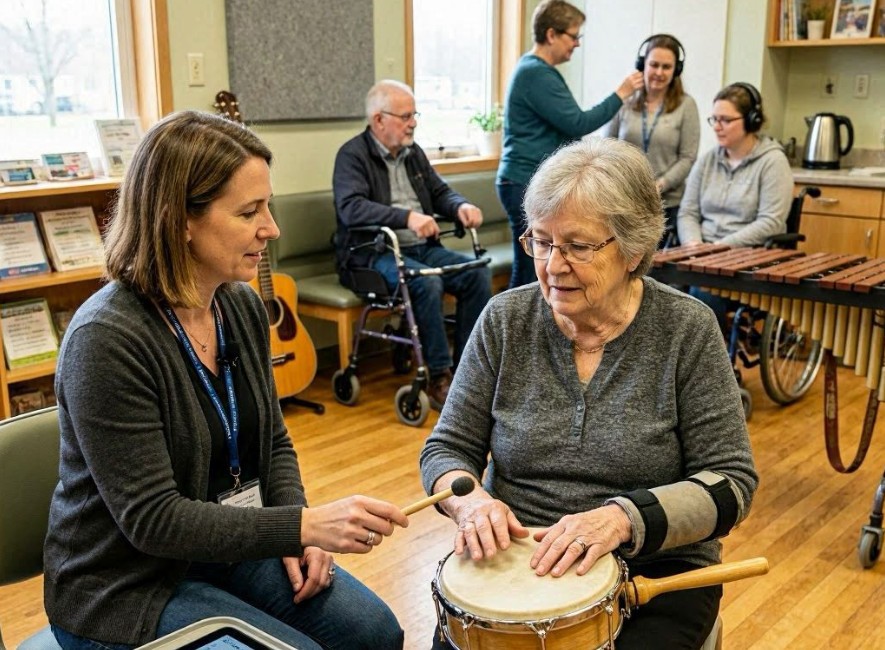
Music therapy introduces an alternative pathway that engages multiple brain systems simultaneously.
How music therapy supports brain recovery
Music activates widespread regions of the brain, including those responsible for emotion, memory, movement, and auditory processing. This makes it a powerful tool for neurorehabilitation.
Rhythm in particular helps the brain synchronize motor responses, improving coordination and timing of movement in affected limbs.
Key neurological mechanisms
- Activation of motor cortex through rhythmic cues
- Engagement of memory and emotional centers
- Stimulation of neuroplasticity
- Reinforcement of speech and language pathways
How the digital program works
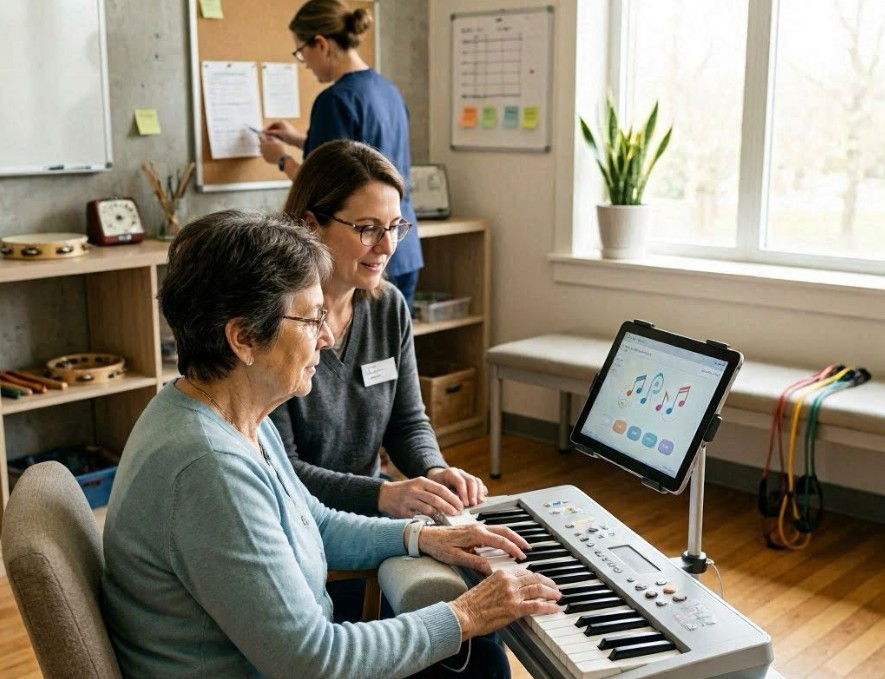
The program combines music therapy principles with artificial intelligence to create personalized rehabilitation exercises for each patient.
It analyzes the patient’s condition and adapts musical exercises in real time based on performance and progress.
Main components of the system
- Motion and speech tracking sensors
- Adaptive music generation engine
- Progress monitoring dashboard
- AI-based therapy adjustment module
Types of music-based exercises
The system offers different rehabilitation tasks depending on the patient’s needs, focusing on movement, speech, or cognitive recovery.
Examples of therapy activities
- Rhythmic tapping to improve motor coordination
- Singing exercises to restore speech fluency
- Melody repetition to strengthen memory pathways
- Instrument simulation for fine motor skills
Role of artificial intelligence in personalization
AI continuously evaluates patient performance and adjusts difficulty levels. If a patient struggles with a task, the system simplifies rhythm or slows tempo. If progress is strong, it gradually increases complexity.
This adaptive approach helps maintain motivation and prevents frustration during long rehabilitation periods.
What the algorithm analyzes
- Movement accuracy and timing
- Speech clarity and rhythm
- Response consistency
- Emotional engagement during therapy
Benefits of music-based rehabilitation
Key advantages
- Improved motor coordination through rhythmic training
- Enhanced speech recovery using melodic patterns
- Higher patient motivation and engagement
- Non-invasive and emotionally supportive therapy
Limitations of the approach
Music therapy is not a standalone treatment and must be combined with medical supervision and traditional rehabilitation methods.
Patient response varies depending on the severity of the stroke and individual neurological differences.
Future of digital neurorehabilitation
Future systems may integrate virtual reality and brain-computer interfaces to create fully immersive rehabilitation environments, further enhancing neuroplastic recovery.
Conclusion
AI-powered music therapy programs demonstrate how technology can support stroke recovery by transforming rehabilitation into an adaptive, engaging, and neurologically effective process.