

In recent years, there has been a significant advancement in the field of Artificial Intelligence (AI) and Augmented Reality (AR). These technologies have become increasingly popular and have the potential to enhance virtual experiences in various fields such as gaming, education, healthcare, and...
A smart fish feeder adjusts portions based on each fish's appetite
129
16.07.2026
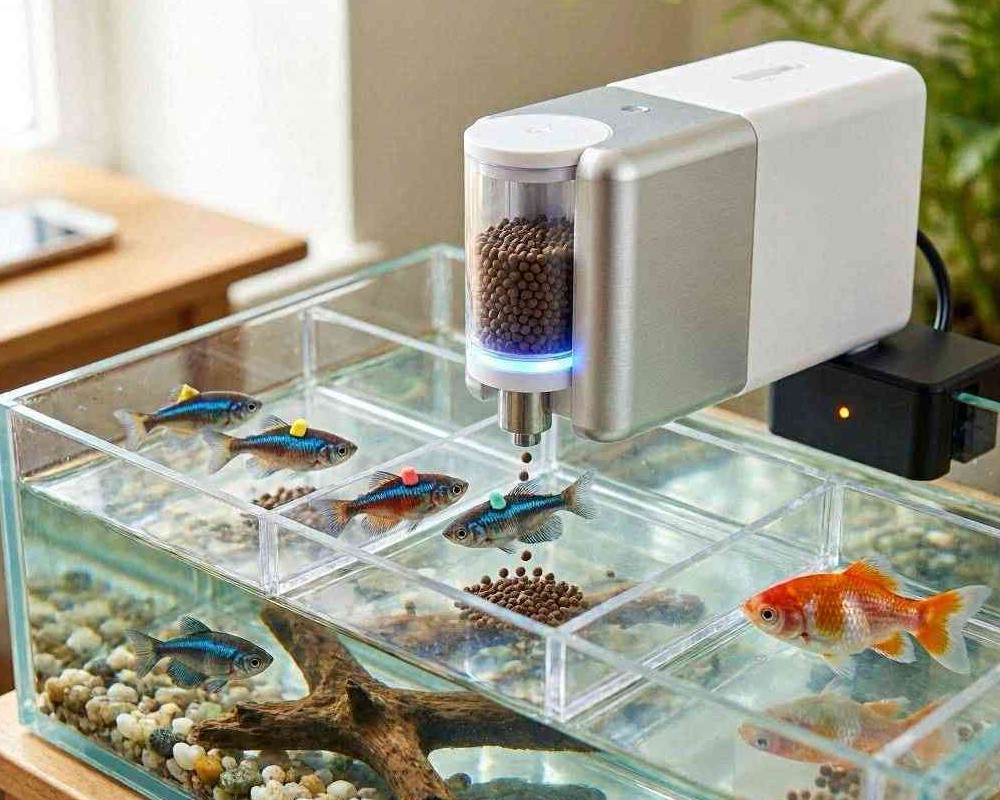
Feeding fish looks simple-until you keep a mixed tank. Different species often eat at different speeds, prefer different foods, and show varying appetites depending on age, temperature, and even social hierarchy. The result is familiar: some fish stay hungry while others overeat, food sinks uneaten, water quality declines, and your aquarium becomes harder to manage.
A smart fish feeder helps by adjusting portions automatically based on what your fish actually consume. Instead of delivering the same preset amount every time, it uses sensing and scheduling logic to learn patterns and respond to changing demand. The goal isn’t just “more convenience”—it’s more consistent nutrition with fewer leftovers and healthier water.
Why fixed portions fail in real aquariums
Most traditional feeders dispense a uniform quantity at set times. That approach assumes all fish will eat everything immediately, every day. In practice, several factors disrupt this:
- Competition and bullying: Larger or more aggressive fish may monopolize food.
- Feeding layer differences: Surface feeders, mid-water swimmers, and bottom-dwellers don’t all eat at the same rate.
- Variable appetite: Many fish reduce intake after temperature changes, during breeding cycles, or under stress.
- Food loss: Uneaten pellets and flakes break down, increasing ammonia and nitrates.
How a smart feeder adapts to appetite
The core benefit of an intelligent feeder is responsiveness. Depending on the model, adaptation may combine multiple methods such as portion adjustment algorithms, timed feeding windows, and feedback from the tank environment. Even when sensors are limited, the system can still respond by refining how much food it releases over time.
Learning patterns over time
Rather than relying on your guess, the feeder can track the outcomes of previous feedings—such as how quickly food disappears or how often waste accumulates. Over days and weeks, it builds a practical “appetite profile” that reflects your specific tank conditions.
Portion scaling for different fish needs
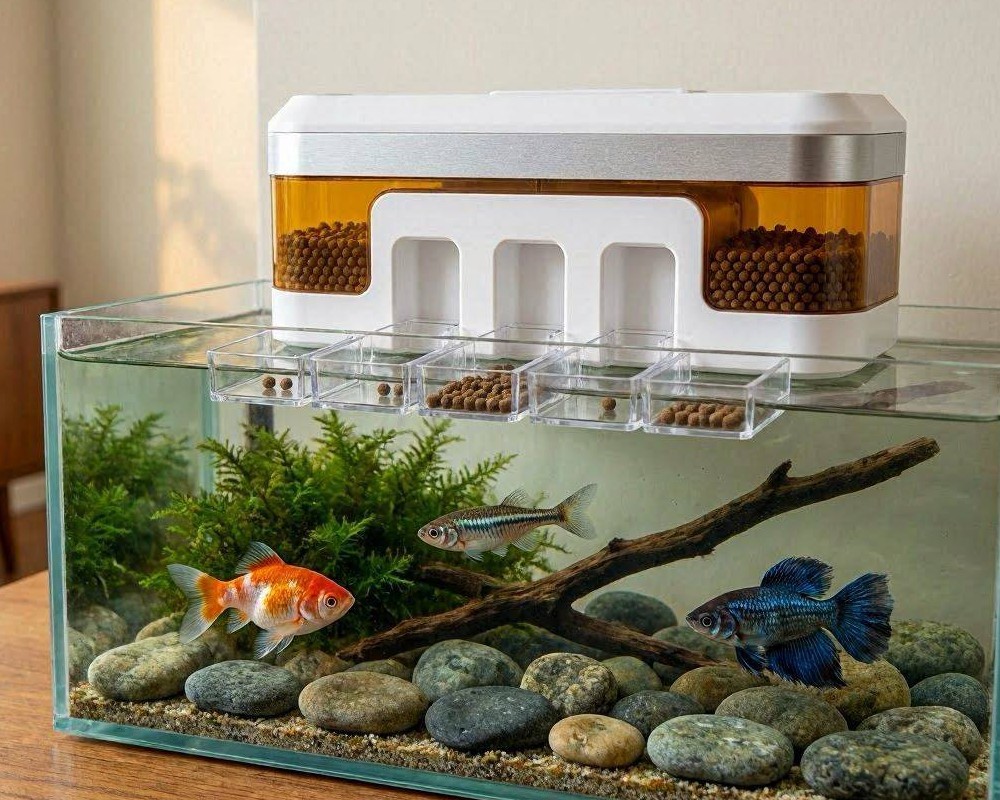
Some systems can manage feeding strategies that effectively account for multiple fish groups. For example, they may split releases into smaller bursts, change feeding frequency, or alternate between sinking and floating schedules. The effect is that each fish gets a better opportunity to eat, reducing the chance that one dominant fish consumes the entire ration.
Reducing leftovers and stabilizing water quality
One of the most measurable outcomes of adaptive feeding is less uneaten food. When portions are closer to actual intake, the breakdown load on the biological filter decreases. This supports steadier parameters and lowers the risk of feeding-related spikes in ammonia and nitrate.
Practical benefits for aquarium owners
A smart fish feeder offers advantages beyond convenience. If your goal is long-term stability, adaptive feeding can make day-to-day maintenance easier.
- More consistent nutrition: Fish receive feed closer to their real intake rather than an oversupply.
- Less waste: Smaller, timed releases reduce food settling and rotting in the substrate.
- Fewer feeding mistakes: You don’t have to remember to adjust portions when fish grow or diets change.
- Better support for sensitive species: Some fish are easily stressed by poor water conditions or sudden changes in feeding volume.
Feeding schedules that match behavior
Adaptive feeders often work well with a feeding rhythm that respects natural activity. Many fish feed more actively in the morning and evening. By distributing portions into short windows, the feeder can align feeding with these peak behaviors, improving consumption and reducing competition.
Ideal for travel and irregular routines
For owners who travel or work unpredictable shifts, smart feeders help maintain continuity. Instead of a single “vacation amount,” the system can keep feeding aligned with typical tank consumption patterns, helping prevent both starvation and overfeeding.
Choosing and setting up the right smart feeder
Not every adaptive feeder behaves the same way. Before buying, consider how it fits your tank and livestock.
Food type and portion control
Check compatibility with your food: flakes, pellets, sinking formulas, and wafer feeds vary in how they disperse. Good portion control matters most if your tank includes bottom-feeders or species that require slower, sinking food.
Tank size and feeding capacity
For larger tanks with multiple fish, the feeder must support enough capacity and accurate scheduling. A feeder that runs out mid-week or releases too coarsely may undermine the benefits of adaptation.
Placement and feeding dispersion
Where the feeder sits affects how food enters the water column. Proper placement helps distribute food more evenly so that shy or slower fish aren’t consistently left out.
Best practices to get results quickly
Even the best technology benefits from thoughtful setup. To help the feeder learn your tank’s appetite, start with conservative settings and observe feeding behavior closely.
- Begin with moderate portions: Avoid starting with large amounts—let the system refine over time.
- Watch for uneaten food: If waste accumulates, reduce portions or shorten intervals.
- Confirm different feeding zones: If bottom-dwellers struggle, consider sinking-food schedules or staggered releases.
- Maintain water monitoring: Track ammonia, nitrite, nitrate, and overall clarity during the transition period.
When a smart fish feeder adjusts portion sizes according to each fish’s appetite, it turns feeding from a daily guess into a responsive routine. The payoff is healthier fish, cleaner water, and a calmer aquarium experience—especially in diverse tanks where “one amount for everyone” simply doesn’t work.