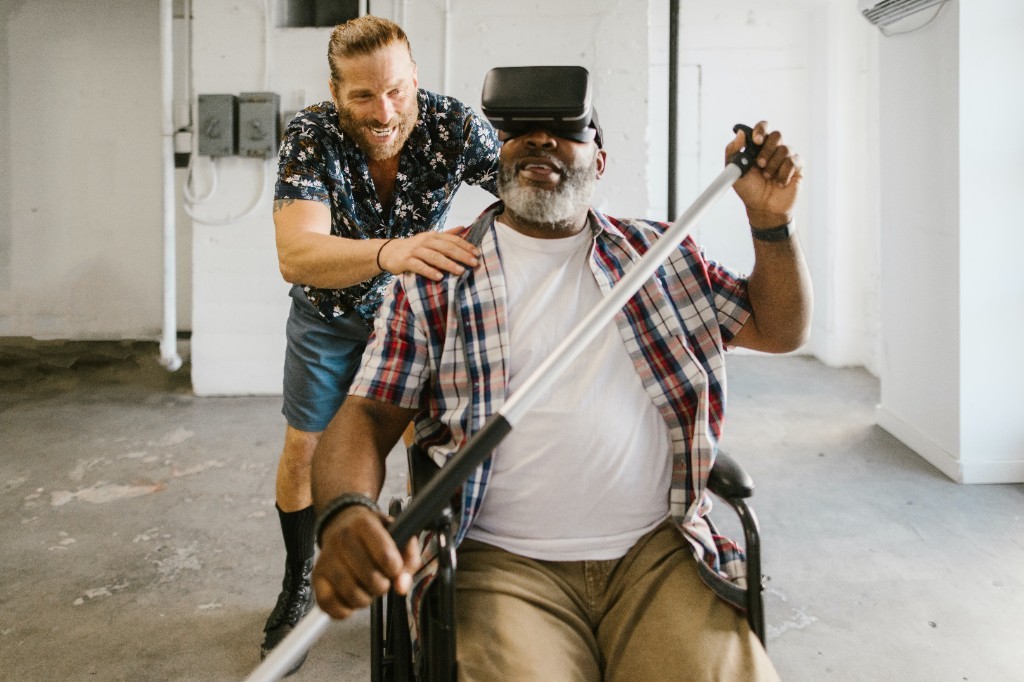

In recent years, there has been a significant advancement in the field of Artificial Intelligence (AI) and Augmented Reality (AR). These technologies have become increasingly popular and have the potential to enhance virtual experiences in various fields such as gaming, education, healthcare, and...
A Smart Glove Trains Surgeons to Perform Complex Operations
197
23.05.2026
Why surgical training is so demanding
Modern surgery requires extreme precision, steady hand control, and the ability to make rapid decisions under pressure. Even small errors can have serious consequences for patient outcomes.
Traditional training methods rely on cadavers, simulations, and supervised practice in operating rooms. While effective, these methods are limited by availability, cost, and variability in training conditions.
As surgical techniques become more complex, there is a growing need for tools that provide continuous, objective feedback during training.
What a smart glove is
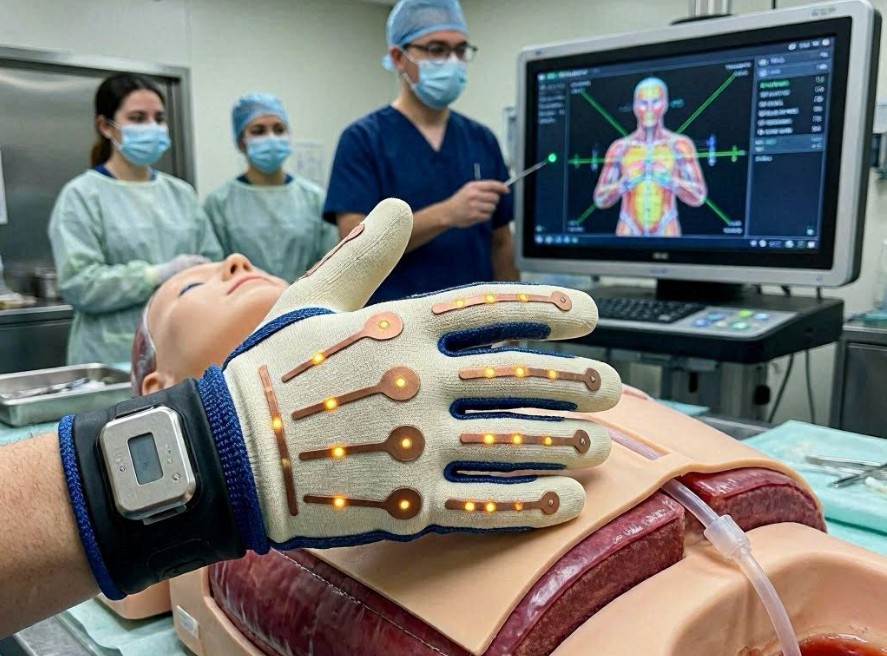
A smart glove is a wearable device embedded with sensors that track hand movements, pressure, finger positioning, and fine motor control. It is designed to replicate the physical conditions of surgical procedures while capturing detailed performance data.
When connected to an AI system, the glove becomes an interactive training platform that evaluates and guides surgical technique in real time.
Main components of the smart glove
- Motion sensors for hand and finger tracking
- Pressure sensors for grip force measurement
- Haptic feedback modules
- Wireless data transmission unit
How the training system works
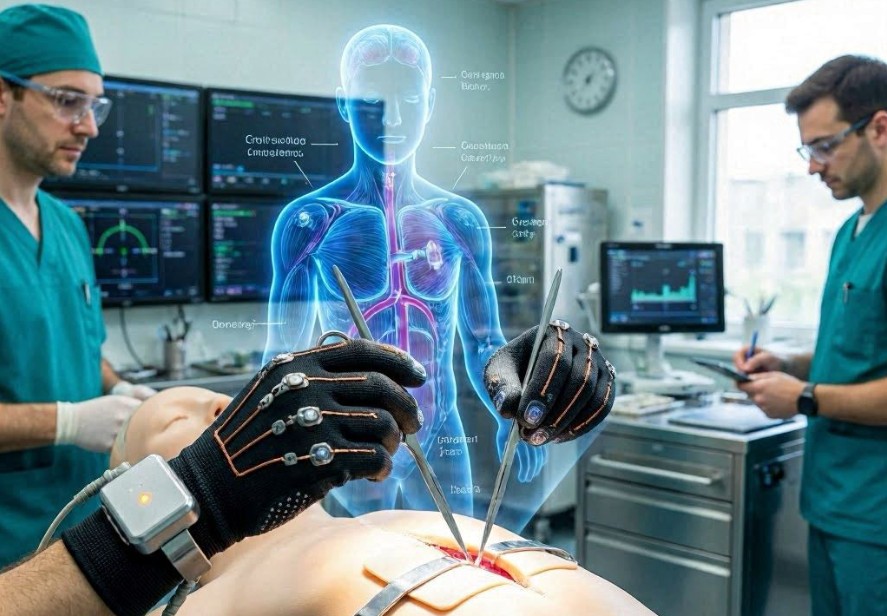
The smart glove is typically used in combination with a virtual or physical simulation environment that mimics surgical procedures. As the trainee performs actions, the system records every movement and compares it to expert-level benchmarks.
The AI then provides immediate feedback, highlighting inaccuracies and suggesting corrections.
Training workflow
- Initialization of surgical simulation scenario
- Real-time capture of hand movements
- Comparison with expert motion models
- Feedback delivery through visual or haptic signals
- Performance scoring and progression tracking
Role of artificial intelligence in surgical training
AI models are trained on large datasets of expert surgeons performing procedures. These datasets allow the system to learn what constitutes optimal movement patterns, precision, and timing.
During training sessions, the AI evaluates deviations from these patterns and adapts feedback accordingly.
What the algorithm analyzes
- Stability of hand movements
- Precision of incision paths
- Force applied to simulated tissues
- Timing and coordination of actions
Benefits of smart glove training systems
Key advantages
- Objective measurement of surgical skill
- Safe practice environment without patient risk
- Continuous real-time feedback
- Accelerated skill development
Limitations of the technology
While highly effective for technical skill development, smart gloves cannot fully replicate the complexity of real surgical environments, including unexpected complications and emotional stress.
Additionally, system accuracy depends on the quality of sensor calibration and simulation fidelity.
Future of AI-assisted surgical education
Future systems may integrate augmented reality, robotic assistance, and fully immersive simulations to create comprehensive surgical training ecosystems.
Conclusion
Smart gloves combined with artificial intelligence represent a significant advancement in medical education, enabling surgeons to refine complex skills in a controlled and data-driven environment.