

In recent years, there has been a significant advancement in the field of Artificial Intelligence (AI) and Augmented Reality (AR). These technologies have become increasingly popular and have the potential to enhance virtual experiences in various fields such as gaming, education, healthcare, and...
A Smart Greenhouse Maintains a Separate Climate for Each Individual Plant
178
10.06.2026
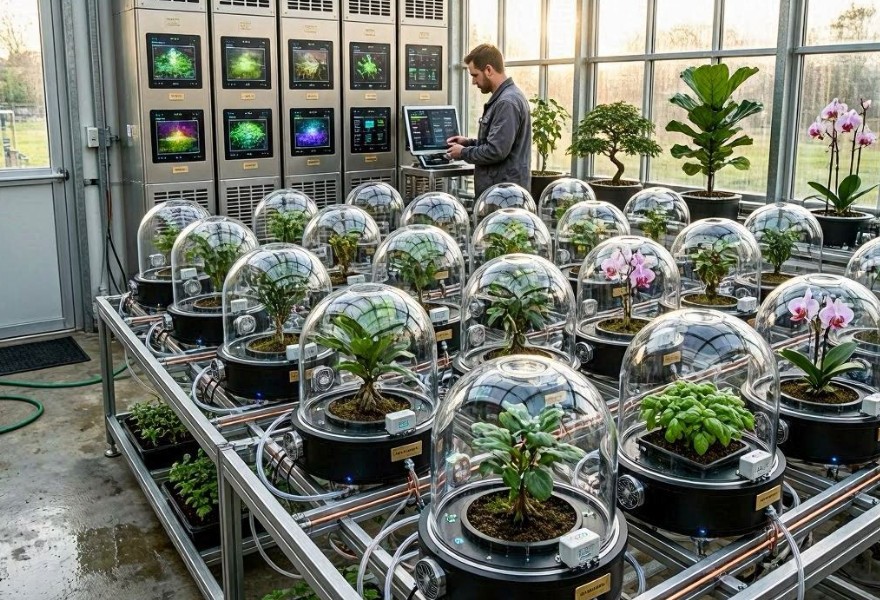
Why plants need different microclimates
Different plant species—and even individual plants within the same species—can have distinct requirements for temperature, humidity, light exposure, and soil conditions.
In traditional greenhouses, environmental control is applied uniformly across large zones, which often forces compromises between optimal conditions for different plants.
This can reduce growth efficiency, increase disease risk, and limit crop diversity within the same space.
What a smart greenhouse is
A smart greenhouse is an automated agricultural system that uses sensors, actuators, and AI-driven control algorithms to dynamically manage environmental conditions. In advanced designs, it can regulate conditions at a very fine spatial resolution, sometimes down to individual plant zones.
This enables precise optimization of growth conditions based on each plant’s needs and growth stage.
Main system components
- Temperature and humidity sensors
- Soil moisture and nutrient monitors
- Adjustable LED lighting arrays
- Automated irrigation and fertilization systems
- Climate control units (heating, cooling, ventilation)
How individualized climate control works
The system divides the greenhouse into micro-zones or plant-specific environments. Each zone is continuously adjusted based on real-time sensor feedback and predictive growth models.
AI algorithms determine the optimal environmental settings for each plant based on its species, growth stage, and current health status.
Control workflow
- Continuous environmental data collection
- Plant health and growth stage assessment
- AI-based growth optimization modeling
- Adjustment of localized climate controls
- Feedback loop for performance refinement
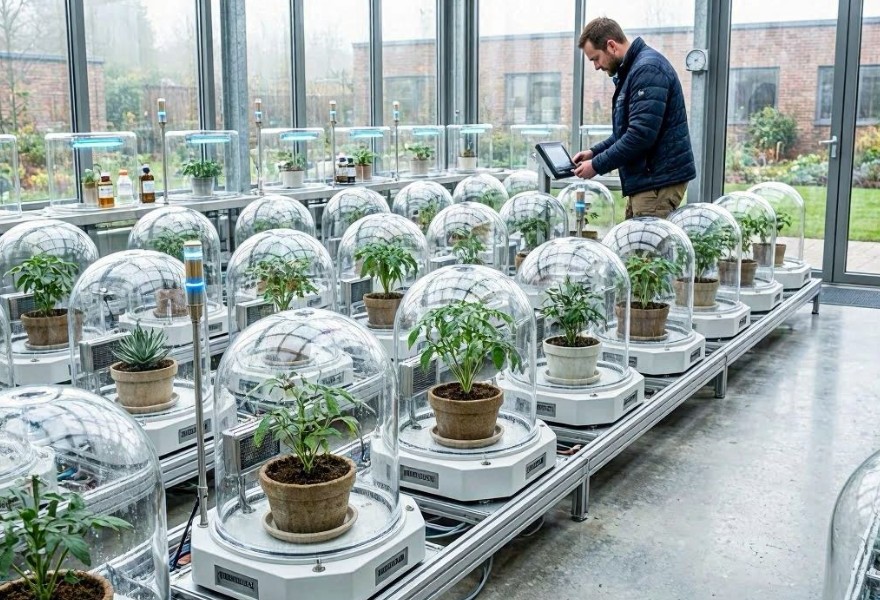
Role of artificial intelligence in plant optimization
Machine learning models analyze large datasets of plant growth under different conditions to determine ideal environmental parameters. These models can predict how a plant will respond to changes in light, temperature, or nutrient levels.
This allows proactive adjustments rather than reactive corrections.
Key variables optimized by AI
- Light intensity and spectrum
- Temperature gradients
- Humidity levels
- Nutrient delivery timing and concentration
Benefits of individualized plant environments
Main advantages
- Higher crop yield and quality
- Reduced resource waste (water, energy, fertilizers)
- Improved resistance to disease and stress
- Ability to grow diverse crops simultaneously
Challenges and limitations
Implementing per-plant climate control requires complex infrastructure and significant computational resources. Sensor calibration and maintenance also become more demanding as system granularity increases.
There is also a trade-off between precision control and cost efficiency in large-scale agricultural production.
Future of precision agriculture
Future smart greenhouses may integrate robotics for individual plant interaction, fully autonomous nutrient delivery systems, and AI models that continuously adapt to climate change conditions.
Conclusion
AI-driven smart greenhouses represent a shift toward highly personalized agriculture, where each plant receives optimized conditions tailored to its specific biological needs.