

In recent years, there has been a significant advancement in the field of Artificial Intelligence (AI) and Augmented Reality (AR). These technologies have become increasingly popular and have the potential to enhance virtual experiences in various fields such as gaming, education, healthcare, and...
A Smart Lens Measures Intraocular Pressure While Being Worn
131
03.08.2026
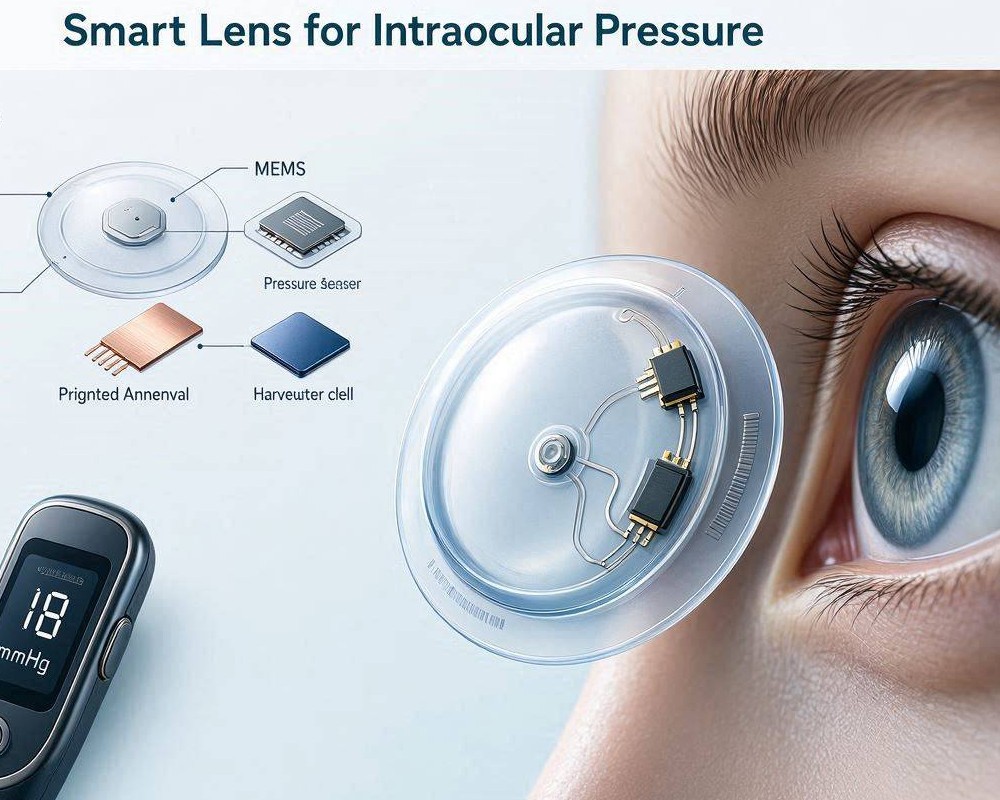
Intraocular pressure (IOP) is one of the most important clinical markers in eye health. Elevated IOP is a known risk factor for glaucoma, yet traditional measurements are often taken only during brief clinic visits. That gap in time matters: IOP fluctuates throughout the day, varies between individuals, and can change with medications, activity, or sleep. A smart contact lens designed to monitor IOP continuously offers a new approach—measuring ocular biomechanics in real life, while a person simply goes about their day.
Why continuous intraocular pressure monitoring matters
Standard IOP checks provide a snapshot, not a full picture. Even well-controlled patients can experience peaks at different times. Continuous monitoring could help clinicians:
- Identify patterns of fluctuation rather than single readings
- Assess how consistently medication is controlling IOP
- Reduce reliance on frequent in-office testing
- Detect concerning trends earlier, enabling faster intervention
For patients, the potential benefit is clearer: more relevant data and fewer uncertainty-driven adjustments. For clinicians, the benefit is improved decision-making supported by longitudinal evidence.
How a smart lens measures IOP while you wear it
A smart lens approach aims to estimate IOP by sensing changes related to ocular biomechanics. Most designs focus on detecting how the eye’s surface and underlying tissues respond to pressure. While the exact sensing mechanisms can vary across prototypes and products, the core idea is consistent: the lens must safely interact with the eye and capture measurable signals that correlate with IOP.
Sensing ocular response
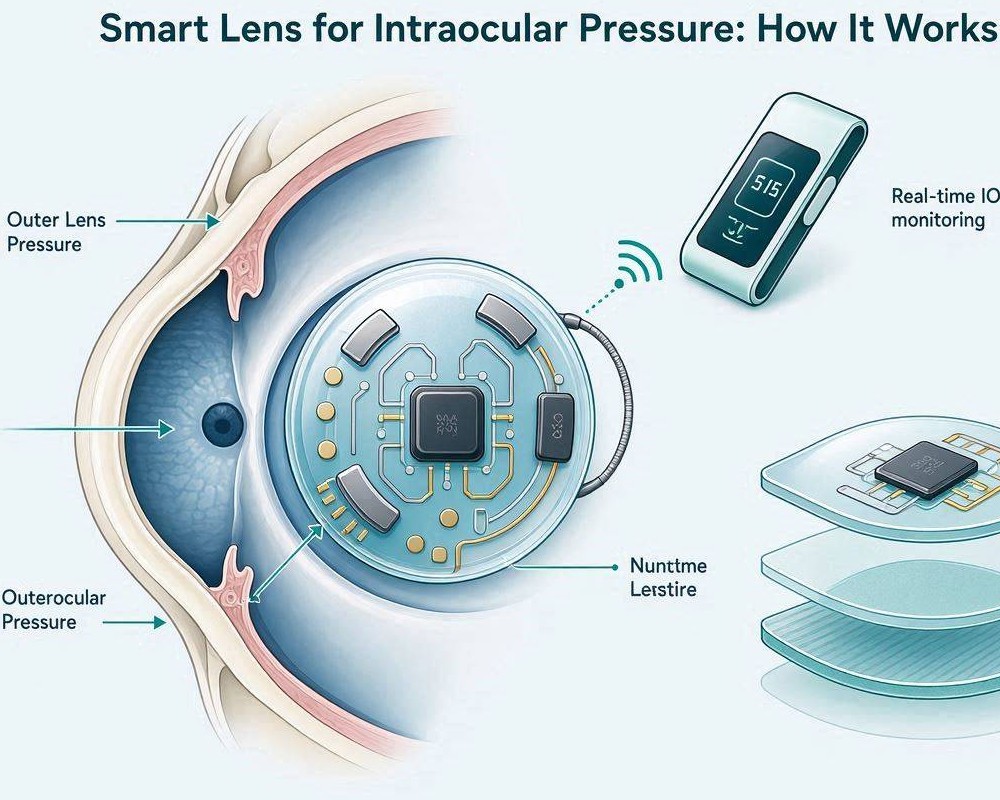
When IOP rises or falls, subtle changes occur in the eye’s shape, corneal deformation, or the mechanical behavior at the cornea. Smart-lens systems use embedded sensing elements—often optical, mechanical, or electrochemical—to detect these micro-changes. The lens then translates the sensed signal into an IOP estimate.
Converting the signal into meaningful readings
Raw sensor signals must be calibrated. Calibration may involve mapping lens responses to known pressure ranges and considering individual factors such as corneal properties. Because corneal thickness, curvature, and hydration can influence how the eye deforms, robust models are essential for accuracy across different patients.
Wireless data transfer and review
To be useful in daily life, the lens must communicate measurements to an external device. Many systems envision data transfer to a smartphone or dedicated reader. Clinicians can then review trends—ideally including confidence levels and time-stamped readings—rather than relying solely on sporadic in-clinic testing.
What “wearable” means in clinical practice
A key advantage of a smart lens is that it supports measurement during normal routines. That means monitoring can occur across different activities, lighting conditions, and time-of-day cycles—factors that can influence IOP. However, “wearable” must also mean comfort, safety, and reliable performance over the monitoring period.
Comfort and biocompatibility
Any device placed on the eye must balance sensing capability with comfort. Materials, lens thickness, oxygen permeability, and surface interactions all affect tolerance. The best systems aim to maintain comfort comparable to conventional contact lenses, while minimizing the risk of irritation or inflammation.
Safety considerations
Because the device resides on the ocular surface, safety evaluation is critical. Studies and regulatory processes typically examine corneal health, tear film effects, risk of infection, and the stability of sensing components. A practical solution must maintain performance without compromising the eye’s normal physiology.
Data interpretation and limitations
Even with strong engineering, IOP estimation from a lens is not identical to standard tonometry. Clinicians may treat smart-lens readings as trend indicators and confirm with conventional methods when necessary. Factors such as lens fit, corneal biomechanics, and user behavior can influence results, so interpreting data requires an evidence-based framework.
Potential benefits for glaucoma care
Glaucoma management is increasingly proactive, but it is still limited by how often IOP is measured. A smart lens could change follow-up from “how was your pressure today?” to “how has your pressure behaved over time?” This shift may improve outcomes by enabling timely medication changes or closer monitoring when trends worsen.
Personalized monitoring
Each patient has a distinct pressure pattern and response to therapy. Continuous data could support personalized treatment goals and reduce trial-and-error adjustments.
Better adherence insights
Some patients struggle with consistent medication use. When IOP readings show a mismatch with the expected effect of drops, clinicians can address adherence barriers, side effects, or technique issues with more clarity.
Looking ahead: from prototype to routine
The path to routine clinical use involves more than accurate sensing. Systems must demonstrate long-term biocompatibility, consistent performance, and clinically meaningful outcomes. Equally important, workflows must be designed so that patients and clinicians can act on the data without complexity.
A smart lens measuring intraocular pressure while being worn is not just a technological novelty—it is a step toward continuous, patient-centered glaucoma care. As research matures and calibration methods improve, these devices could help close the time gap between clinic measurements and real-life eye pressure, enabling earlier detection and smarter management.