

In recent years, there has been a significant advancement in the field of Artificial Intelligence (AI) and Augmented Reality (AR). These technologies have become increasingly popular and have the potential to enhance virtual experiences in various fields such as gaming, education, healthcare, and...
A Smart Medication Dispenser Sends Reminders and Monitors Dosages
187
04.06.2026
Why medication adherence is a persistent healthcare problem
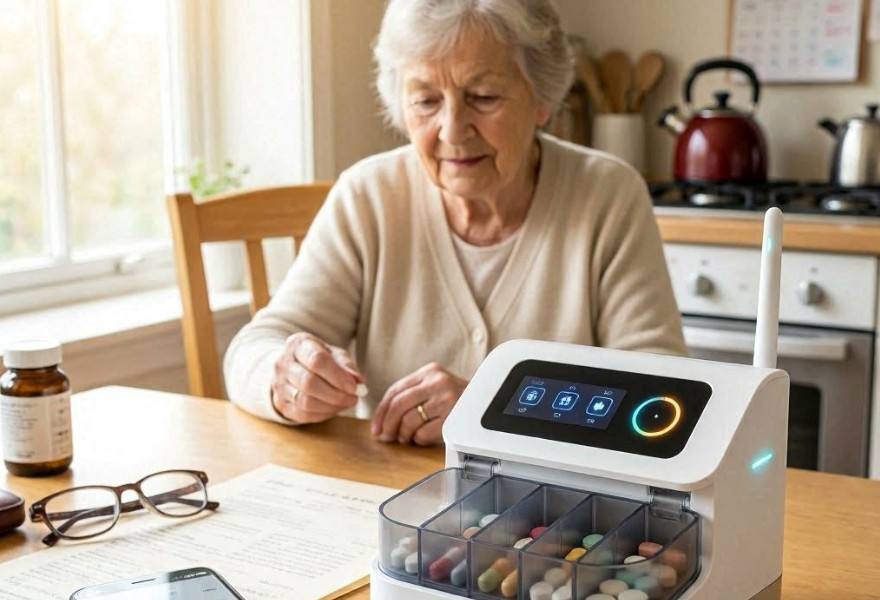
Many patients fail to take medications exactly as prescribed. Missed doses, double dosing, or incorrect timing can significantly reduce treatment effectiveness and, in some cases, lead to serious health complications.
This issue is especially common among elderly patients managing multiple prescriptions at once, where schedules become complex and easy to confuse.
Healthcare systems increasingly look for technological solutions to reduce these risks and improve adherence.
What a smart medication dispenser is
A smart medication dispenser is an electronic device designed to store, organize, and release medication doses according to a prescribed schedule. It is connected to a digital system that tracks usage and provides real-time feedback.
Unlike simple pillboxes, it actively monitors whether medication has been taken and responds when doses are missed.
Main components of the system
- Automated pill compartments
- Time-based release mechanism
- Sensor system for dose detection
- Connectivity module (mobile app or cloud system)
How the reminder system works
The dispenser uses a programmed medication schedule to trigger reminders at specific times. These alerts can be delivered through sounds, lights, vibrations, or mobile notifications.
If a dose is not taken within a defined time window, the system escalates reminders or notifies caregivers.
Reminder workflow
- Scheduled dose activation
- User alert via device or app
- Confirmation of dose intake
- Escalation if dose is missed
- Logging of medication adherence data
How dosage monitoring works
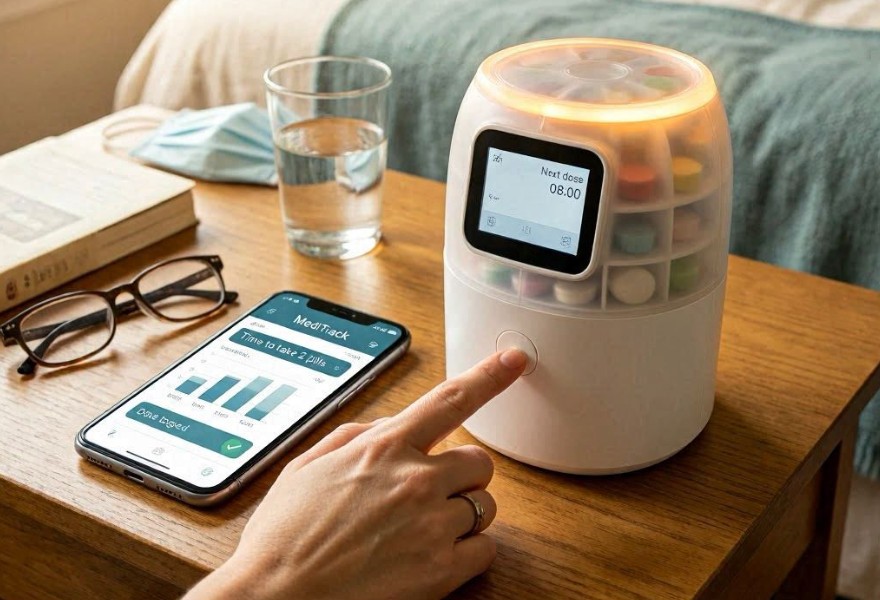
Sensors inside the dispenser detect whether a compartment has been opened and whether medication has been removed. Some advanced systems use weight sensors or optical detection to confirm intake.
This data is recorded and analyzed to ensure accurate tracking of medication adherence over time.
Monitored parameters
- Time of dose intake
- Number of doses taken or missed
- Frequency of medication access
- Adherence patterns over time
Role of smart analytics and AI
More advanced systems use machine learning to identify patterns in patient behavior. For example, they may detect repeated missed doses at certain times of day and suggest schedule adjustments.
The system can also provide caregivers and healthcare providers with adherence reports to support clinical decisions.
Benefits of smart medication dispensers
Main advantages
- Improved medication adherence
- Reduced risk of dosing errors
- Timely reminders for patients and caregivers
- Better visibility for healthcare providers
Limitations of the technology
Smart dispensers rely on user interaction, meaning they cannot guarantee ingestion of medication—only that the device was accessed. Technical failures, connectivity issues, or incorrect setup can also affect reliability.
Additionally, they may be less suitable for patients requiring highly flexible or frequently changing prescriptions.
Future of intelligent medication management
Future systems may integrate biometric verification, automated prescription updates, and direct communication with pharmacies and healthcare providers to create fully connected medication ecosystems.
Conclusion
Smart medication dispensers improve healthcare outcomes by combining automation and monitoring, helping patients follow prescriptions more accurately and consistently.