

In recent years, there has been a significant advancement in the field of Artificial Intelligence (AI) and Augmented Reality (AR). These technologies have become increasingly popular and have the potential to enhance virtual experiences in various fields such as gaming, education, healthcare, and...
AI Analyzes Concert Hall Acoustics and Improves Sound Quality
13
08.10.2026
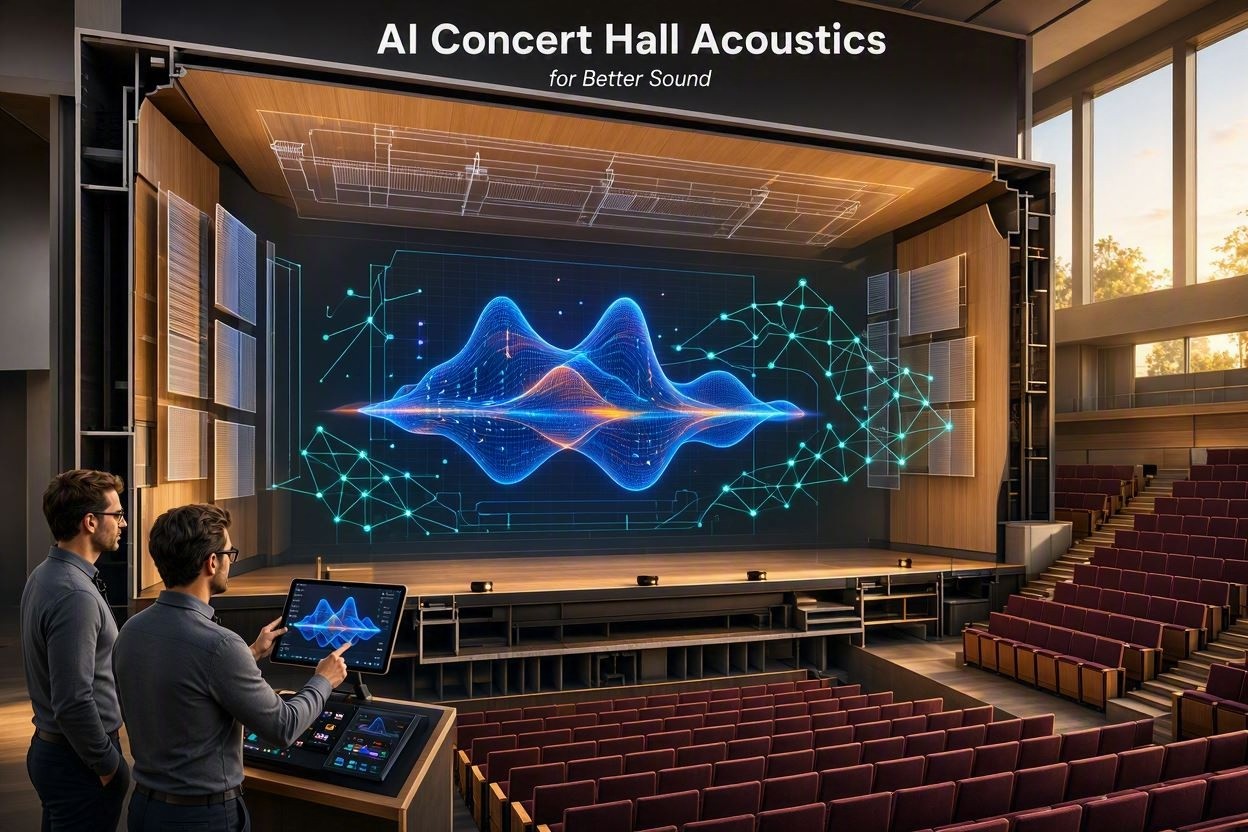
Concert halls are designed to make music feel alive, yet even beautiful rooms can hide acoustic flaws. A balcony may receive weak strings, speech may blur in the rear seats, or bass frequencies may build up near walls. Traditionally, solving these issues required repeated manual measurements, expert listening, and costly trial-and-error changes. Today, artificial intelligence gives acousticians a faster and more precise way to understand how sound behaves in a hall and how it can be improved.
How AI Studies the Sound of a Concert Hall
AI-based acoustic analysis begins with data. Engineers capture impulse responses, frequency balance, reverberation time, clarity, loudness, background noise, and spatial sound information from many points in the room. Microphone arrays, laser measurements, digital twins, and sometimes audience occupancy simulations create a detailed picture of the hall’s acoustic personality.
From Measurements to Meaningful Patterns
Once the data is collected, machine learning models compare thousands of acoustic variables. Instead of looking only at one number, such as reverberation time, AI can identify relationships between room shape, materials, seat location, reflection timing, and perceived sound quality. This helps reveal why a hall may sound warm from the center stalls but dull under a balcony.
Advanced systems can also use historical databases of famous venues, known acoustic standards, and psychoacoustic models. The result is not just a technical report, but a practical diagnosis of what listeners and performers are likely to experience.
Key Acoustic Problems AI Can Detect
Artificial intelligence is especially valuable because acoustic problems are rarely isolated. A single design choice can affect clarity, envelopment, bass response, and stage communication at the same time. AI can highlight conflicts and rank them by importance.
- Excessive reverberation that makes fast passages or speech difficult to understand.
- Insufficient early reflections that reduce intimacy and musical presence.
- Uneven frequency response, including boomy bass or harsh treble.
- Acoustic shadows caused by balconies, overhangs, or architectural obstacles.
- Echoes, flutter echoes, and delayed reflections that distract listeners.
- Poor onstage acoustics that prevent musicians from hearing each other clearly.
- Noise intrusion from HVAC systems, traffic, or technical equipment.
Why Seat-by-Seat Analysis Matters
A concert hall is not one listening position. AI can map sound quality across hundreds or thousands of seats, showing where the experience changes. This is useful for venue managers because improvements can be targeted where they matter most. For example, if only the rear balcony suffers from low clarity, the solution may involve localized diffusers or reflectors rather than a complete renovation.
How AI Suggests Improvements
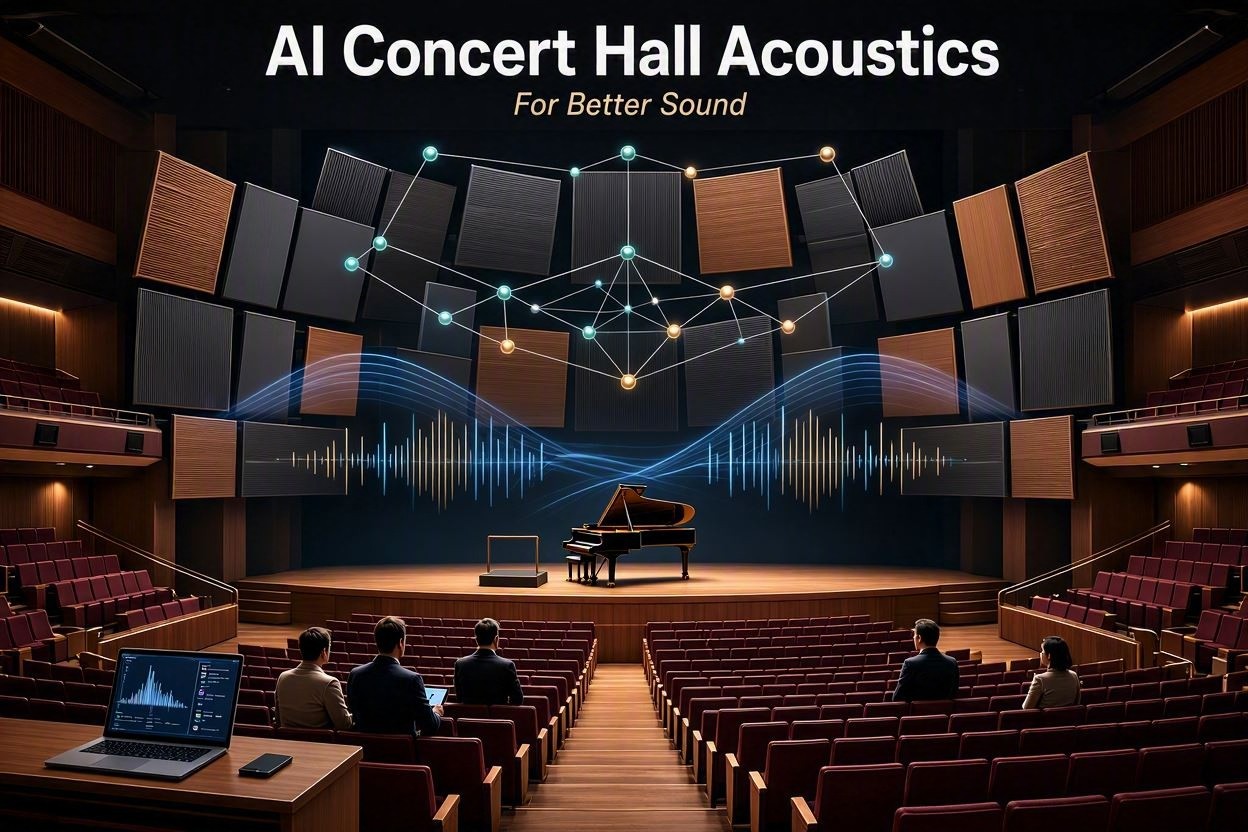
After identifying problems, AI can simulate possible remedies before any physical work begins. This reduces risk and helps decision-makers compare cost, disruption, and acoustic benefit. The system may test changes to wall panels, ceiling clouds, curtains, seating materials, stage shells, orchestra risers, or electroacoustic reinforcement.
- It builds or updates a digital acoustic model of the hall.
- It predicts how sound travels and reflects under different conditions.
- It evaluates proposed modifications against acoustic goals.
- It ranks options by effectiveness, budget, and impact on audience experience.
- It provides visual maps and recommendations for architects, engineers, and venue owners.
Examples of AI-Driven Recommendations
If AI detects a lack of warmth, it may recommend adding absorptive control only in high-frequency zones while preserving low-frequency energy. If clarity is weak, it may suggest adjusting overhead reflectors to deliver stronger early reflections. In a multipurpose hall, AI can help design variable acoustics, such as movable banners, rotating panels, or electronic enhancement presets for symphony, opera, chamber music, and spoken events.
Benefits for Venues, Performers, and Audiences
The main advantage of AI is speed with precision. Acoustic consultants can test more design scenarios in less time and explain results with clearer evidence. Venue owners gain confidence before investing in renovations. Performers benefit from better stage support, which improves ensemble timing and musical expression. Audiences hear greater detail, more balanced tone, and a more consistent experience from seat to seat.
AI is also valuable for older halls where historic preservation limits physical changes. By modeling subtle interventions, it can protect architectural character while improving sound. In new construction, AI supports better decisions from the earliest design stages, when changes are far less expensive than after opening night.
The Human Expert Still Matters
AI does not replace acoustic consultants, musicians, or architects. Sound quality involves artistic judgment, cultural expectations, and the intended identity of a venue. A room for Baroque music should not necessarily sound like a hall built for Mahler symphonies. Human experts define the goals, verify the measurements, interpret the recommendations, and decide which solutions serve the music best.
A Smarter Future for Live Sound
As sensors, simulation engines, and machine learning models improve, concert halls will become easier to tune with accuracy. AI can continuously monitor acoustic conditions, account for audience size, and support adaptive systems that respond to different performances. Used responsibly, it turns acoustic design from guesswork into informed craft, helping every note reach the listener with clarity, depth, and emotional impact.