
In recent years, there has been a significant advancement in the field of Artificial Intelligence (AI) and Augmented Reality (AR). These technologies have become increasingly popular and have the potential to enhance virtual experiences in various fields such as gaming, education, healthcare, and...
AI Created a Fabric That Changes Color Depending on Body Temperature
211
17.07.2026
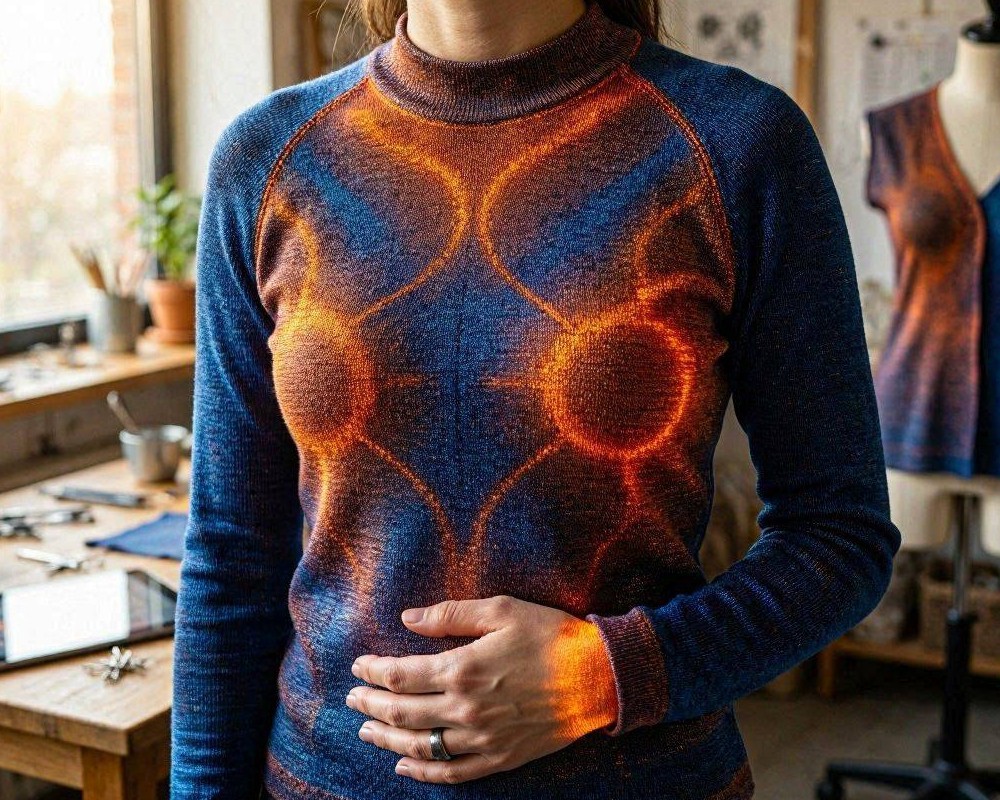
A new generation of textiles is emerging where fashion meets sensing. Researchers have developed a fabric whose color shifts in response to the temperature of the wearer’s body. What makes this breakthrough especially exciting is the role of artificial intelligence: AI helps model material behavior, optimize microstructures, and speed up the discovery of formulations that respond reliably across real-world conditions.
Instead of relying on a single heat-sensitive dye, the system is engineered to produce clear visual cues as skin temperature changes. The result is a wearable that can communicate physiology, comfort, or safety-without requiring batteries or active electronics.
How color change can be triggered by body temperature
At the heart of the technology is a class of temperature-responsive materials. When the fabric experiences a thermal shift—slightly above or below a designed threshold—its internal structure or chemical state changes. That alteration affects how the material absorbs and reflects light, which we perceive as a color transition.
Depending on the chosen mechanism, the color shift can be driven by:
- Thermochromic compounds that reversibly change light absorption when heated
- Phase-change behavior where a microstructure rearranges at specific temperatures
- Composite design that amplifies small temperature differences into visible effects
AI’s contribution is not just in picking a dye. It helps map the relationship between composition, fiber architecture, thermal conductivity, and optical output—then guides iterative experiments to reach a fabric that performs consistently during real wear.
What AI adds beyond traditional textile chemistry
Conventional development often depends on trial-and-error batches and repeated bench tests. That approach can be slow because textile performance is influenced by many interacting variables: binder chemistry, pigment loading, thickness, surface treatment, and how heat spreads through knit or weave patterns.
AI can accelerate this process by analyzing large sets of experimental results and simulating how candidate formulations will behave. In practice, AI models can:
- Predict the temperature-to-color mapping based on material properties
- Optimize for contrast, reversibility, and response speed
- Account for variability caused by humidity, motion, and laundering cycles
- Reduce waste by narrowing the search space before lab synthesis
Because wearables face changing conditions—sweat, airflow, wind, and layered clothing—the fabric must respond correctly not only in controlled tests, but also on a moving human body. AI-supported design can incorporate these constraints early, leading to more dependable outcomes.
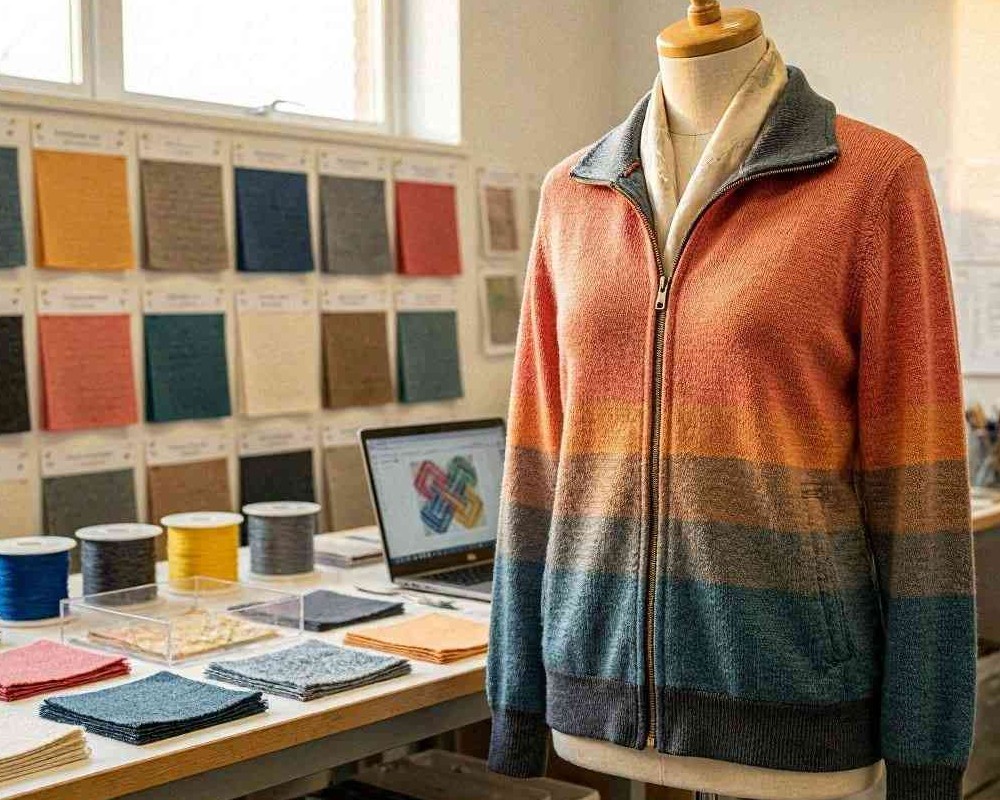
Where this temperature-reactive fabric could be used
The ability to visualize body temperature opens up several practical applications. While some uses are consumer-focused, others are safety and health oriented.
Smart clothing for comfort and temperature awareness
Imagine apparel that subtly indicates when your body is getting too warm or too cold. A color shift could help users adjust layers, seek airflow, or warm up—especially in sports, outdoor work, and travel where conditions change quickly.
Health monitoring and early alerts
In clinical or home settings, temperature markers can support situational awareness. For example, rapid color changes could help flag fever onset or detect localized thermal anomalies—provided the system is calibrated to individual skin temperature patterns.
It’s important to note that “visual temperature sensing” is not the same as a medical device diagnosis. Still, it can be a valuable screening and communication tool, particularly when paired with clear usage guidelines.
Industrial safety and occupational settings
Work environments such as firefighting, chemical plants, or high-heat manufacturing require fast indicators. A fabric that changes color in response to the wearer’s body temperature could serve as an intuitive, low-tech signal for when cooling gear or protective adjustments are needed.
Key performance factors: what makes a fabric actually reliable
For this technology to move from prototypes to everyday products, several engineering issues must be solved. AI helps, but the end result still depends on careful material design and testing.
Response range and clarity
The color transition must occur within a useful temperature window for skin—often involving small differences. If the shift is too subtle, it won’t be readable. If it triggers too early or too late, the wearer may receive confusing signals.
Reversibility and cycle durability
Users want repeatable behavior over many heating and cooling cycles. Materials must maintain color performance after repeated wear, washing, and exposure to sweat salts and detergents.
Thermal uniformity and heat transfer
Knits and weaves distribute heat differently. Motion can also create localized hotspots. Designers must ensure the optical effect is consistent across the garment, not only at isolated points.
What happens next for AI-designed smart textiles
As AI models become more accurate, future fabrics may combine temperature responsiveness with other sensing modalities—such as humidity awareness or strain mapping—creating multi-parameter garments. The biggest opportunity is democratizing sensing: making it visible, intuitive, and low-power, so people can understand what their bodies and environments are doing at a glance.
AI-created color-changing textiles demonstrate a promising direction for wearable technology: materials that respond to us directly, communicate through light, and reduce the friction of conventional sensors. With continued development, this shift from novelty to reliable product could happen faster than traditional paths in textile innovation.