

In recent years, there has been a significant advancement in the field of Artificial Intelligence (AI) and Augmented Reality (AR). These technologies have become increasingly popular and have the potential to enhance virtual experiences in various fields such as gaming, education, healthcare, and...
AI Created a New Type of Fertilizer from Food Waste
662
02.04.2026
The Problem of Food Waste and Soil Depletion
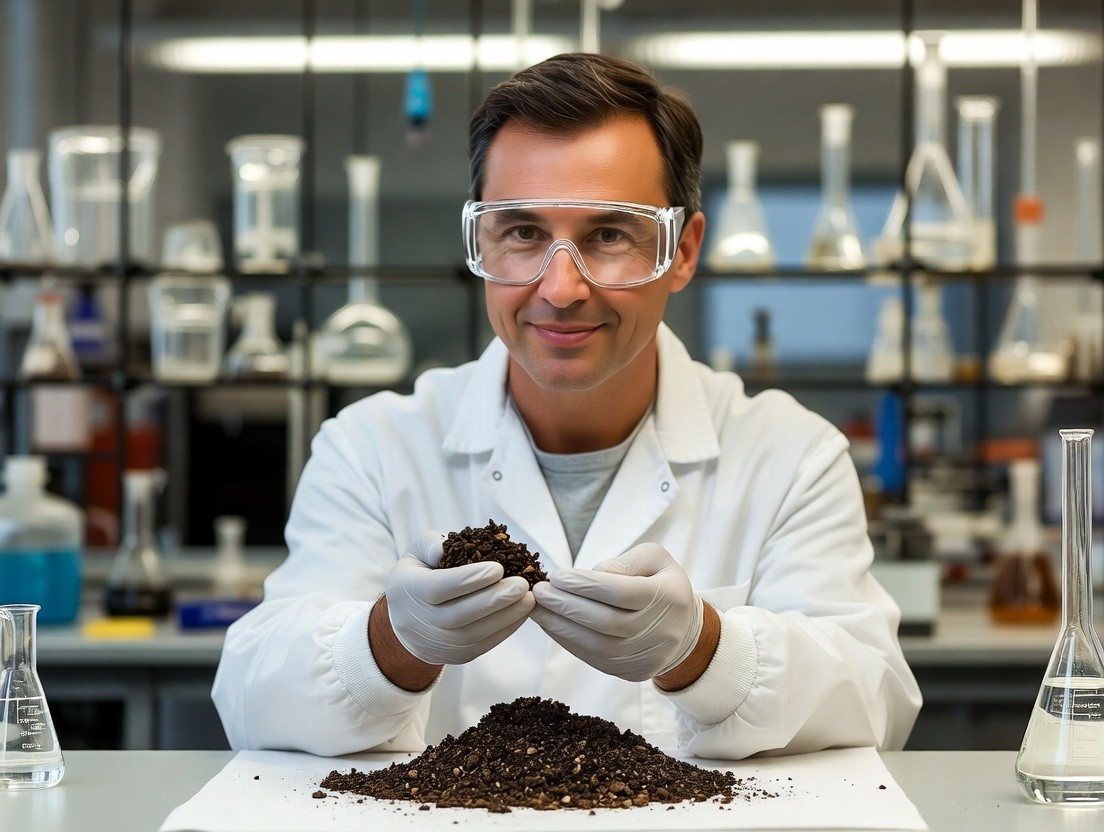
Every year, millions of tons of food are discarded around the world. Restaurants, supermarkets, food processing facilities, and households all contribute to a growing amount of organic waste. At the same time, agricultural soils are gradually losing nutrients due to intensive farming practices and environmental changes.
Food waste and soil degradation represent two major environmental challenges. While organic leftovers often end up in landfills, farmers depend on fertilizers to maintain crop productivity. Researchers have begun exploring ways to transform food waste into useful agricultural materials that can restore soil nutrients.
Artificial intelligence has recently helped scientists develop a new type of fertilizer produced from processed food waste. This innovation demonstrates how technology can convert environmental problems into sustainable solutions.
How Artificial Intelligence Contributed to the Discovery
Creating an effective fertilizer requires a precise balance of nutrients such as nitrogen, phosphorus, potassium, and trace minerals. Food waste contains many of these nutrients, but the composition varies widely depending on the type of organic material.
Artificial intelligence algorithms were used to analyze thousands of samples of food waste from different sources. By studying the chemical composition of these materials, the system identified optimal combinations that could produce a nutrient-rich fertilizer suitable for agriculture.
Tasks Performed by the AI System
- Analyzing nutrient composition in different food waste materials
- Predicting chemical reactions during composting and processing
- Optimizing nutrient balance for plant growth
- Identifying safe processing methods
- Testing potential fertilizer formulas through simulations
Using machine learning, researchers were able to quickly identify promising formulas that would have taken years to discover through traditional experimentation.
Processing Food Waste into Fertilizer
Once the AI system identified the best nutrient combinations, scientists developed a process for converting food waste into fertilizer. The process involves several stages that transform organic materials into stable agricultural products.
Food waste is first collected and sorted to remove non-organic contaminants. The organic material is then processed using controlled microbial decomposition, which breaks down complex organic compounds into simpler nutrients that plants can absorb.
Main Stages of the Production Process
- Collection and sorting of food waste
- Grinding and preparation of organic material
- Microbial decomposition under controlled conditions
- Nutrient stabilization and moisture control
- Final processing into fertilizer granules or liquid form
The result is a fertilizer that contains balanced nutrients while being environmentally friendly.
Benefits for Sustainable Agriculture
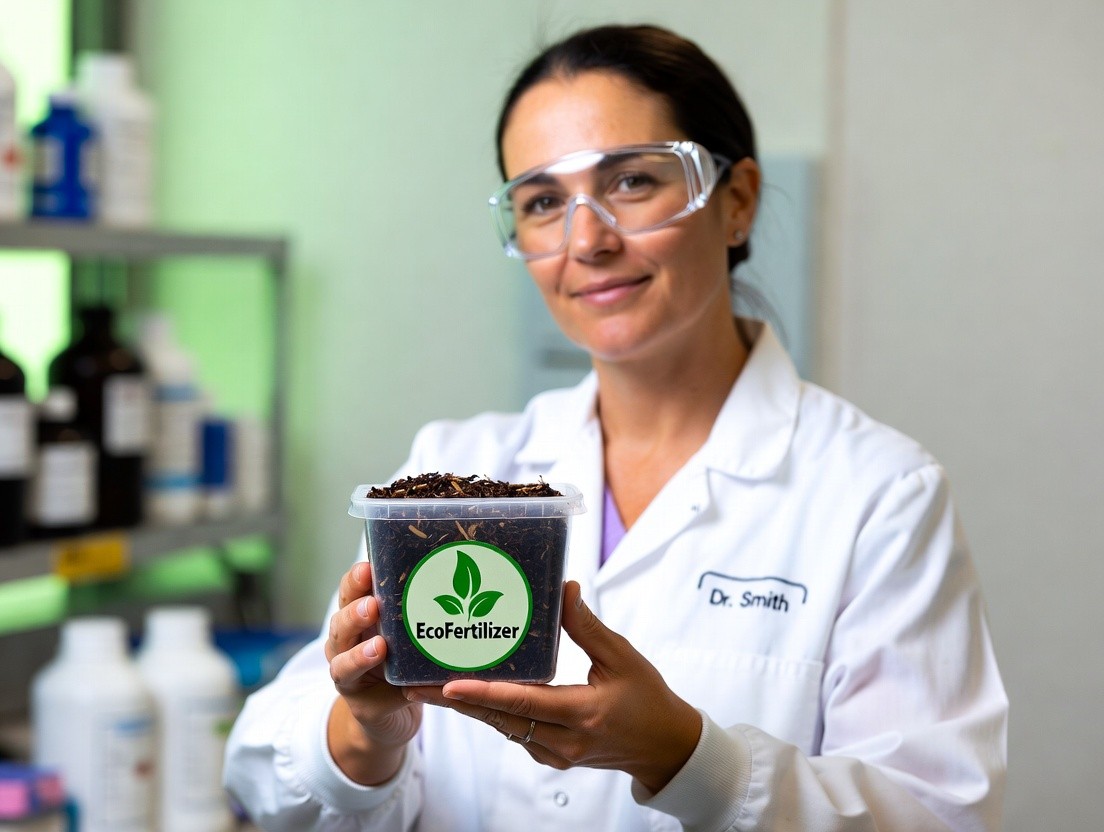
The AI-developed fertilizer offers several advantages compared with conventional chemical fertilizers. Traditional fertilizers are often produced using energy-intensive industrial processes and mined minerals. In contrast, fertilizer derived from food waste relies on recycled organic resources.
- Reduction of organic waste in landfills
- Improved soil health through natural nutrients
- Lower environmental impact compared with synthetic fertilizers
- Support for circular economy principles
- More sustainable agricultural production
These benefits help farmers maintain productivity while reducing environmental harm.
Environmental Impact
Food waste decomposing in landfills produces methane, a powerful greenhouse gas that contributes to climate change. By converting organic waste into fertilizer, this technology reduces landfill emissions while providing valuable agricultural inputs.
In addition, organic fertilizers can improve soil structure by increasing microbial activity and organic matter content. Healthier soils are better able to retain water and support plant growth.
This dual environmental benefit makes waste-based fertilizers an attractive option for sustainable farming systems.
The Future of AI in Agriculture
The development of fertilizer from food waste demonstrates the growing role of artificial intelligence in agriculture and environmental science. AI systems can analyze complex chemical and biological data much faster than traditional research methods.
Future applications may include AI-designed soil treatments tailored to specific crops, climate conditions, and soil types. Intelligent systems could also help farmers monitor soil nutrient levels and recommend optimal fertilization strategies.
As global food demand continues to grow, sustainable agricultural innovations will become increasingly important. Technologies that combine artificial intelligence with waste recycling may help create more efficient and environmentally friendly farming practices.
By transforming discarded food into valuable fertilizer, AI-assisted research is showing how advanced technology can help solve environmental challenges while supporting agricultural productivity.