

In recent years, there has been a significant advancement in the field of Artificial Intelligence (AI) and Augmented Reality (AR). These technologies have become increasingly popular and have the potential to enhance virtual experiences in various fields such as gaming, education, healthcare, and...
AI Developed a Fabric Coating That Repels Mosquitoes
170
10.07.2026
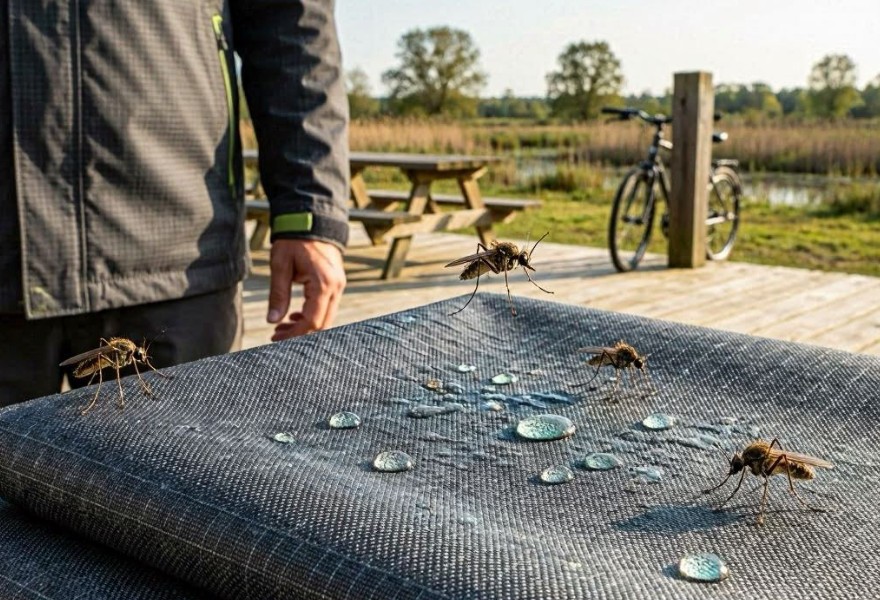
For centuries, humanity has waged a persistent war against the mosquito. Beyond the incessant annoyance of their bites, these insects serve as primary vectors for devastating diseases such as malaria, dengue, Zika, and West Nile virus. Traditional protection methods—ranging from DEET-based chemical sprays to mosquito netting—have remained largely unchanged for decades, often suffering from issues like skin irritation, chemical odor, and limited durability. However, a scientific breakthrough led by artificial intelligence is changing the game: the development of a smart, bio-inspired fabric coating that repels mosquitoes before they can land, all while remaining imperceptible to the wearer.
This innovation represents a marriage between advanced material science and machine learning. By using AI to screen millions of molecular combinations, researchers have synthesized a coating that mimics the natural defense mechanisms found in specific botanical species, providing a long-lasting and non-toxic solution to a global health problem.
The AI-Driven Discovery Process
Designing a substance that repels insects while remaining safe for human skin is a complex chemical challenge. Traditional trial-and-error laboratory methods would take years to test the efficacy, toxicity, and durability of new compounds. To accelerate this, scientists employed a specialized neural network designed for material informatics.
Simulating Molecular Interactions
The AI model was trained on vast datasets of molecular structures known for their insect-repellent properties, as well as data on human dermal sensitivity. The algorithm performed the following tasks:
- Screening for Efficacy: It simulated how different molecular chains interact with the olfactory receptors of mosquitoes, identifying compounds that effectively "block" or "misdirect" the insect's ability to sense human skin.
- Optimizing Durability: The AI modeled how different coating polymers adhere to fabric fibers—such as cotton, polyester, and nylon—ensuring the repellent survives dozens of laundry cycles.
- Safety Validation: It predicted the metabolic impact of the coating on human skin, successfully filtering out compounds that could trigger allergic reactions.
How the Fabric Coating Functions
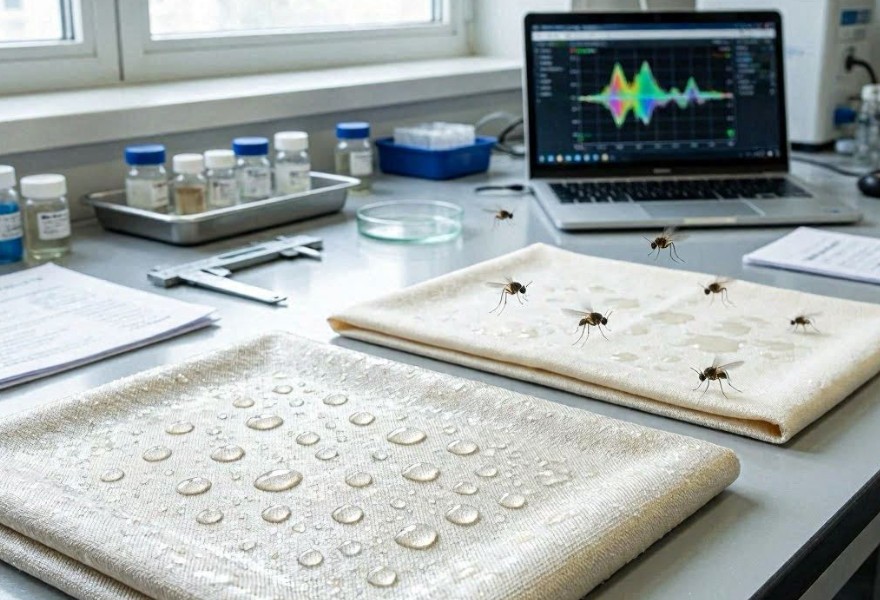
Unlike traditional sprays that evaporate quickly, this new AI-developed coating operates as a "slow-release" interface. It is applied to fabrics during the manufacturing process, effectively embedding the repellent molecules within the weave of the textile.
The Mechanism of Repulsion
The coating works by creating a subtle, microscopic barrier that releases a specific scent—undetectable to humans—that disrupts the mosquito’s sensory navigation. When a mosquito approaches a treated garment, the volatile compounds released by the fabric interfere with the insect's ability to detect carbon dioxide and lactic acid, the primary chemical signals mosquitoes use to locate a host. Essentially, to the mosquito, the person wearing the treated fabric becomes "invisible" or highly unappealing.
Advantages Over Traditional Methods
This AI-designed technology offers several distinct advantages that address the failures of previous repellent solutions:
- Extended Protection: Because the repellent is chemically bonded to the fabric fibers, it provides protection that lasts through months of daily wear, far outlasting topical lotions.
- Eco-Friendly and Safe: The AI optimized for natural, biodegradable compounds, ensuring that the technology is safe for both the wearer and the surrounding environment, unlike many synthetic neurotoxic insecticides.
- Increased Comfort: Since the repellent is part of the fabric itself, there is no need for sticky, greasy creams, making it ideal for everything from high-performance athletic wear to everyday casual clothing.
The Broader Impact on Public Health
The implications of a mosquito-repellent fabric go far beyond personal convenience. In regions where mosquito-borne diseases are endemic, this technology could be integrated into uniforms, school clothing, and bedding, providing a passive, consistent layer of protection for entire communities. By reducing the human-mosquito contact rate, the coating has the potential to significantly lower infection rates for diseases that currently claim hundreds of thousands of lives annually.
Conclusion
The development of this repellent fabric coating is a powerful testament to the potential of artificial intelligence to solve real-world problems. By utilizing machine learning to navigate the vast complexities of chemistry, we have discovered a solution that is safer, more durable, and more effective than anything that came before it. As this technology scales from the laboratory to the mass market, it promises to reshape our relationship with the outdoors, allowing us to move through the world with newfound confidence, protected by the invisible, intelligent science woven into our very clothes.