
In recent years, there has been a significant advancement in the field of Artificial Intelligence (AI) and Augmented Reality (AR). These technologies have become increasingly popular and have the potential to enhance virtual experiences in various fields such as gaming, education, healthcare, and...
AI Developed a New Type of Adhesive That Holds Stronger Underwater
182
18.07.2026
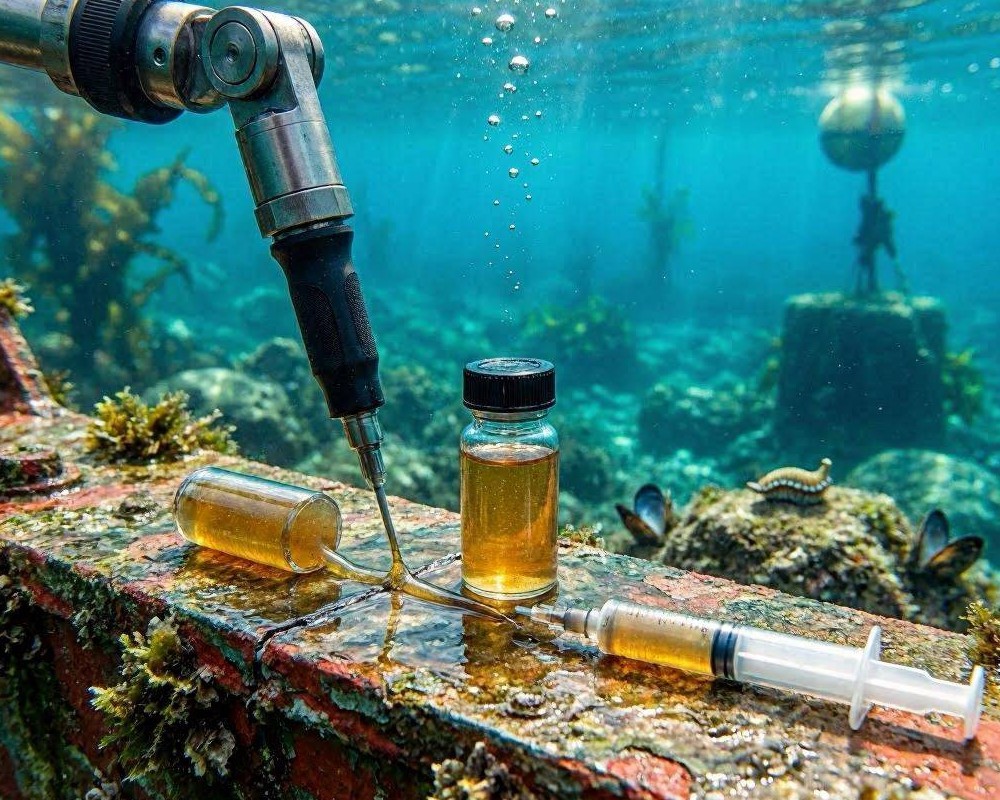
Underwater repairs have always been a compromise: most adhesives lose strength when exposed to water pressure, salt ions, and constant shear forces. A new breakthrough shifts the trade-off. By using AI to guide material design, researchers have developed an adhesive formulation engineered to maintain—often exceed-bond strength even after prolonged immersion.
This matters not only for divers and hobbyists, but for shipyards, offshore energy, bridges, and water infrastructure. When failures happen underwater, the cost of stopping operations and mobilizing specialists can be enormous. A stronger, more reliable adhesive can reduce both downtime and structural risk.
Why Underwater Adhesives Fail
To appreciate the innovation, it helps to understand what typically goes wrong below the surface. Water is not just a solvent; it actively interferes with bonding mechanisms.
Common failure modes
- Hydrolysis: Polymer networks can break down when exposed to water over time.
- Interfacial contamination: Biofilms, oils, and salt deposits reduce wetting and adhesion.
- Ion-driven weakening: Salts can disrupt chemical interactions that normally hold the adhesive to the substrate.
- Water penetration: Moisture migrates into the adhesive layer, lowering cohesive strength.
- Thermal and pressure cycling: Marine environments repeatedly stress the bond line.
Traditional adhesives may work briefly, but they often degrade under long-term immersion or dynamic loading. The key challenge is creating chemistry and microstructure that remain stable while still forming a strong interface in wet conditions.
How AI Helped Design a Better Bond
The research approach leverages machine learning to compress the “trial-and-error” cycle of materials development. Instead of testing thousands of formulations blindly, the team used AI models trained on experimental and simulated data to predict which compositions would perform best underwater.
AI-enabled material discovery
In practice, the system evaluates candidate adhesives based on features such as curing behavior, water uptake, predicted interfacial interactions, and durability under simulated seawater conditions. The AI then ranks formulations likely to resist hydrolysis and maintain strong cohesive properties.
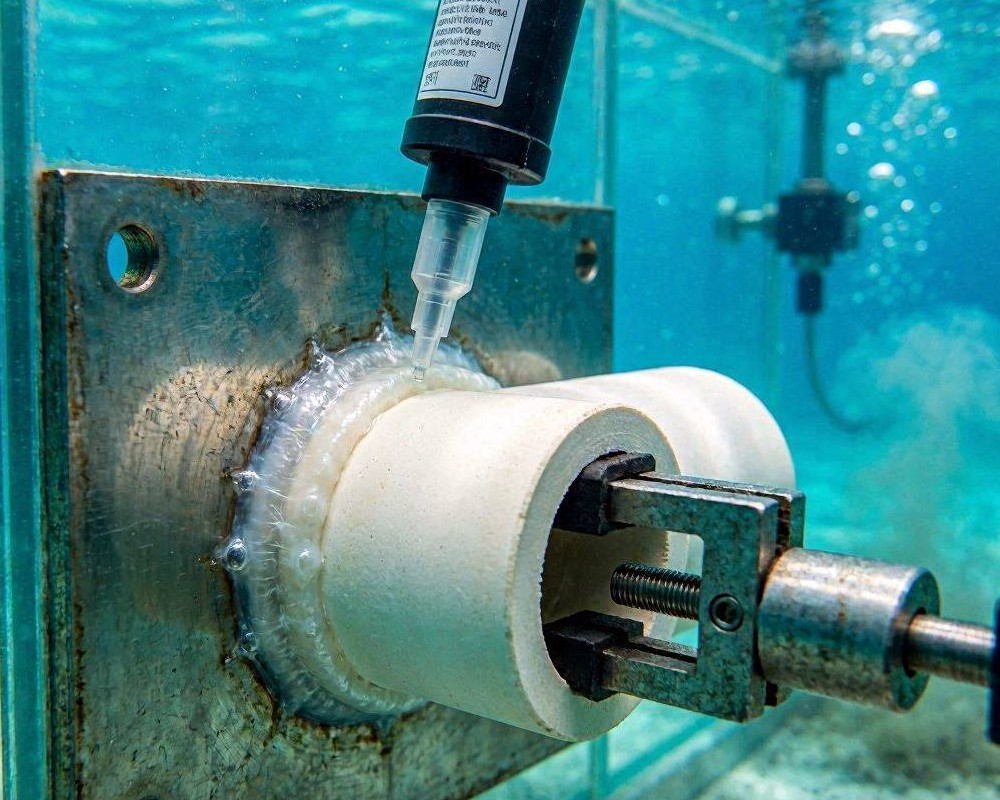
After selecting top candidates, researchers verify performance using accelerated aging and mechanical tests that mimic real underwater stresses—tensile strength, lap shear strength, and durability after cycling immersion.
What Makes the New Adhesive Stronger Underwater
The standout improvement is not just initial bonding; it’s the retention of strength after water exposure. This is typically achieved by pairing robust polymer crosslinking with interfacial chemistry that tolerates wet surfaces.
Performance-focused design choices
- Reduced water sorption: The adhesive network is tuned to limit how quickly water penetrates.
- Stable crosslink architecture: Curing produces a structure that resists hydrolysis.
- Improved wetting on marine substrates: The formulation adapts to damp, contaminated surfaces better than conventional systems.
- Stronger interfacial energy: The chemistry encourages more durable attachment even when water competes with bonding sites.
Even more important, the AI-guided optimization targets how the adhesive behaves at the bond line, not only the bulk material. Underwater failures often begin at the interface, where micro-gaps and weakened adhesion allow cracks to propagate.
Where This Could Transform Underwater Work
If the performance scales from lab testing to real-world deployment, the adhesive could support safer, faster repairs across multiple sectors.
Potential applications
- Ship hull and propeller repairs where quick underwater patching reduces dry-dock time.
- Offshore platforms and pipelines requiring durable bonding under salinity and pressure.
- Bridge and marine infrastructure maintenance to manage corrosion-prone joints.
- Water treatment facilities where equipment longevity depends on reliable sealing.
- Underwater cable and sensor mounting in habitats where rework is difficult.
Beyond adhesive use itself, the underlying AI workflow signals a broader shift: material engineering is becoming faster and more predictive, especially for harsh environments where conventional design rules are insufficient.
What to Consider Before Adoption
Stronger underwater adhesion is promising, but engineers will still need to validate compatibility with substrate types, surface preparation methods, and expected service conditions.
Practical evaluation checklist
- Substrate match: Confirm performance on steel, concrete, composites, and coatings.
- Immersion duration: Test for long-term retention, not just initial pull-off strength.
- Environmental limits: Verify salt concentration, temperature range, and biofouling exposure.
- Curing constraints: Assess whether the curing timeline works for field conditions.
- Mechanical loading profile: Ensure resistance under shear, peel, and fatigue-like stress.
When these factors are addressed, AI-designed adhesives could reduce uncertainty in underwater repairs and help extend the lifespan of critical structures.
The Bottom Line
AI is enabling adhesives that are built for the realities of underwater environments—water competition, chemical attack, and mechanical stress. The new adhesive’s strength retention suggests a meaningful leap from “works briefly in water” to “stays strong after immersion,” which could reshape maintenance strategies in marine and offshore industries.