
In recent years, there has been a significant advancement in the field of Artificial Intelligence (AI) and Augmented Reality (AR). These technologies have become increasingly popular and have the potential to enhance virtual experiences in various fields such as gaming, education, healthcare, and...
AI Found a Way to Turn Peat Bogs into an Energy Source
168
28.06.2026
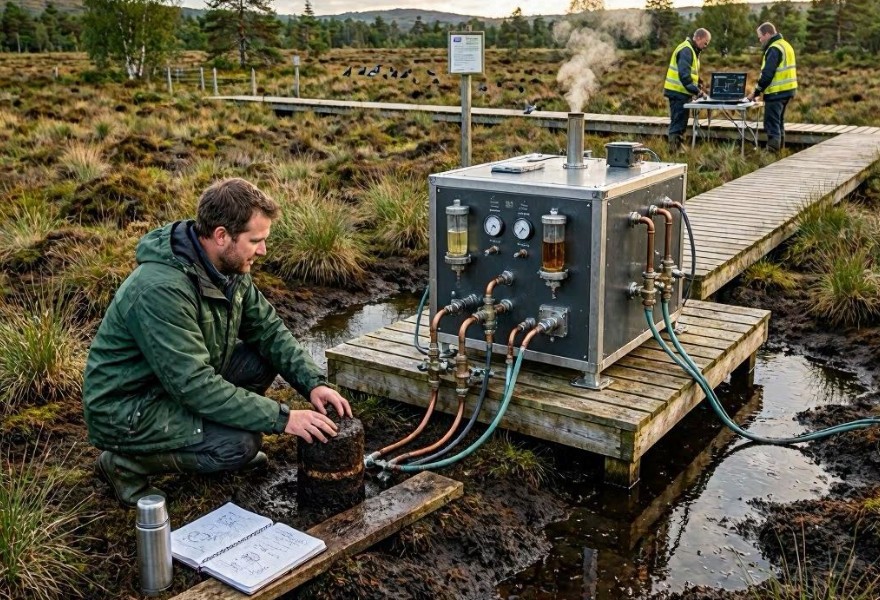
Peat bogs have long been viewed as a paradox of nature. On one hand, they are among the most effective carbon sinks on the planet, storing vast amounts of organic carbon accumulated over millennia. On the other, they have historically been harvested as a crude fossil fuel, a practice that releases immense amounts of carbon dioxide and destroys fragile ecosystems. For years, the dilemma of how to utilize the energy potential of peat without permanently compromising our climate goals has remained unsolved. However, a new breakthrough involving artificial intelligence and advanced biochemical processing is providing a potential solution: converting peat into high-density, low-emission energy sources without the traditional destructive mining practices.
Researchers have recently deployed AI algorithms to analyze the complex molecular structure of peat and optimize its conversion into bio-energy. By rethinking how we process these organic materials, scientists are turning an environmental liability into a sustainable, circular energy asset.
The Complexity of Peat Decomposition
The reason peat has remained difficult to utilize sustainably is its heterogeneous nature. It consists of partially decayed vegetation, water, and varying levels of humic acid, which makes direct combustion highly inefficient and incredibly polluting. Traditional methods of burning peat are chemically messy, releasing not only CO2 but also significant amounts of sulfur and nitrogen oxides.
AI as a Molecular Mapper
To overcome these challenges, researchers utilized deep learning models to map the molecular composition of peat samples collected from various depths and types of bogs. The AI was tasked with identifying chemical pathways to "pre-process" the peat—essentially breaking down the complex organic polymers into simpler, cleaner combustible liquids or gases before combustion ever takes place.
Sustainable Conversion Processes
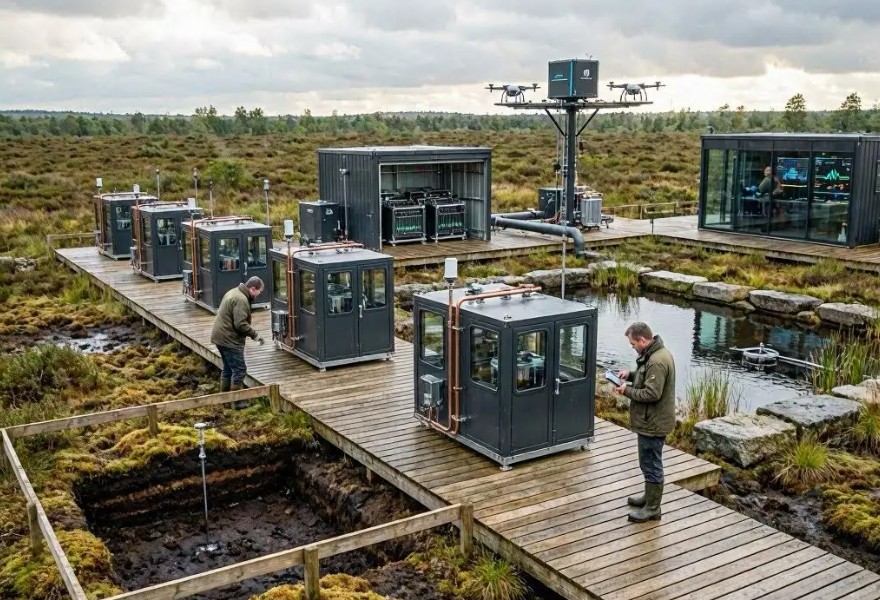
The breakthrough lies in the AI-optimized application of hydrothermal carbonization (HTC). In this process, raw, wet peat is placed in a reactor under controlled pressure and temperature. The AI acts as a digital supervisor, modulating these conditions in real time based on the specific moisture and carbon content of the input sample.
Optimizing Hydrothermal Carbonization
- Dynamic Pressure Management: The AI adjusts the reactor pressure to maximize the yield of "hydro-char," a coal-like substance that has a much higher energy density than raw peat.
- Catalyst Selection: The algorithm identifies the most effective natural catalysts—often derived from other organic waste streams—to speed up the conversion process, reducing the energy needed for the reaction.
- Water Recovery: AI models monitor the byproduct water to ensure that contaminants are removed, allowing the water to be recycled back into the bog ecosystem or used for irrigation.
Environmental Stewardship via Algorithmic Precision
The most controversial aspect of peat usage is the extraction process. AI-assisted mapping now allows for "precision harvesting," where machines are directed by satellite and sensor data to remove only the top layers of degraded peat, leaving the deeper, carbon-rich layers undisturbed. This method, optimized by machine learning to predict how a bog will recover, ensures that the extraction site remains a functional carbon-sequestering wetland even after limited harvesting.
Predicting Ecosystem Recovery
Before any harvesting occurs, AI simulations model the potential impact on the bog's water table and biodiversity. If the simulation suggests a high risk of ecosystem collapse, the algorithm denies the extraction permit. This "digital gatekeeping" ensures that peat-based energy production is restricted only to bogs that are already degraded or have been identified as suitable for small-scale, regenerative management.
The Future of Circular Bio-Energy
By transforming raw peat into refined bio-fuels, we are creating a localized energy source that could reduce reliance on imported fossil fuels in northern regions. The beauty of this AI-driven approach is its adaptability. Because the algorithm can be recalibrated for different types of biomass, the same reactors used for peat can potentially process agricultural residues, turning the entire local ecosystem into a circular energy hub.
Conclusion
The use of artificial intelligence to optimize the conversion of peat into energy is a prime example of how technology can heal the divide between industrial demand and environmental protection. By applying high-level analytical rigor to a substance that was once seen as a "dirty fuel," we have unlocked a cleaner, more efficient pathway. While peat management remains a sensitive topic, the integration of AI-driven precision and regenerative harvesting offers a glimpse into a future where our energy needs do not come at the expense of our planet’s most vital ecosystems.