

In recent years, there has been a significant advancement in the field of Artificial Intelligence (AI) and Augmented Reality (AR). These technologies have become increasingly popular and have the potential to enhance virtual experiences in various fields such as gaming, education, healthcare, and...
AI Helps Fishermen Track Schools of Fish Without Special Equipment
560
15.12.2025

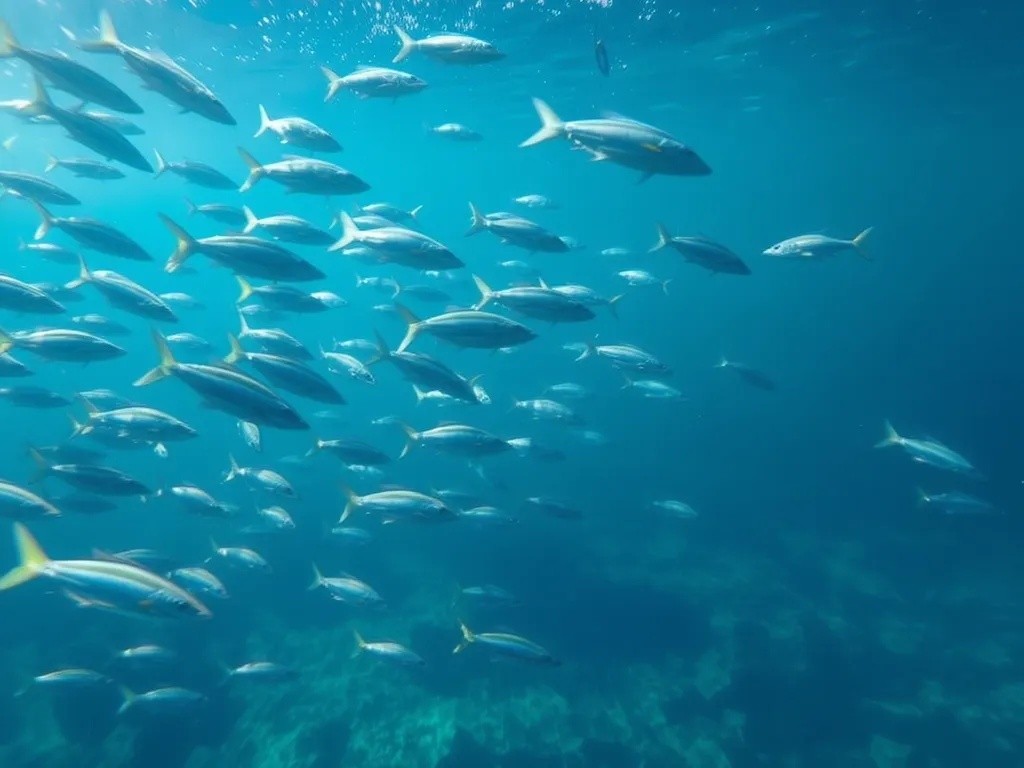
In a groundbreaking development for the fishing industry, artificial intelligence technology now enables fishermen to track schools of fish without expensive specialized equipment. This innovation represents a significant democratization of technology that was previously available only to large commercial operations with substantial financial resources.
How AI Fish Tracking Works
The new AI systems utilize a combination of machine learning algorithms, smartphone sensors, and publicly available oceanographic data to predict fish locations with remarkable accuracy. Unlike traditional fish-finding methods that require specialized sonar equipment costing tens of thousands of dollars, these AI solutions work with devices fishermen already own.
Core Technologies Behind the System
- Pattern recognition algorithms that analyze historical catch data, weather patterns, and seasonal migrations
- Computer vision technology that can identify subtle surface water disturbances from ordinary smartphone photos
- Integration with public satellite data to track water temperature, currents, and plankton concentrations
- Collaborative data networks where fishermen anonymously share information to improve prediction accuracy for everyone
Once installed on a standard smartphone, the application continuously analyzes environmental conditions and compares them against vast databases of fish behavior. When conditions match known patterns for specific species, the system alerts the user and provides navigation guidance.
Real-World Impact on Fishing Communities
In coastal communities worldwide, the technology is already transforming how small-scale and artisanal fishermen operate. In Indonesia, early adopters report catch increases of 30-45% while simultaneously reducing fuel consumption by avoiding fruitless searching. For many fishing families operating on thin margins, this technology represents the difference between profitability and financial struggle.
Economic and Environmental Benefits
The benefits extend beyond individual fishermen to include broader economic and environmental advantages:
- Reduced fuel consumption and carbon emissions from more efficient fishing expeditions
- Decreased bycatch as fishermen can target specific species more precisely
- More stable income for fishing communities, helping preserve traditional ways of life
- Improved food security in regions dependent on local fishing for protein sources
Challenges and Limitations
Despite its promise, the technology faces several challenges. Network connectivity remains inconsistent in many fishing regions, though offline functionality mitigates this issue somewhat. Additionally, the system currently works better for certain species with more predictable behavior patterns than for others with erratic movement.
Environmental scientists also express concerns about potential overfishing if the technology becomes too effective without proper regulation. Developers are working closely with marine conservation organizations to build in sustainability safeguards.
Future Development Directions
The technology continues to evolve rapidly. Current development efforts focus on several promising areas:
Next Generation Features
- Integration with weather prediction algorithms to forecast optimal fishing windows
- Species-specific tracking refinements for previously difficult-to-locate fish
- Sustainable catch quota recommendations based on regional stock assessments
- Augmented reality overlays that visualize underwater topography and fish concentration directly on the boat's camera view
Researchers are also exploring how acoustic data from ordinary boat engines can be analyzed to detect fish schools, potentially adding another data source without requiring additional equipment.
Conclusion
This AI fishing technology represents a rare technological advancement that simultaneously benefits small-scale operators economically while encouraging more sustainable practices. By lowering the technological barrier to efficient fishing, it helps level the playing field between large commercial operations and independent fishermen.
As machine learning algorithms continue improving through increased data collection, accuracy will likely reach levels previously unimaginable without specialized equipment. The democratization of this technology promises to reshape coastal economies worldwide while potentially contributing to more sustainable management of our ocean resources.