

In recent years, there has been a significant advancement in the field of Artificial Intelligence (AI) and Augmented Reality (AR). These technologies have become increasingly popular and have the potential to enhance virtual experiences in various fields such as gaming, education, healthcare, and...
AI Learned to Detect Signs of Depression in Messenger Conversations
163
04.07.2026

In the modern era, a significant portion of our social interaction has migrated from face-to-face meetings to the digital realm. Messaging apps have become the primary channel for our daily communication, acting as a repository for our moods, anxieties, and shifting mental states. While this digital shift has been documented for its potential to increase isolation, it has also created an unprecedented opportunity for public health. Artificial intelligence researchers have recently developed advanced models capable of identifying subtle markers of depression within text-based conversations, offering a new, non-invasive way to flag mental health struggles before they escalate into crises.
This development does not aim to replace the role of clinical psychologists or therapists. Instead, it serves as a "digital canary in a coal mine," providing an early warning system that can prompt individuals to seek the professional help they need. By analyzing the language, cadence, and semantic patterns hidden within our everyday chats, these AI systems are beginning to offer a deeper understanding of human emotional health.
The Linguistics of Depression
Depression leaves a "linguistic fingerprint" that is often invisible to human observers but highly detectable to machine learning models. Clinical researchers have long known that people experiencing depressive episodes shift their language in consistent, measurable ways. AI systems are now trained to recognize these patterns with high sensitivity.
Key Indicators and Semantic Markers
The AI models focus on several specific linguistic categories that frequently correlate with depressive states:
- First-Person Pronoun Usage: Research has shown that individuals suffering from depression often use "I" and "me" more frequently than "we" or "us," indicating a narrowing of perspective and increased self-focus.
- Absolutist Language: The AI flags the frequent use of words like "always," "never," "completely," or "nothing." This type of binary, polarized thinking is a hallmark of cognitive distortions often associated with mood disorders.
- Decreased Social Engagement Markers: Shifts in response time, the use of shorter sentences, and a decline in the frequency of initiating conversation can all serve as indicators of lethargy or social withdrawal.
How the Technology Works
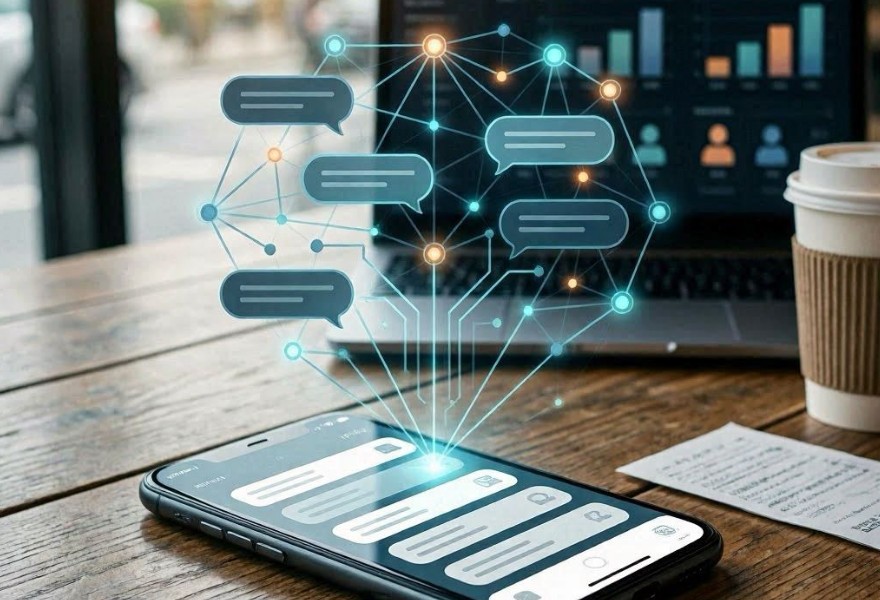
The detection process relies on Natural Language Processing (NLP), specifically transformer-based architectures that excel at understanding context and nuance. Unlike older "keyword" search methods that would flag a user for simply using the word "sad," modern AI looks at the *intent* and *emotional valence* of the entire conversation thread.
Contextual Analysis and Nuance
Modern models are trained to differentiate between a fleeting mood—such as feeling down after a bad day—and a persistent, pervasive state of low mood. The AI performs longitudinal analysis, tracking changes in a user’s communication style over days, weeks, and months. By establishing a "baseline" for each individual, the AI can detect significant deviations that suggest a decline in mental health, rather than simply misinterpreting a few negative messages.
The Ethical Frontier
The ability to detect mental health indicators through private messaging software raises significant ethical and privacy concerns. The question of "who owns the data?" and "who is alerted?" is central to the development of these systems.
Privacy by Design
Most reputable developers are implementing "privacy-by-design" frameworks, where the analysis happens locally on the user's device. This means the sensitive data never reaches a cloud server; only the AI, running on the phone, knows that a pattern has been detected. In these designs, the "intervention" is triggered within the app itself—for example, by presenting the user with resources for mental health support, contact information for therapists, or simple self-care prompts, rather than alerting a third party.
The Future of Proactive Mental Health
This technology has the potential to transform mental health from a reactive system—where people seek help only after they have reached a breaking point—into a proactive one. By catching the early signals of depression, we can encourage smaller, more manageable interventions before a condition becomes chronic. As these AI models become more sophisticated and accurate, they may become standard features in digital wellness platforms, helping us to be more mindful of our own well-being and more supportive of those around us.
Conclusion
The integration of AI into our digital communication is a double-edged sword, but when used to identify and support mental health, it offers a profound opportunity for good. By learning to "read between the lines" of our messenger conversations, artificial intelligence is helping us identify signs of depression that we might have missed in ourselves or our friends. As we continue to refine these tools, the ultimate goal is not to monitor or control, but to provide a digital hand reaching out to those who may be struggling in silence, guiding them toward the support they deserve.