
In recent years, there has been a significant advancement in the field of Artificial Intelligence (AI) and Augmented Reality (AR). These technologies have become increasingly popular and have the potential to enhance virtual experiences in various fields such as gaming, education, healthcare, and...
AI Learned to Grow Corals in the Laboratory Faster Than Nature
1064
16.03.2026
The Global Crisis of Coral Reefs
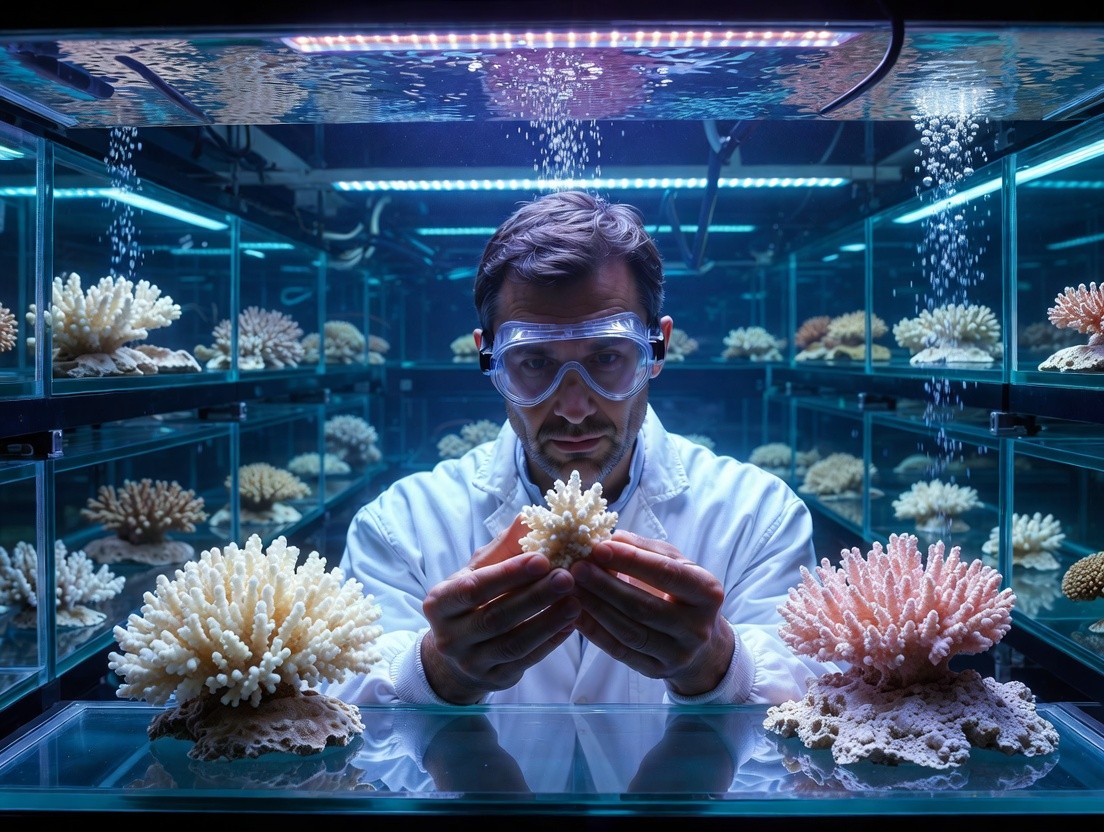
Coral reefs are among the most valuable ecosystems on Earth. They support thousands of marine species, protect coastlines from erosion, and sustain fishing and tourism industries. However, climate change, pollution, and ocean acidification have caused widespread coral bleaching and reef destruction around the world.
Scientists estimate that a large percentage of coral reefs could disappear within decades if restoration efforts are not significantly improved. Because corals grow very slowly in the wild—often only a few centimeters per year—natural recovery can take many decades or even centuries. This slow growth rate has forced researchers to look for new technological solutions to accelerate coral regeneration.
Recently, researchers began combining laboratory coral farming with artificial intelligence. These new systems allow scientists to grow corals much faster than nature normally allows, potentially transforming reef restoration efforts worldwide.
How Artificial Intelligence Helps Grow Corals
Artificial intelligence is being used to analyze huge amounts of biological and environmental data related to coral growth. Machine learning models can examine factors such as water chemistry, temperature, lighting cycles, nutrient levels, and coral genetics to determine the ideal conditions for coral development.
By continuously analyzing experimental data, the algorithm adjusts laboratory environments to maximize growth speed and coral health. This approach removes much of the trial-and-error traditionally involved in marine biology experiments.
Main AI Tasks in Coral Research
- Analyzing growth patterns of different coral species
- Predicting optimal water conditions for development
- Identifying heat-resistant coral varieties
- Monitoring coral health through image analysis
- Optimizing feeding and lighting schedules
Machine learning is also used to process underwater images and measure coral size, survival rate, and color changes automatically. This allows scientists to track coral development much faster and more accurately than manual observation methods.
Laboratory Techniques That Accelerate Coral Growth
The rapid coral growth observed in laboratories is not achieved by artificial intelligence alone. Researchers combine AI analysis with innovative biological techniques that stimulate coral reproduction and tissue growth.
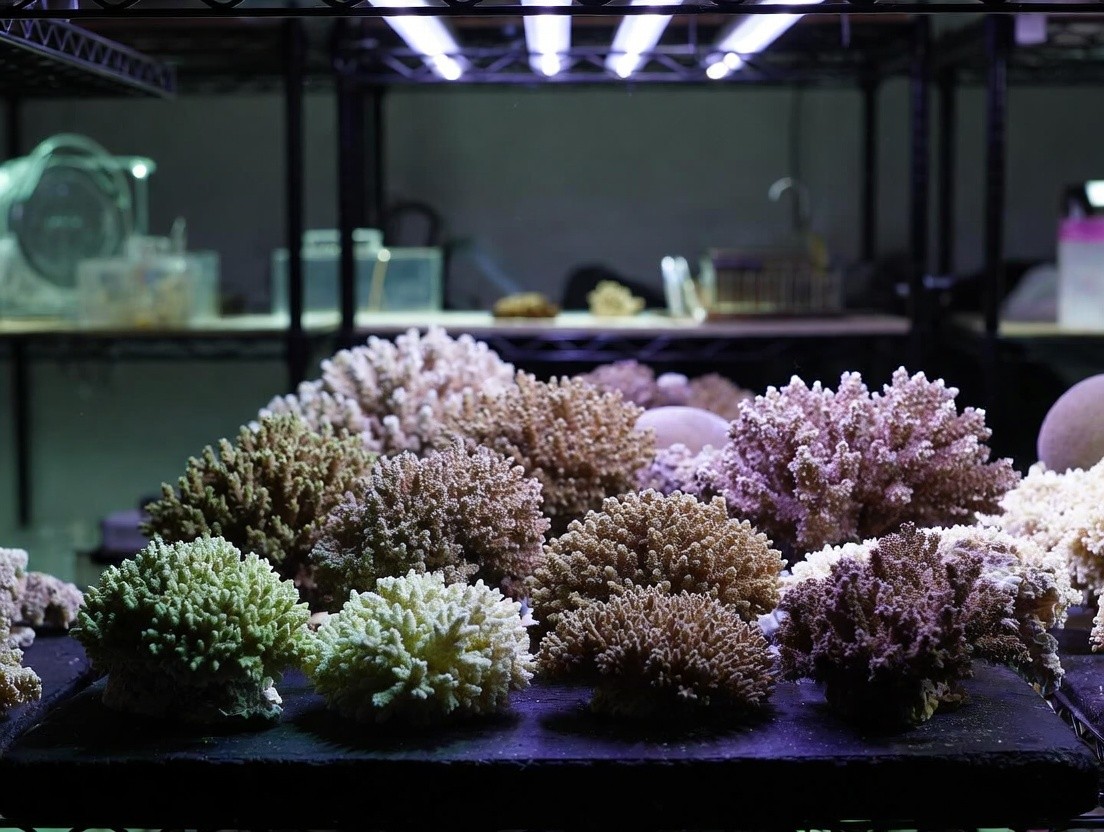
One of the most promising methods is microfragmentation. In this process, scientists cut coral colonies into tiny pieces. Each fragment begins growing rapidly to heal the cut edges, which dramatically accelerates overall colony growth.
Using this technique, coral fragments can fuse together and form large colonies much faster than they would in natural reef environments. Studies have shown that coral colonies grown using microfragmentation can reach sizes that would normally require decades in the wild within only a few years. :contentReference[oaicite:1]{index=1}
Technologies Used in Modern Coral Labs
- Microfragmentation to stimulate rapid tissue growth
- Automated water chemistry monitoring
- AI-controlled temperature and lighting systems
- Robotic coral handling and transplantation
- Machine learning models predicting survival rates
Some restoration projects report that these laboratory methods allow corals to grow dozens of times faster than they do naturally. In certain restoration programs, microfragmentation has been shown to accelerate growth rates by 25 to 50 times compared to natural reef development. :contentReference[oaicite:2]{index=2}
Large-Scale Coral Farming
Several organizations have already begun building land-based coral farms designed to mass-produce corals for reef restoration. These facilities grow thousands of coral fragments in controlled tanks before transplanting them back into damaged reef ecosystems.
By combining laboratory coral cultivation with AI monitoring systems, researchers can produce large numbers of healthy coral colonies every year. Some projects have even introduced multiple coral spawning cycles annually by controlling light and seasonal conditions inside laboratories. :contentReference[oaicite:3]{index=3}
This industrial-style approach to coral cultivation is sometimes referred to as “coral farming.” It aims to restore entire reef ecosystems within years instead of decades.
Future of AI-Assisted Reef Restoration
The integration of artificial intelligence into marine biology is still developing, but the early results are promising. AI systems are already helping scientists monitor reefs, predict environmental threats, and improve restoration strategies.
Future technologies may include autonomous underwater robots that plant coral fragments, AI models that simulate reef ecosystems, and digital twins of coral reefs that help scientists test restoration scenarios virtually before implementing them in the ocean.
These innovations could become critical tools in protecting one of the planet’s most important ecosystems. While technology alone cannot solve the climate crisis, AI-driven coral cultivation offers a powerful new method to accelerate reef recovery and preserve marine biodiversity.
If these techniques continue to improve, scientists may soon be able to restore damaged coral reefs around the world far faster than natural processes ever allowed.