In recent years, there has been a significant advancement in the field of Artificial Intelligence (AI) and Augmented Reality (AR). These technologies have become increasingly popular and have the potential to enhance virtual experiences in various fields such as gaming, education, healthcare, and...
AI Monitors the Condition of Bridges Using Vibration Sensor Data
18
28.10.2026
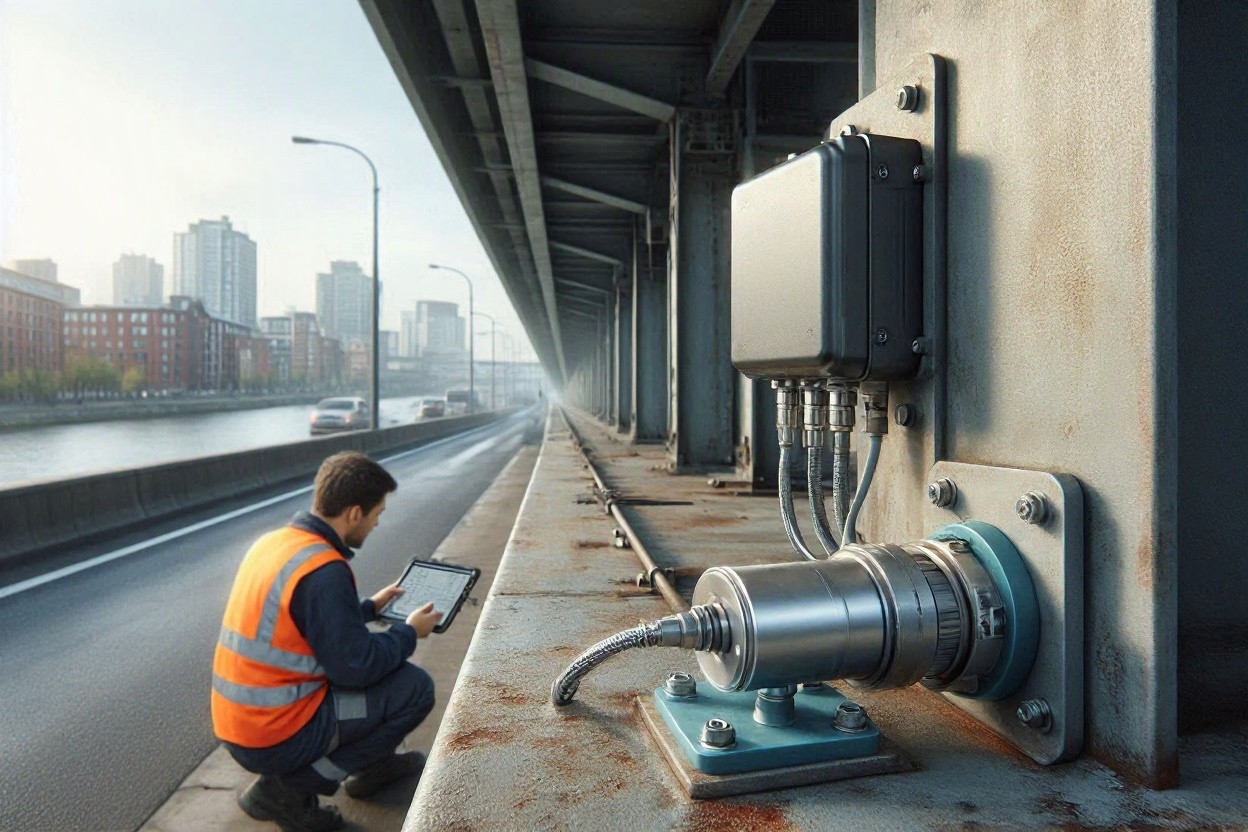
Bridges age under constant pressure from traffic, wind, temperature changes, corrosion, and occasional extreme events. Traditional inspections remain essential, but they are periodic, labor-intensive, and sometimes unable to detect early internal damage. Artificial intelligence is changing this model by continuously analyzing vibration sensor data and identifying subtle changes in a bridge’s structural behavior before visible defects appear.
Why Vibration Data Matters in Bridge Health Monitoring
Every bridge has a dynamic signature. When vehicles pass, wind loads shift, or temperature changes affect materials, the structure vibrates in measurable patterns. These patterns include natural frequencies, damping ratios, mode shapes, and response amplitudes. If a girder cracks, a bearing deteriorates, or stiffness decreases in a critical section, the vibration response often changes.
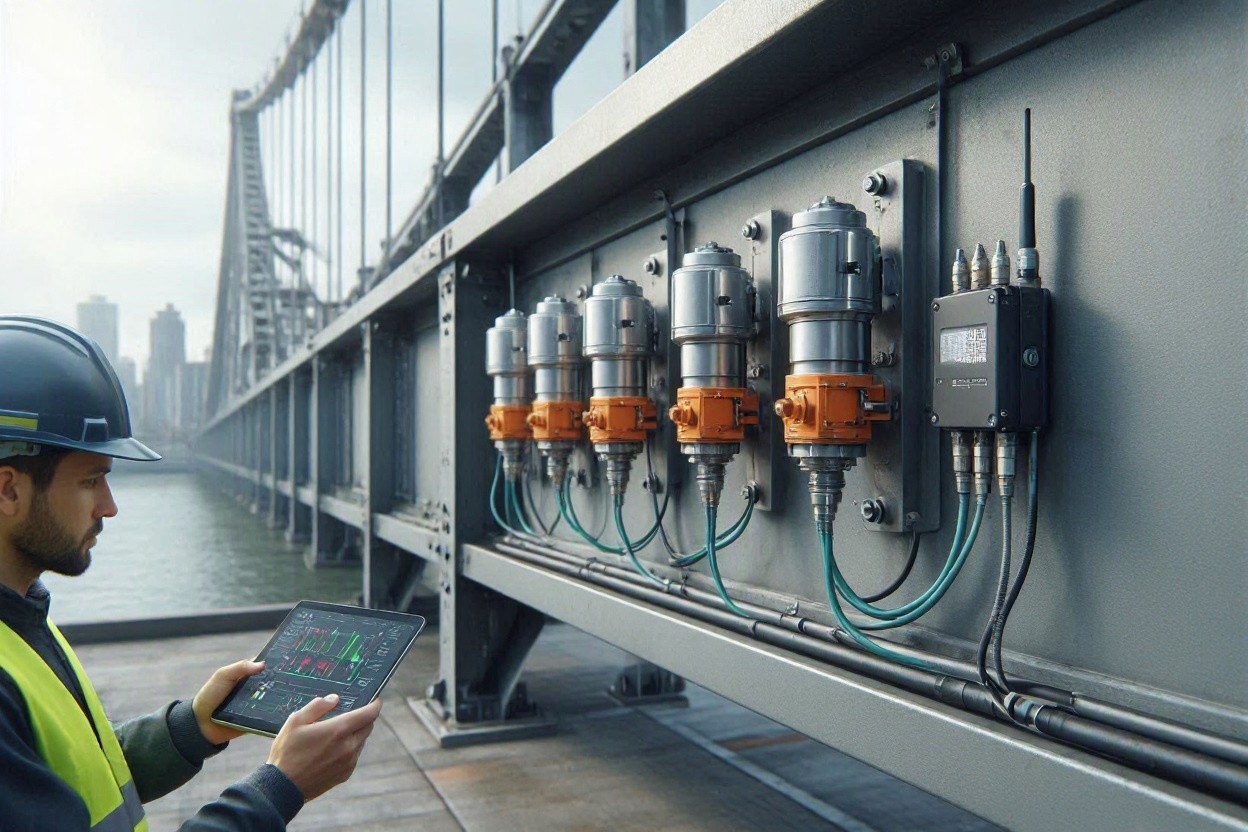
Vibration sensors, commonly accelerometers, are installed at selected points on the deck, supports, cables, or towers. They collect data continuously or during specific monitoring periods. The result is a detailed record of how the bridge behaves under real operating conditions, not just during a scheduled inspection.
From Raw Signals to Structural Insight
Raw vibration signals are complex. They contain useful structural information mixed with noise from traffic variability, wind, temperature, and sensor drift. AI helps by filtering, classifying, and interpreting these signals at scale. Instead of relying only on fixed thresholds, machine learning models learn what normal bridge behavior looks like and flag deviations that may indicate damage.
How AI Detects Early Signs of Damage
AI-based bridge monitoring typically begins with baseline modeling. During a period when the bridge is considered healthy, the system records vibration patterns across different traffic loads and weather conditions. The model then learns the normal range of responses and compares new data against this reference.
- Anomaly detection: The system identifies unusual vibration patterns that differ from normal behavior.
- Damage localization: Advanced models estimate which part of the bridge may be affected.
- Severity assessment: Algorithms evaluate whether the change is minor, developing, or potentially critical.
- Trend analysis: Long-term monitoring shows whether structural performance is stable or deteriorating.
Machine Learning Techniques Used
Several AI methods are applied in structural health monitoring. Supervised learning can classify known damage scenarios when labeled data is available. Unsupervised learning is useful when damage examples are rare, which is common for major bridges. Neural networks, autoencoders, random forests, support vector machines, and Bayesian models are all used depending on data quality and project goals.
Deep learning is especially valuable when monitoring systems generate large datasets. It can find patterns that are difficult to define manually, such as nonlinear relationships between temperature, traffic load, and vibration response. However, the best systems combine AI with engineering knowledge rather than treating the bridge as a black box.
Benefits for Infrastructure Owners
AI vibration monitoring offers practical value for transport agencies, municipalities, railway operators, and private infrastructure owners. It does not replace engineers, but it gives them better evidence for decisions.
- Earlier detection: Small changes can be identified before they become visible cracks or service disruptions.
- Lower inspection risk: Fewer emergency manual inspections are needed in hard-to-access areas.
- Better maintenance planning: Repairs can be prioritized based on measured structural behavior.
- Reduced lifecycle costs: Timely intervention often prevents expensive rehabilitation or replacement.
- Improved public safety: Continuous monitoring supports faster response after storms, earthquakes, or impacts.
Real-Time Alerts and Decision Support
Modern systems can transmit sensor data to cloud platforms or local edge devices. AI models process the data and generate alerts when abnormal behavior is detected. A useful alert should not simply say that something is wrong; it should provide context, confidence level, affected sensor locations, and recommended next steps for engineering review.
Challenges and Limitations
AI monitoring depends on data quality. Poor sensor placement, calibration errors, missing data, and environmental noise can reduce accuracy. Bridges also operate under changing conditions, so models must account for seasonal temperature effects, traffic growth, and maintenance activities. Without proper validation, an algorithm may generate false alarms or miss important changes.
Another challenge is the shortage of labeled damage data. Engineers rarely have extensive examples of real bridge failures, and intentionally damaging structures for training is impractical. To address this, teams use simulations, laboratory structures, digital twins, and transfer learning. Still, field validation remains critical before AI recommendations influence major safety decisions.
The Future of AI-Based Bridge Monitoring
The next generation of bridge monitoring will combine vibration sensors with strain gauges, displacement sensors, cameras, drone imagery, weather stations, and traffic data. AI will integrate these sources into a more complete picture of structural health. Digital twins will allow engineers to compare real-time sensor behavior with physics-based models and predict future deterioration.
As infrastructure networks age, continuous monitoring will become increasingly important. AI applied to vibration sensor data gives bridge owners a practical way to move from reactive maintenance to predictive asset management. The strongest results will come from systems designed jointly by structural engineers, data scientists, and maintenance teams, with clear procedures for verification and action.
In this role, AI is not a replacement for professional judgment. It is a powerful analytical tool that listens to a bridge’s vibrations, detects meaningful changes, and helps engineers protect critical infrastructure with greater precision and confidence.