

In recent years, there has been a significant advancement in the field of Artificial Intelligence (AI) and Augmented Reality (AR). These technologies have become increasingly popular and have the potential to enhance virtual experiences in various fields such as gaming, education, healthcare, and...
AI Optimizes Courier Routes Accounting for Traffic and Parcel Weight
10
28.09.2026
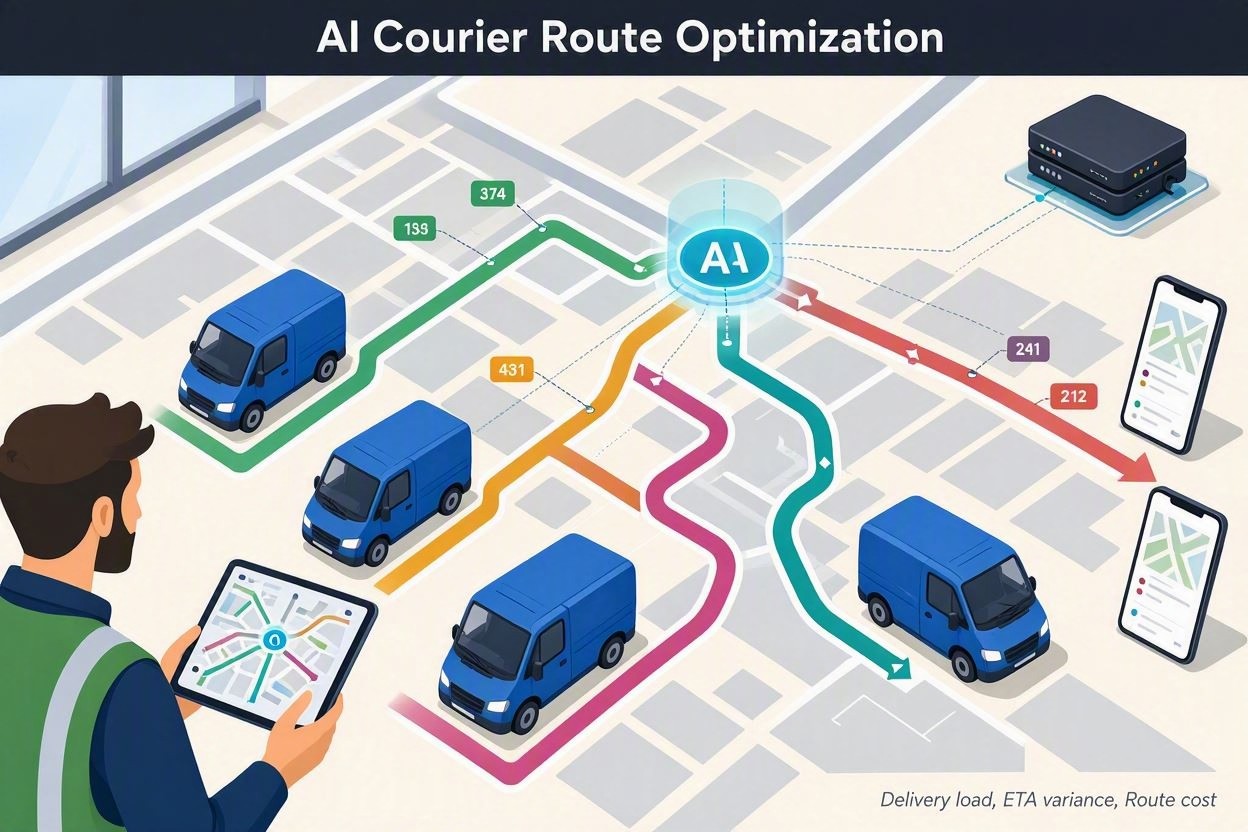
Courier delivery is no longer a simple question of finding the shortest road between two points. Modern logistics teams must balance live traffic, parcel weight, vehicle capacity, delivery time windows, fuel costs, driver availability, and customer expectations. Artificial intelligence makes this complex planning process faster and more accurate by continuously analyzing data and adjusting routes in real time.
For courier companies, AI route optimization can reduce delays, lower operating costs, improve fleet utilization, and increase delivery reliability. For customers, it means more accurate estimated arrival times and fewer missed deliveries. The key advantage is that AI does not treat every parcel or every road the same; it evaluates the full delivery context before recommending the best route.
How AI Understands Courier Route Complexity
Traditional route planning systems often rely on static maps and basic distance calculations. AI-based systems go further by combining historical delivery data, current road conditions, vehicle specifications, parcel characteristics, and business rules. This allows the system to make decisions that reflect real operational constraints rather than idealized routes.
Traffic Is More Than a Delay Factor
Traffic data helps AI predict not only how long a route will take but also when conditions are likely to change. A road that is clear at 9:00 a.m. may become congested by 9:30 a.m. because of school traffic, roadworks, weather, or recurring bottlenecks. AI models can learn these patterns and choose a route that remains efficient throughout the delivery sequence.
Real-time traffic feeds, GPS signals, incident reports, and historical congestion trends are often used together. When a traffic jam appears unexpectedly, the system can recalculate routes for one driver or an entire fleet, minimizing disruption without requiring manual dispatcher intervention.
Parcel Weight Changes the Best Route
Parcel weight directly affects fuel consumption, vehicle handling, loading order, and capacity planning. A van carrying heavy packages may not be suitable for steep roads, long detours, or routes with frequent stop-and-start traffic. AI can factor weight into route decisions so that the most efficient path is not only the fastest but also the most practical.
Weight-aware routing is especially valuable for mixed deliveries, where lightweight envelopes, fragile items, bulky goods, and heavy parcels are transported in the same vehicle. The system can recommend which packages should be delivered first to reduce vehicle load early, improve fuel efficiency, and make unloading safer for drivers.
Core Data Inputs Used by AI Routing Systems
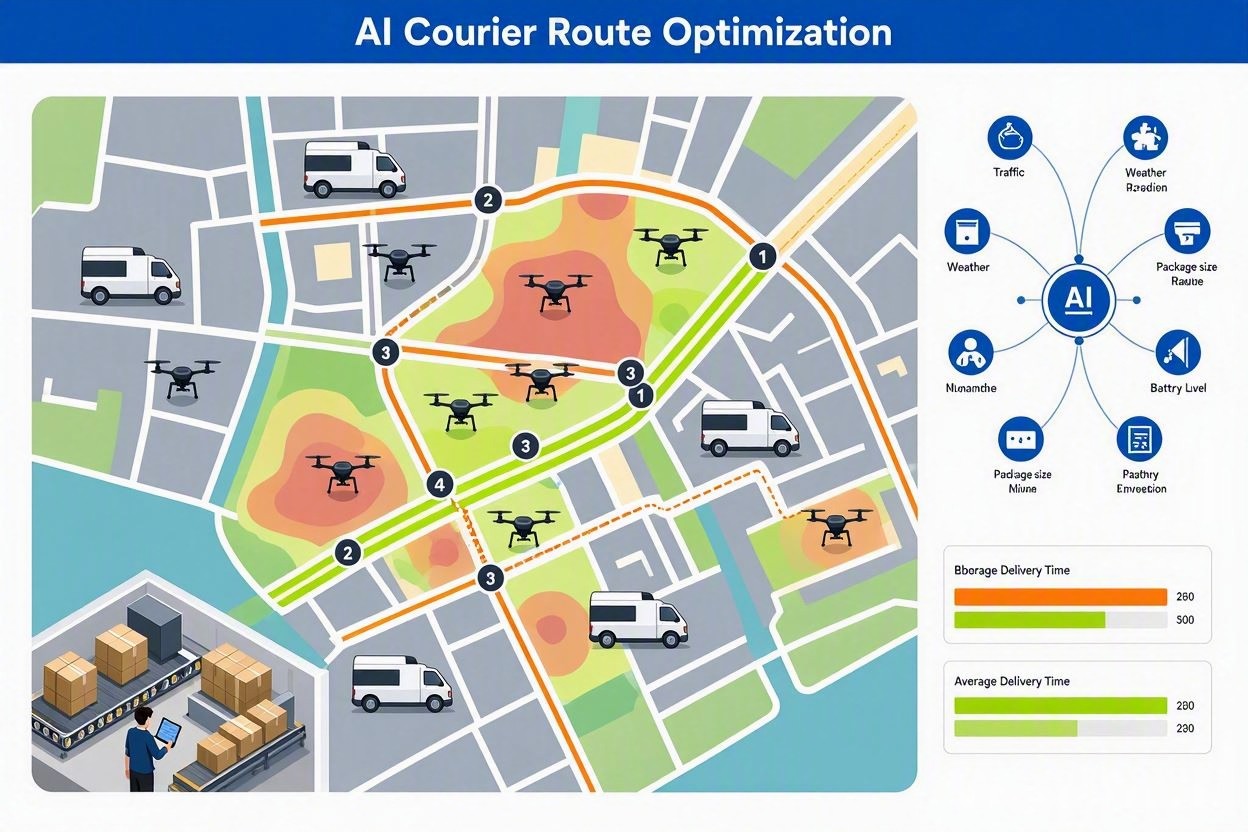
AI route optimization depends on high-quality data. The more accurate and timely the inputs, the better the route recommendations become. Common data sources include:
- Live traffic speeds, congestion alerts, and road closures.
- Parcel weight, dimensions, fragility, and handling requirements.
- Vehicle capacity, fuel type, range, and load limits.
- Customer delivery windows and priority levels.
- Driver schedules, break requirements, and route familiarity.
- Historical delivery times by neighborhood, day, and season.
- Weather conditions that may affect driving speed or safety.
By processing these inputs together, AI can avoid inefficient decisions that a simpler system might make. For example, assigning a heavy load to a route with many uphill stops may look acceptable on a map but become costly in practice. AI identifies these hidden inefficiencies before they affect delivery performance.
How AI Builds Better Delivery Sequences
Route optimization is not only about choosing roads; it is also about deciding the order of stops. AI evaluates thousands or even millions of possible stop combinations to identify the most effective delivery sequence. This is particularly important when couriers must meet strict time windows or handle parcels with different service levels.
Dynamic Reordering During the Day
Delivery conditions change constantly. A customer may reschedule, a driver may be delayed, or a road may become blocked. AI can dynamically reorder stops to protect the most important deliveries and reduce wasted mileage. Instead of following a rigid plan created in the morning, couriers receive updated instructions based on what is happening now.
Balancing Speed, Cost, and Service Quality
The fastest route is not always the best route. A slightly longer path may reduce fuel use, avoid tolls, keep a vehicle within weight-safe roads, or improve on-time delivery rates. AI can be configured to prioritize different goals depending on business strategy, such as cost reduction, premium delivery performance, lower emissions, or balanced workload distribution among drivers.
Business Benefits of AI Courier Route Optimization
When implemented properly, AI routing creates measurable gains across courier operations. Dispatchers spend less time manually solving routing conflicts. Drivers follow clearer plans and face fewer last-minute surprises. Fleet managers gain better visibility into performance and can use analytics to improve future planning.
- Lower delivery costs: Smarter routing reduces mileage, idle time, fuel consumption, and overtime.
- Higher on-time performance: Predictive traffic analysis improves delivery window accuracy.
- Better vehicle utilization: Weight and capacity planning prevents underused or overloaded vehicles.
- Improved customer experience: More reliable ETAs increase trust and reduce support requests.
- Reduced emissions: Efficient routes and lighter load sequencing help cut fuel waste.
Implementation Considerations
AI routing should be introduced with clear operational goals. A courier company may begin by optimizing a single city, delivery zone, or fleet segment before scaling across the network. Integration with order management systems, warehouse software, driver apps, and GPS tracking is essential for real-time performance.
Data quality also matters. Incorrect parcel weights, outdated addresses, or missing delivery windows can weaken optimization results. Companies should create processes for validating shipment data before routing begins. Human oversight remains important too: dispatchers can review AI recommendations and handle exceptions that require local knowledge or customer communication.
The Future of Intelligent Courier Delivery
As AI models become more advanced, courier routing will become increasingly predictive. Systems will anticipate demand surges, recommend pre-positioning of vehicles, and coordinate deliveries with electric vehicle charging schedules. Parcel weight, traffic, weather, and customer behavior will be treated as connected variables rather than separate planning issues.
AI route optimization gives courier companies a practical way to make delivery networks faster, safer, and more cost-efficient. By accounting for both real-time traffic and parcel weight, it turns route planning into a precise operational advantage instead of a daily guessing game.