
In recent years, there has been a significant advancement in the field of Artificial Intelligence (AI) and Augmented Reality (AR). These technologies have become increasingly popular and have the potential to enhance virtual experiences in various fields such as gaming, education, healthcare, and...
AI System Decodes Cat Emotions: Understanding Feline Communication
1142
01.03.2026
The Mystery of Feline Vocalizations
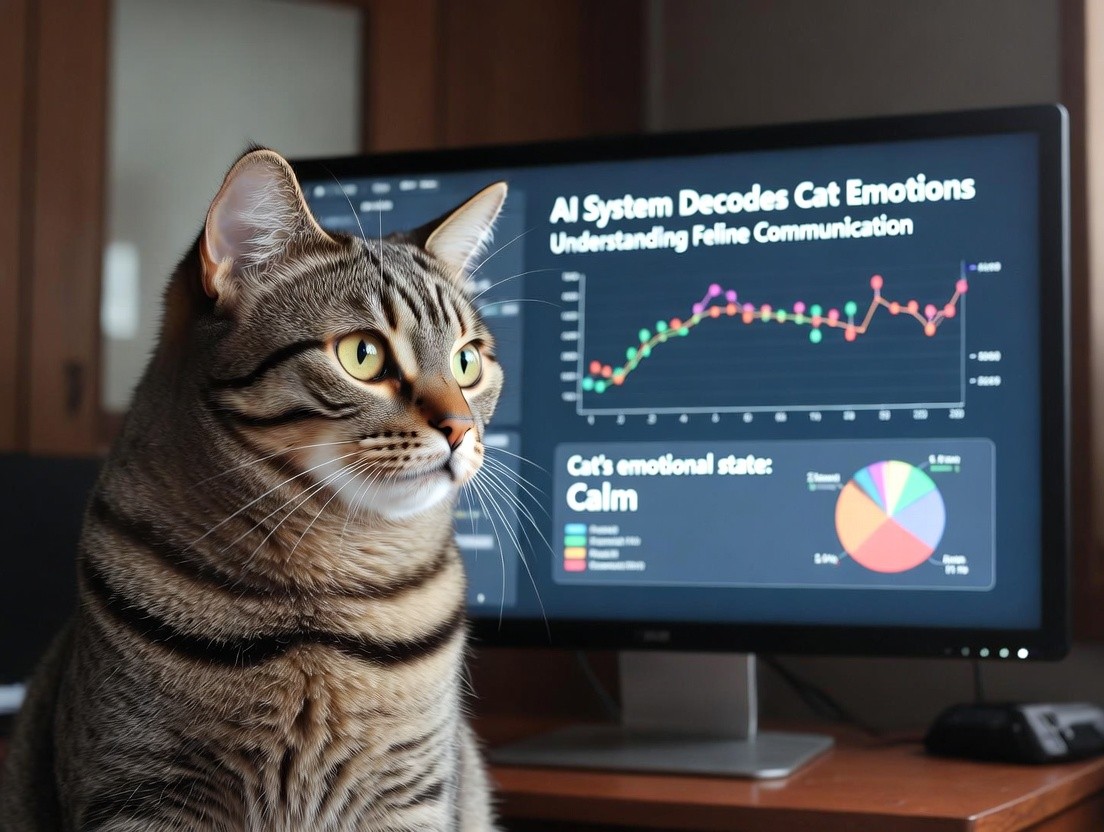
For millennia, humans have lived alongside cats without truly understanding their complex emotional expressions. While scientists have long recognized that cats communicate through diverse vocalizations, decoding the precise emotional content has remained largely guesswork. Recent breakthroughs in artificial intelligence and bioacoustics have changed this entirely. Advanced AI systems now recognize and interpret cat emotions with remarkable accuracy by analyzing meowing patterns, frequency variations, and acoustic characteristics.
How AI Recognizes Cat Emotions
Acoustic Analysis Technology
The AI system begins by capturing and analyzing cat vocalizations using sophisticated audio processing techniques. The technology examines:
- Frequency patterns and pitch variations
- Duration and intensity of meows
- Harmonic complexity and resonance characteristics
- Temporal patterns and rhythm sequences
- Background context and environmental factors
- Individual cat vocal signatures and personality patterns
Machine Learning Training
The AI system was trained using thousands of recorded cat vocalizations paired with behavioral observations and contextual information. Machine learning algorithms learned to associate specific acoustic patterns with particular emotional states. A high-pitched, rapid meow might indicate excitement or eagerness, while lower-pitched, drawn-out sounds suggest contentment or demand. Hissing sounds register as warning signals, and specific chirping patterns correlate with hunting drive activation.
Emotional States Recognized by AI
Primary Cat Emotions
The AI system reliably recognizes numerous emotional states including affection and bonding, hunger and food-seeking behavior, pain or physical distress, fear and anxiety, territorial aggression and defense, playfulness and hunting arousal, stress and overstimulation, and contentment and relaxation. Each emotion produces distinctive acoustic signatures that the artificial intelligence has learned to identify reliably.
Benefits for Cat Owners and Veterinarians
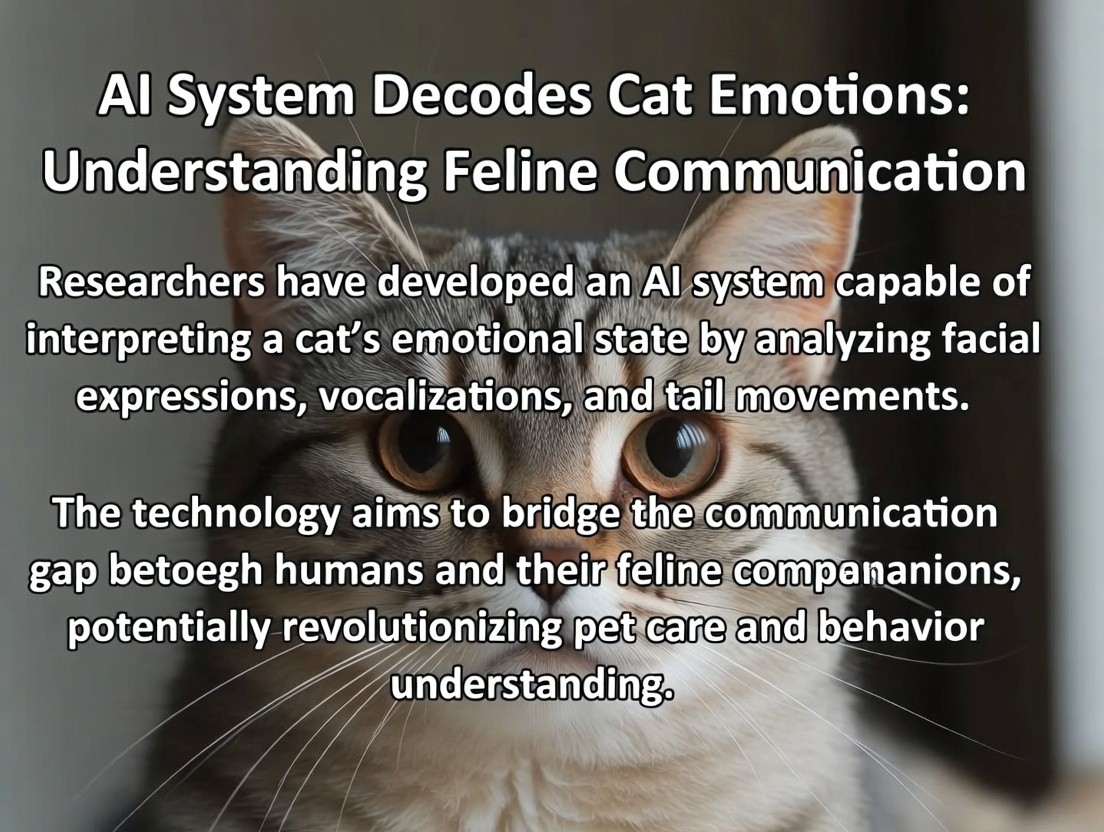
This technology transforms human-cat interaction and veterinary care. Cat owners gain unprecedented insight into their pets' emotional needs and physical conditions. The AI can alert owners to pain signals that might indicate illness requiring veterinary attention. Veterinarians use the system to assess patient stress levels during examinations and hospitalization, adjusting care approaches accordingly.
The system proves particularly valuable for identifying stressed or suffering cats. Animals cannot verbally communicate their distress to humans, often concealing pain through natural behavioral adaptations. AI analysis of vocalizations reveals hidden suffering that traditional observation might miss, enabling earlier interventions and more effective treatment.
Individual Cat Recognition
Importantly, the AI learns individual cat vocal patterns over time. Just as humans have unique voices, each cat develops distinctive vocalization characteristics. The system adapts to recognize specific cats' particular communication styles, improving accuracy with each interaction. An owner can build a personal profile of their cat's typical sounds and behavioral signals, making deviations more apparent.
Research Applications
Beyond practical applications for pet owners, AI emotion recognition from cat vocalizations advances feline behavioral science significantly. Researchers use the technology to study wild cat populations, understanding stress responses and environmental adaptation patterns. Conservation efforts for endangered wild cats benefit from this technology, as researchers can monitor population health and emotional states in natural habitats.
Integration with Smart Pet Technology
Modern pet tech companies integrate emotion recognition into smart feeders, health monitors, and interactive toys. A smart feeder can recognize hunger signals and dispense food appropriately. Interactive toys respond to play vocalizations, providing enhanced engagement. Pet cameras alert owners when recorded vocalizations indicate distress, enabling remote monitoring and emergency response.
Limitations and Future Development
While remarkably accurate, the AI system acknowledges its limitations. Context remains important for interpretation, and individual variations sometimes challenge accurate analysis. Future systems will incorporate visual data and movement patterns alongside acoustic analysis for even more comprehensive emotion assessment. Multimodal analysis combining vocalization, body language, and environmental context will provide increasingly nuanced understanding.
Conclusion
Artificial intelligence technology has finally bridged the communication gap between humans and cats. By decoding emotions from meowing and vocalizations, AI systems enable deeper understanding and stronger bonds between pets and owners. This innovation improves feline welfare, advances veterinary medicine, and opens new frontiers in animal behavior research and conservation.