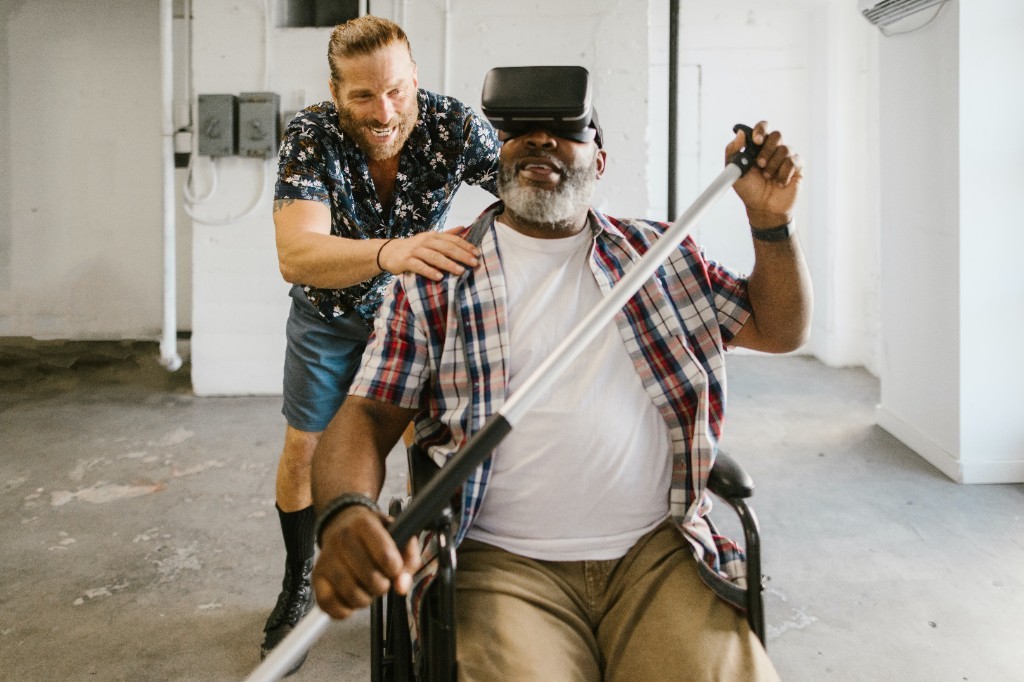

In recent years, there has been a significant advancement in the field of Artificial Intelligence (AI) and Augmented Reality (AR). These technologies have become increasingly popular and have the potential to enhance virtual experiences in various fields such as gaming, education, healthcare, and...
AI Technology Helps Hearing-Impaired Distinguish Voices in Crowded Environments
1076
07.03.2026
Breakthrough Accessibility Solution
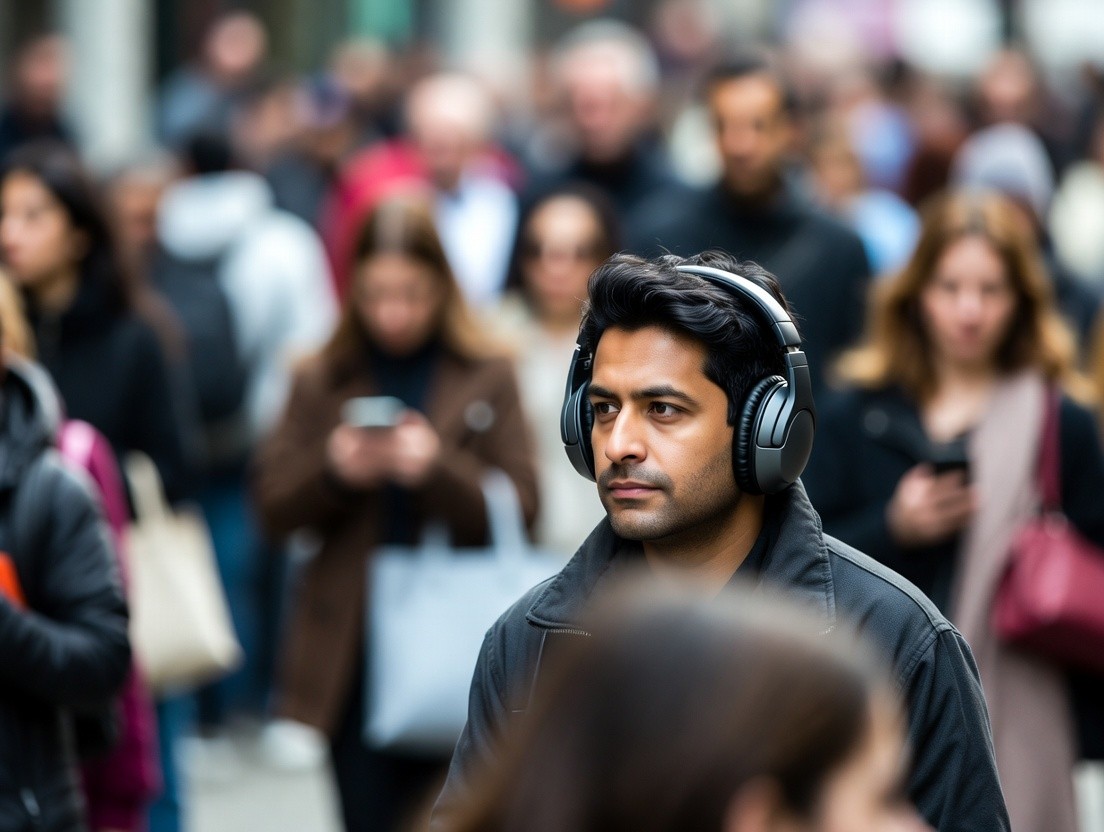
Hearing impairment represents a significant challenge for millions of people worldwide, with many experiencing particular difficulty in crowded social situations where multiple speakers create overlapping audio signals. A revolutionary artificial intelligence application now enables deaf and hard-of-hearing individuals to identify specific speakers and understand conversations in noisy environments. This technology transforms social accessibility and enhances quality of life for hearing-impaired people by enabling fuller participation in group interactions.
The Challenge: The Cocktail Party Problem
Acoustic Environment Complexity
The "cocktail party problem" describes the difficulty of isolating and understanding a single speaker in acoustically complex environments with multiple simultaneous speakers and background noise. While people with normal hearing can naturally focus on specific speakers, hearing-impaired individuals using traditional hearing aids face overwhelming background noise. Conventional audio processing technology struggles to separate individual voices from the acoustic cacophony of crowded spaces.
Social and Emotional Impact
Difficulty hearing in group settings leads many hearing-impaired individuals to withdraw from social activities, experiencing isolation and reduced quality of life. Family gatherings, workplace meetings, public events, and casual social interactions become anxiety-inducing or impossible to participate in meaningfully. The emotional toll of social exclusion significantly impacts mental health and overall wellbeing.
How AI Audio Processing Works
Voice Recognition and Separation
Advanced machine learning algorithms use deep neural networks trained on thousands of hours of speech data to recognize and separate individual voices in crowded acoustic environments. The systems identify unique characteristics of each speaker's voice including pitch, tone, speech patterns, and acoustic signature. Using this information, AI filters can isolate specific speakers from background noise and other voices.
Key Technical Features
The AI systems incorporate several sophisticated capabilities:
- Real-time audio stream processing and analysis
- Speaker identification and voice recognition
- Noise reduction and acoustic environment filtering
- Speech enhancement targeting specific speakers
- Visual speaker identification through lip-reading AI
- Real-time captions synchronized with audio processing
Application and Implementation
Integration with Hearing Aids and Devices
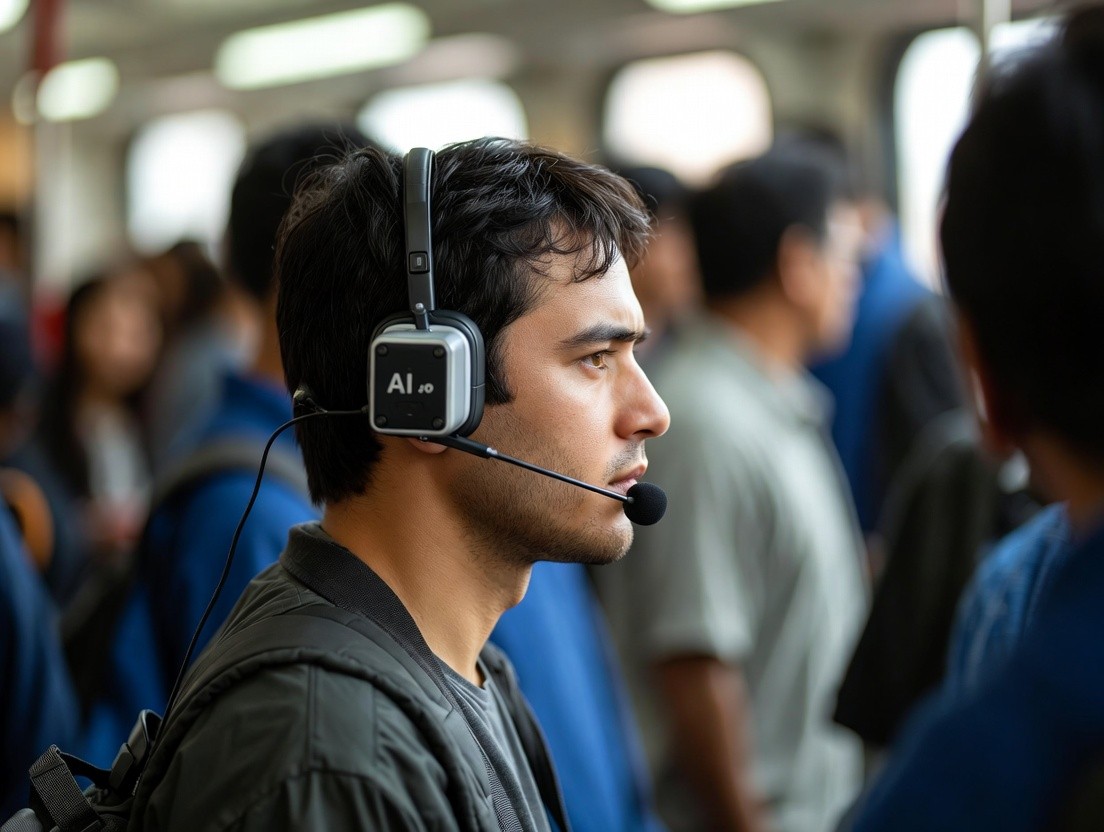
The technology integrates seamlessly with modern hearing aids, cochlear implants, and personal audio devices. Users can select specific speakers they wish to focus on, either through manual selection or through AI automatic identification of the primary speaker. The system continuously processes audio in real-time, enabling natural conversation participation without perceptible latency.
Real-Time Captioning Features
Many implementations include real-time speech-to-text capabilities that display captions of conversation participants on smartglasses or mobile devices. Users see text of what each speaker says, enabling them to follow multi-person conversations effortlessly. Speaker identification ensures users know who is speaking at any given moment.
Real-World Benefits and Impact
Enhanced Social Participation
Users report dramatically improved ability to participate in group conversations, family gatherings, and social events. The technology transforms previously challenging situations into comfortable social experiences. Many individuals describe regaining confidence in social interactions and experiencing reduced anxiety in crowded environments.
Professional Advantages
In workplace settings, AI voice separation technology enables hearing-impaired employees to participate fully in meetings, conferences, and collaborative discussions. This accessibility supports career advancement and professional integration. Some organizations report that implementation of this technology has significantly improved workplace inclusion and employee satisfaction among hearing-impaired staff.
Educational Benefits
Students with hearing impairments benefit from improved classroom participation and learning opportunities. The technology enables them to focus on specific speakers during lectures, group discussions, and class interactions. Educational outcomes improve as hearing-impaired students gain better access to classroom instruction and peer interaction.
Technical Limitations and Ongoing Development
Current Challenges
While impressive, current technology has limitations. Extremely loud environments with many simultaneous speakers can overwhelm even sophisticated AI systems. Distinguishing between voices with similar acoustic characteristics remains challenging. Processing latency, though minimal, occasionally creates slight delays in real-time applications.
Future Improvements
Researchers are developing more advanced neural network architectures that improve speaker separation quality. Integration with brain-computer interfaces may eventually enable direct thought-based speaker selection. Improved visual speech recognition will complement audio processing for enhanced accuracy.
Accessibility and Cost Considerations
Affordability and Availability
As AI technology becomes more sophisticated yet computationally efficient, costs decrease and accessibility improves. Several manufacturers now offer hearing aids with integrated AI voice separation at reasonable price points. However, cost remains a barrier for some individuals in developing countries or lower-income populations.
Inclusive Design Philosophy
Developers prioritize universal design principles ensuring that voice recognition technology works across diverse populations, accents, languages, and speech patterns. Inclusive AI training data ensures equitable performance for all hearing-impaired individuals regardless of demographic characteristics.
Conclusion
Artificial intelligence technology for voice separation represents a transformative breakthrough in accessibility for hearing-impaired individuals. By enabling full participation in social, professional, and educational environments, this technology fundamentally improves quality of life and expands opportunities for deaf and hard-of-hearing people. As AI continues advancing and costs decrease, universal access to these capabilities will become increasingly achievable, fostering more inclusive societies where hearing impairment poses fewer barriers to full participation in community life.