

In recent years, there has been a significant advancement in the field of Artificial Intelligence (AI) and Augmented Reality (AR). These technologies have become increasingly popular and have the potential to enhance virtual experiences in various fields such as gaming, education, healthcare, and...
Algorithm Helps Police Find Stolen Cars Using Camera Networks
493
11.04.2026

The Challenge of Stolen Vehicle Investigations
Vehicle theft remains a serious problem in many countries. Thousands of cars are stolen every year, and law enforcement agencies often struggle to locate them quickly. Traditional investigations depend on eyewitness reports, patrol searches, and manual analysis of security footage. These methods can be slow and inefficient, especially in large cities with heavy traffic.
Modern technology is changing how stolen vehicles are detected and recovered. Advanced algorithms are now being used to analyze traffic camera networks and automatically identify suspicious vehicles. By processing huge volumes of visual data, these systems can locate stolen cars far more quickly than traditional investigative methods.
The integration of artificial intelligence, computer vision, and city surveillance infrastructure allows police departments to track vehicles across entire urban areas in real time.
How the Detection Algorithm Works
The system is based on computer vision technology, which allows machines to interpret images and video footage. Traffic cameras, highway monitoring systems, and public security cameras continuously capture video data. The algorithm scans these video streams and searches for vehicles that match information stored in police databases.
When a car is reported stolen, its license plate number, color, model, and other characteristics are entered into the system. The algorithm then compares these details with vehicles detected in camera footage.
Key Recognition Capabilities
- Automatic license plate recognition
- Vehicle color and shape identification
- Model and manufacturer recognition
- Tracking of movement across multiple cameras
- Detection of suspicious driving patterns
Once a potential match is detected, the system alerts law enforcement officers and provides the vehicle’s location, direction of travel, and time of detection.
Automatic License Plate Recognition
One of the most important technologies used in these systems is Automatic License Plate Recognition (ALPR). ALPR software scans images captured by cameras and extracts the characters from license plates. The system can recognize plates even when vehicles are moving at high speed.
The extracted license plate numbers are compared against databases containing stolen vehicle records, wanted vehicles, or vehicles involved in criminal investigations. If a match is found, the system immediately notifies authorities.
Steps in the ALPR Process
- Capture of vehicle image from camera feed
- Detection of the license plate area in the image
- Optical character recognition of plate numbers
- Comparison with law enforcement databases
- Alert generation when a match is detected
This automated process can analyze thousands of vehicles every minute, making it far more efficient than manual monitoring.
Tracking Vehicles Across Camera Networks
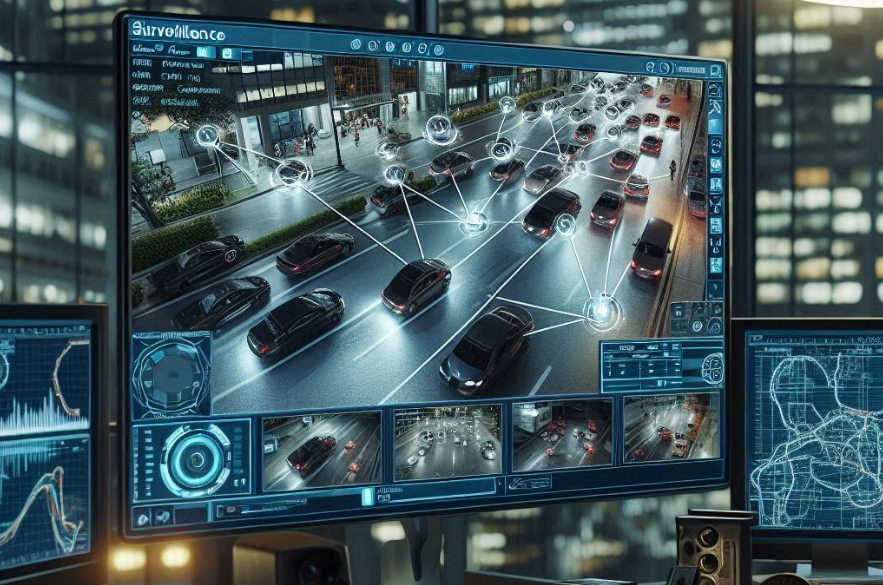
Modern cities often have large networks of cameras installed at intersections, highways, parking areas, and public buildings. The algorithm can connect these cameras into a unified system that tracks vehicles as they move through different areas.
When a stolen vehicle is detected by one camera, the system predicts possible routes based on road networks and traffic conditions. It then monitors cameras along those routes to locate the vehicle again.
This predictive tracking significantly increases the chances of recovering stolen vehicles before they are moved to another city or dismantled for parts.
Benefits for Law Enforcement
The use of algorithms and automated surveillance systems provides several advantages for police departments. By reducing manual work and accelerating the detection process, officers can focus on responding to incidents rather than searching for vehicles.
- Faster detection of stolen vehicles
- More efficient use of police resources
- Improved coordination between city surveillance systems
- Higher recovery rates for stolen cars
- Better evidence collection for criminal investigations
In many cases, the system can locate a stolen vehicle within minutes after it appears on a monitored road.
Privacy and Ethical Considerations
Despite the benefits, camera-based vehicle tracking systems also raise concerns about privacy and surveillance. Continuous monitoring of public spaces may lead to questions about how personal data is stored, used, and protected.
To address these concerns, many systems are designed to focus only on vehicles connected to active investigations. Data that does not match any law enforcement records is often deleted automatically after a short period of time.
Clear legal frameworks and transparency are essential to ensure that these technologies are used responsibly.
The Future of Smart Policing
Algorithms capable of analyzing traffic camera networks represent a major step toward smarter urban security systems. As artificial intelligence continues to improve, future systems may include even more advanced capabilities, such as predicting vehicle theft patterns or identifying suspicious behavior before crimes occur.
Integration with smart city infrastructure could also allow police to coordinate with traffic control systems, road sensors, and other digital tools to locate stolen vehicles even more efficiently.
While technology alone cannot eliminate vehicle theft, the use of intelligent algorithms is becoming an increasingly powerful tool for modern law enforcement agencies seeking to protect citizens and recover stolen property.