

In recent years, there has been a significant advancement in the field of Artificial Intelligence (AI) and Augmented Reality (AR). These technologies have become increasingly popular and have the potential to enhance virtual experiences in various fields such as gaming, education, healthcare, and...
An Algorithm Helps Dispatchers Manage Passenger Flow at Airports
34
03.10.2026
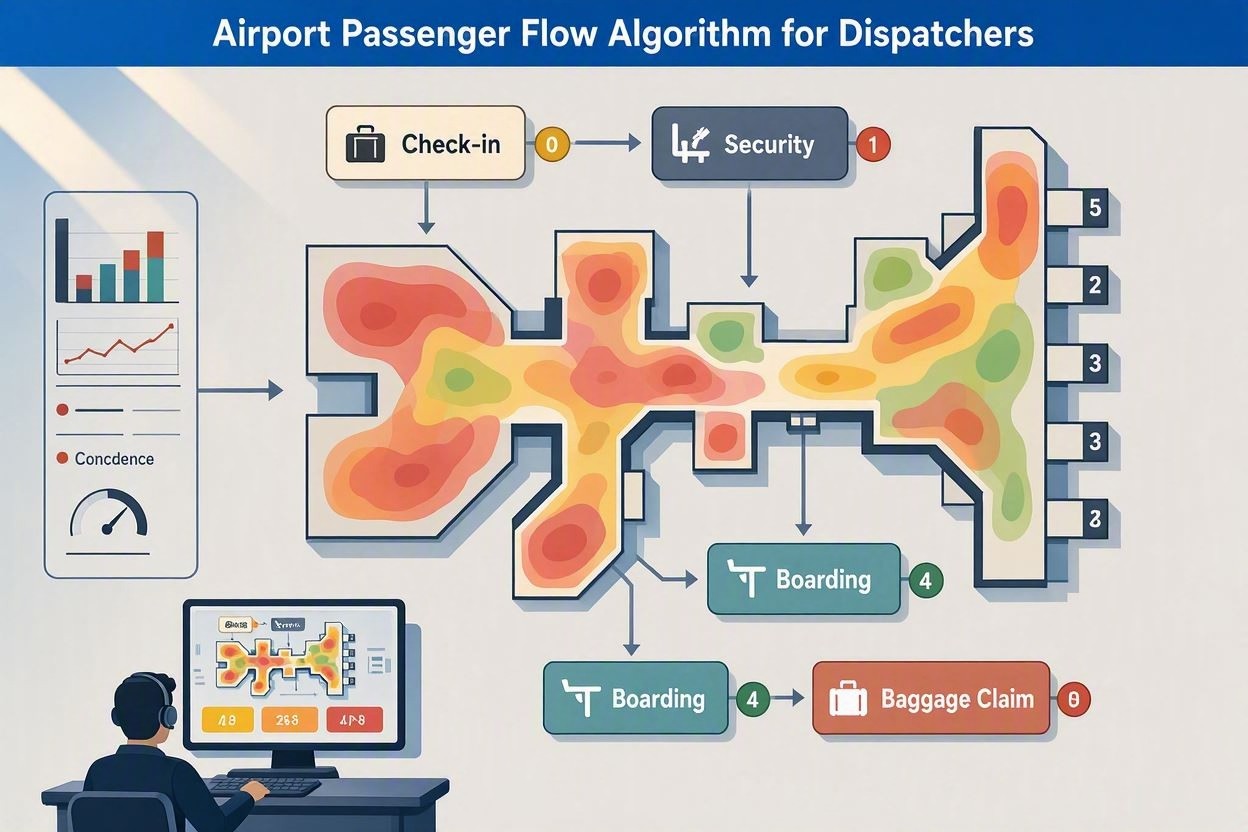
Airports operate like living systems: every flight delay, security lane closure, weather alert, or late-arriving bus can change passenger movement within minutes. For dispatchers, the challenge is not simply seeing where crowds are forming, but understanding where pressure will appear next. Modern passenger flow algorithms give airport control teams that forward-looking view, helping them make faster and more accurate operational decisions.
Why Passenger Flow Is Difficult to Manage
Passenger movement is rarely linear. Travelers arrive in waves, families move more slowly than business passengers, international flights require additional document checks, and transfer passengers may cross several zones in a short time. Traditional monitoring, based only on CCTV observation and manual reports, can identify congestion after it has already started. By then, waiting times may rise quickly and service recovery becomes more expensive.
Common pressure points inside terminals
The busiest locations are usually check-in areas, security checkpoints, border control, baggage reclaim, boarding gates, and transport exits. Each zone depends on the next. If passport control slows down, passengers may miss connections. If boarding is delayed, gate areas become crowded. An algorithm connects these operational dots and shows dispatchers how one bottleneck may influence the wider terminal.
How the Algorithm Works
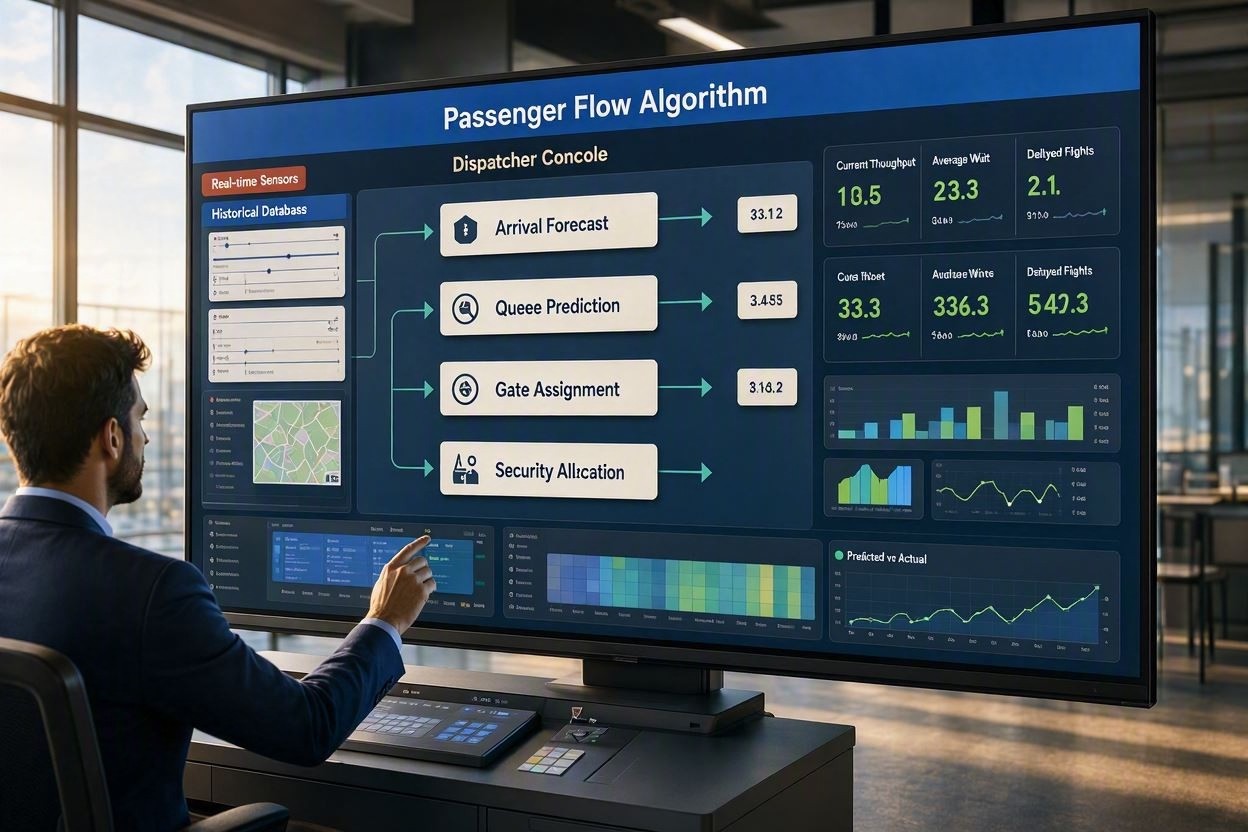
A passenger flow algorithm collects data from multiple airport systems and converts it into practical recommendations. It may use flight schedules, boarding status, passenger load factors, queue sensors, Wi-Fi or Bluetooth movement data, baggage system information, staffing rosters, and historical travel patterns. The goal is not to replace dispatchers, but to give them a decision-support tool that improves situational awareness.
From raw data to real-time prediction
The algorithm compares current conditions with expected behavior. For example, if a wide-body aircraft lands twenty minutes early and two security lanes are temporarily unavailable, the system can forecast queue growth before the crowd reaches the checkpoint. It can also estimate how long the congestion may last and what resources are needed to reduce it.
Machine learning and historical patterns
Over time, the system learns from repeated events. Monday morning domestic departures, holiday charter flights, delayed long-haul arrivals, and peak transfer banks all create different passenger patterns. Machine learning models help identify these patterns and refine predictions. This makes the system more useful than a static rule-based dashboard.
What Dispatchers Can Do With Better Forecasts
Accurate forecasts allow dispatchers to act before passengers experience serious delays. Instead of reacting to complaints, they can coordinate staff, equipment, and announcements at the right moment. This is especially valuable during peak travel periods, when a small delay in one area can affect thousands of passengers.
- Open additional security or passport control lanes before queues exceed target limits.
- Redirect passengers to less crowded entrances or screening points.
- Adjust cleaning, assistance, and customer service staff deployment.
- Inform airlines and ground handlers about expected boarding or transfer delays.
- Improve signage and public announcements based on real-time congestion.
Benefits for Airports and Passengers
The most visible benefit is shorter and more predictable waiting times. Passengers feel less stress when queues move steadily and information is clear. For airports, smoother passenger flow improves terminal capacity without requiring immediate construction. Better use of existing infrastructure can postpone expensive expansion projects and increase commercial opportunities in retail areas.
Operational efficiency
Algorithms help managers allocate resources where they create the greatest impact. Instead of keeping too many staff in quiet zones, airports can move teams based on demand forecasts. This improves productivity and helps maintain service standards even when passenger numbers fluctuate.
Safety and compliance
Crowd density is also a safety issue. Excessive congestion can block emergency routes, create confusion, and increase the risk of incidents. A flow management algorithm alerts dispatchers when occupancy approaches critical thresholds, supporting compliance with safety procedures and terminal capacity rules.
Implementation Challenges
Introducing such a system requires high-quality data and cooperation between airport departments. Flight operations, security, border control, airlines, and ground handlers often use separate platforms. The algorithm becomes more effective when these systems share reliable, timely information. Data privacy is another key concern. Passenger tracking must be anonymized and handled according to applicable regulations.
Human expertise remains essential. Dispatchers understand local constraints, unusual events, and operational priorities that an algorithm may not fully capture. The best results come when the system explains its recommendations clearly, so teams can trust the forecast and apply professional judgment.
The Future of Airport Flow Management
As airports become more digital, passenger flow algorithms will become central to terminal operations. Future systems may integrate biometric processing, predictive maintenance, airline rebooking data, and city transport conditions. This broader view will help dispatchers manage the complete passenger journey, from curbside arrival to aircraft boarding.
An algorithm cannot remove every delay, but it can make airport operations more proactive, coordinated, and resilient. For dispatchers, that means fewer surprises. For passengers, it means a smoother journey through one of the most complex environments in modern travel.