

In recent years, there has been a significant advancement in the field of Artificial Intelligence (AI) and Augmented Reality (AR). These technologies have become increasingly popular and have the potential to enhance virtual experiences in various fields such as gaming, education, healthcare, and...
An Algorithm Helps Insurers Calculate Risk More Accurately for Young Drivers
45
02.10.2026

Young drivers have long been difficult for insurers to price fairly. Traditional motor insurance models often rely on broad indicators such as age, postcode, vehicle type, claims history, and driving experience. While these factors are useful, they can place many careful young motorists into the same high-risk category as reckless drivers. A new generation of risk algorithms is changing that approach by using richer data to assess how a person actually drives.
Why Young Driver Risk Is Hard to Measure
Insurers know that younger drivers, especially those under 25, are statistically more likely to be involved in accidents. Limited road experience, night-time driving, peer passengers, and higher sensitivity to distractions all contribute to higher claims frequency. However, statistics do not describe every individual accurately. Two 19-year-old drivers may look identical in a traditional pricing model but behave very differently behind the wheel.
This is where algorithmic risk assessment offers value. Instead of judging risk mainly through demographic assumptions, insurers can combine historical data with real-time or near-real-time behavioral signals. The result is a more detailed risk profile that can help reduce unfair pricing and improve road safety.
How the Algorithm Works
Telematics and Driving Behavior
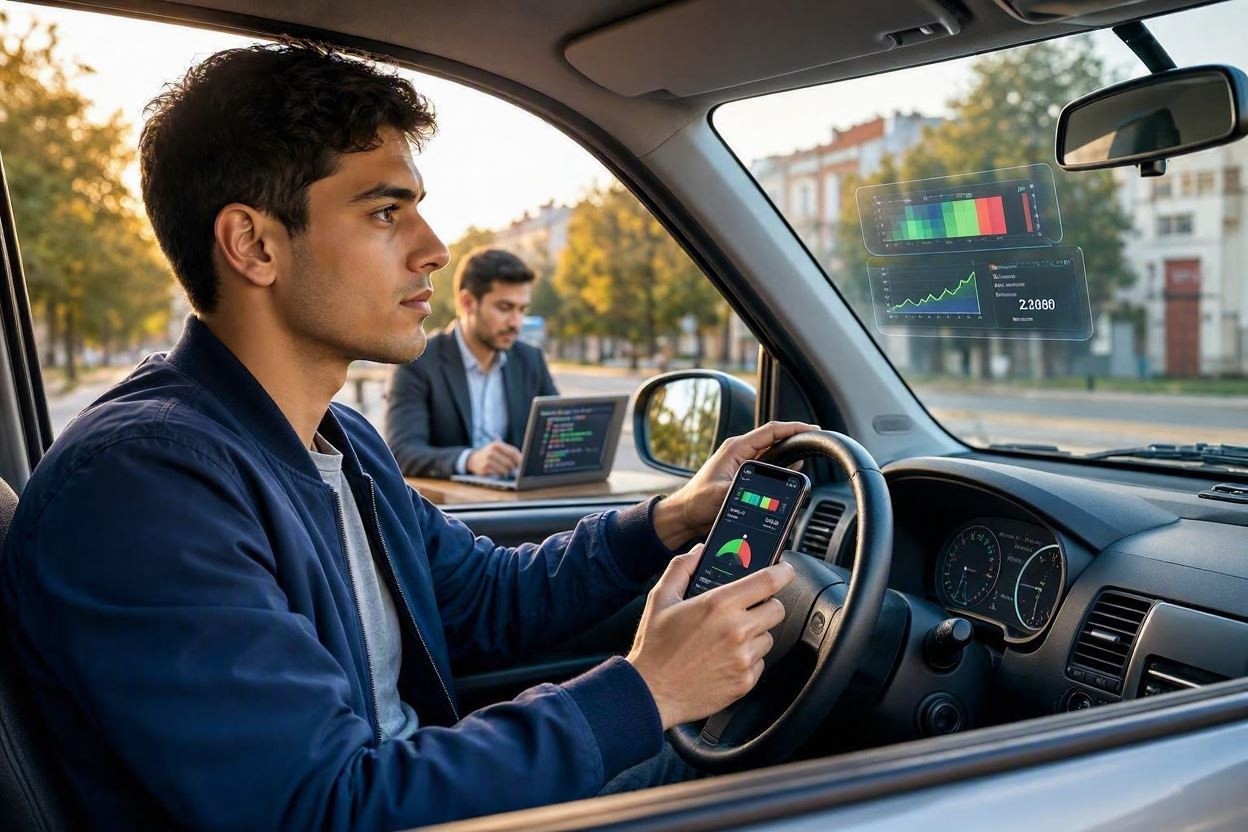
Many modern young driver policies use telematics, sometimes called black box insurance. Data can be collected through an installed device, a smartphone app, or a connected vehicle system. The algorithm analyzes driving patterns such as speed, acceleration, braking, cornering, mileage, journey times, and road types. A driver who regularly brakes harshly at high speed will usually be scored differently from one who drives smoothly and avoids risky hours.
Context Matters
Advanced models do not look at single events in isolation. For example, hard braking may indicate poor driving, but it may also be a safe response to a sudden hazard. Better algorithms consider context, including traffic density, weather, location, speed limits, and the frequency of repeated behaviors. This helps insurers distinguish between occasional defensive reactions and consistent patterns of risky driving.
Learning From Large Data Sets
Machine learning systems can examine large volumes of anonymized claims and driving data to detect correlations that older pricing methods may miss. If certain combinations of behavior strongly predict future claims, the model can factor them into the risk score. Over time, the algorithm can be recalibrated as more data becomes available, making pricing more responsive to real-world outcomes.
Benefits for Insurers and Young Drivers
For insurers, more accurate risk calculation can improve underwriting performance and reduce unexpected claims costs. For young drivers, the biggest benefit is the possibility of fairer premiums. A responsible new driver may be able to prove lower risk through consistent safe driving rather than waiting several years to build a no-claims history.
- Safer driving habits can be rewarded with lower premiums or renewal discounts.
- Risk scoring can be updated more frequently than traditional annual pricing.
- Feedback from apps can help young motorists identify and correct dangerous habits.
- Insurers can design more personalized policies instead of relying only on age-based assumptions.
Key Challenges and Ethical Questions
Data Privacy
Because telematics can reveal sensitive information, privacy is a major concern. Location data, journey times, and driving routines must be handled carefully. Insurers need clear consent, transparent data policies, secure storage, and limits on how information is used. Young drivers and parents should understand what data is collected and whether it can be shared with third parties.
Bias and Fairness
Algorithms are only as fair as the data and design behind them. If a model unintentionally penalizes drivers from certain areas or income groups, it may reproduce existing inequalities. Responsible insurers test models for bias, explain key rating factors where possible, and ensure that customers have a way to challenge inaccurate data or unusual scoring decisions.
Overreliance on Automation
Risk algorithms should support expert underwriting rather than replace judgment entirely. Unusual circumstances, technical errors, or incomplete data can distort a score. Human oversight remains important, especially when pricing decisions significantly affect affordability.
What Young Drivers Should Look For
Before choosing an algorithm-based or telematics policy, young drivers should compare more than the headline premium. Important questions include how the score is calculated, how often it is reviewed, whether poor scores can increase premiums mid-term, and what happens if the device or app records incorrect data.
- Check the insurer’s privacy policy and data retention rules.
- Ask whether safe driving can lead to discounts during renewal.
- Review any restrictions on night driving, mileage, or vehicle use.
- Confirm how disputes about inaccurate data are handled.
The Future of Young Driver Insurance
Algorithms are unlikely to remove all uncertainty from motor insurance, but they can make risk assessment more precise and personalized. For young drivers, this shift creates an opportunity to be judged by actual behavior rather than broad assumptions. For insurers, it offers a smarter way to price policies, manage claims exposure, and encourage safer roads. The most successful systems will be those that combine accurate data science with transparency, privacy protection, and fair treatment for every driver.