

In recent years, there has been a significant advancement in the field of Artificial Intelligence (AI) and Augmented Reality (AR). These technologies have become increasingly popular and have the potential to enhance virtual experiences in various fields such as gaming, education, healthcare, and...
An Algorithm Predicts Flight Delays Using Weather Data and Airport Traffic Levels
48
18.09.2026

Flight delays rarely happen for a single reason. A departure may be held because of thunderstorms near the destination, reduced runway capacity, late-arriving aircraft, or congestion at a major hub. Modern prediction algorithms are designed to connect these signals before disruption becomes visible to passengers. By combining weather data with airport traffic levels, they can estimate the probability and length of a delay with increasing accuracy.
Why Flight Delay Prediction Matters
Airlines, airports, and travelers all depend on timing. Even a 20-minute delay can affect crew schedules, gate availability, missed connections, baggage handling, and fuel planning. Traditional delay management often reacts after a problem has already developed. Predictive models shift the process earlier, giving operations teams more time to adjust schedules, reassign gates, or notify passengers.
For passengers, accurate forecasts can reduce uncertainty. A traveler who receives an early warning about a likely delay may change a connecting flight, adjust ground transportation, or avoid waiting unnecessarily at the airport. For airlines, better predictions support lower operating costs and improved customer satisfaction.
Key Data Sources Used by the Algorithm
Weather Conditions
Weather is one of the strongest predictors of flight disruption. The algorithm may analyze real-time and forecasted data such as wind speed, visibility, precipitation, storm activity, temperature, cloud ceiling, and lightning risk. It also considers where the weather is occurring. Heavy rain at the departure airport is important, but severe conditions along the route or at the arrival airport can be even more disruptive.
Airport Traffic Levels
Airport congestion is another critical input. Traffic data includes scheduled arrivals and departures, runway usage, gate occupancy, taxiway congestion, and air traffic control restrictions. A busy airport operating near maximum capacity has less flexibility when a storm passes through or when one runway is temporarily unavailable. The same weather event may cause minimal delays at a smaller airport but create major disruption at a crowded hub.
Historical Flight Performance
Although the main focus is weather and traffic, historical patterns make the model smarter. Some routes are frequently delayed during evening peak periods. Certain airports recover quickly after congestion, while others experience cascading delays. By learning from past outcomes, the algorithm can compare current conditions with similar situations and estimate what is likely to happen next.
How the Prediction Process Works
The algorithm begins by collecting structured data from weather services, airport systems, flight schedules, and aircraft tracking feeds. It then cleans and aligns the data by time, location, route, and flight number. This step is essential because aviation data changes quickly, and inaccurate timestamps can reduce prediction quality.
Machine learning models then identify relationships between variables. For example, the system may learn that crosswinds above a certain threshold reduce arrival rates at a specific airport, or that departures during peak traffic are more vulnerable when visibility drops. Instead of relying on a single rule, the model evaluates many signals together.
- Current and forecasted weather at departure and arrival airports
- Expected airport capacity and runway configuration
- Volume of scheduled arrivals and departures
- Aircraft location and previous flight status
- Historical delay patterns by route, airline, and time of day
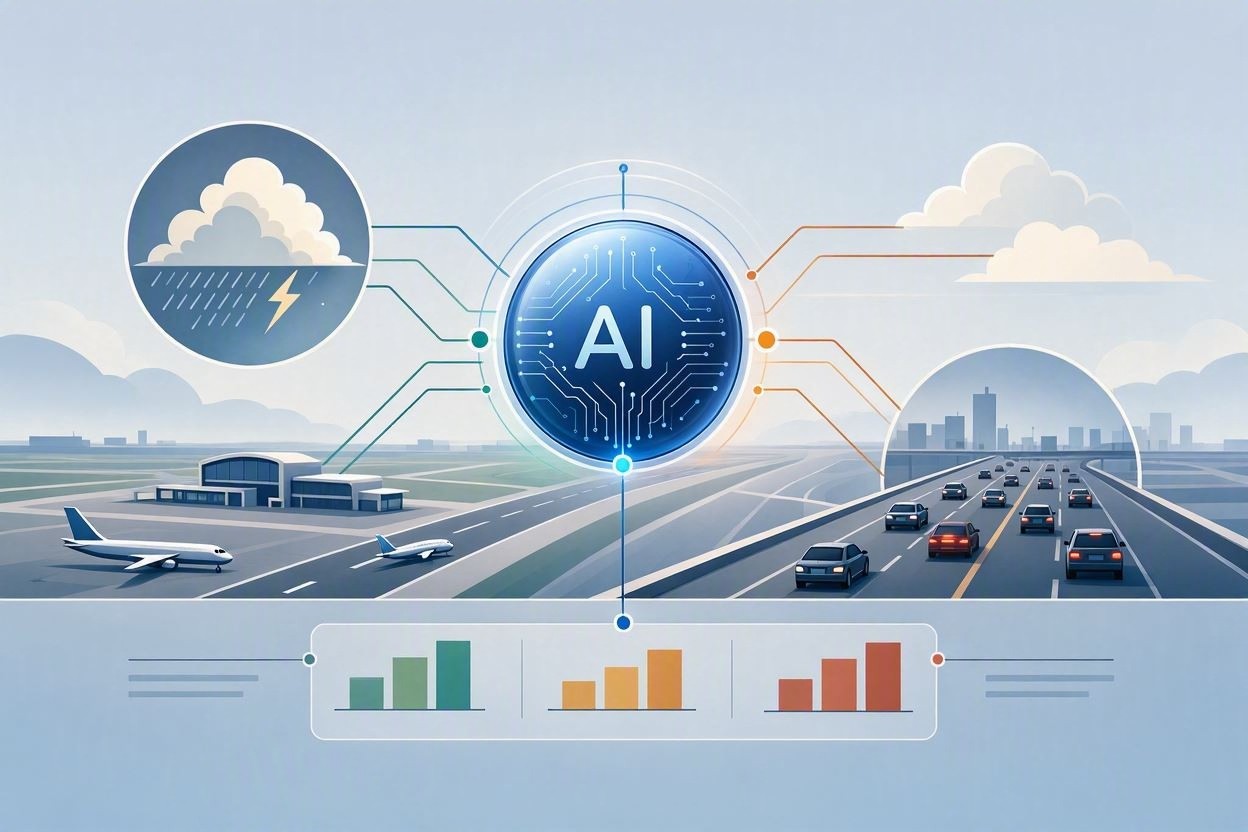
Types of Predictions Produced
Delay Probability
The most common output is the likelihood that a flight will be delayed. For example, the model may estimate a 70% chance that a flight will depart more than 15 minutes late. This helps airlines prioritize which flights require attention.
Estimated Delay Duration
More advanced models predict the likely length of the delay. A short delay may require only passenger communication, while a long delay could trigger crew reassignment, aircraft substitution, or connection protection.
Network Impact
Air travel operates as a network. A delayed aircraft in Chicago may later affect flights in Denver, Seattle, or Boston. Algorithms can map these knock-on effects and identify where intervention will have the greatest operational value.
Benefits for Airlines and Airports
Predictive delay systems allow airlines to move from reactive control to proactive planning. Dispatchers can adjust flight plans, operations managers can prepare alternate gates, and customer service teams can issue earlier notifications. Airports can also use predictions to manage staffing, security queues, baggage resources, and ground equipment.
- Earlier decisions about schedule adjustments and gate planning
- Improved passenger communication and fewer surprise disruptions
- Better use of crews, aircraft, and airport infrastructure
- Reduced cost from missed connections and extended ground time
Challenges and Limitations
No algorithm can predict every delay perfectly. Weather can change faster than forecasts suggest, air traffic control decisions may be issued with little notice, and mechanical issues can appear unexpectedly. Data quality is also a challenge. If airport traffic feeds are delayed or incomplete, the model may underestimate congestion.
Another limitation is explainability. Airlines need to understand why a model predicts a delay, not just see a percentage. The best systems provide clear reasons, such as rising arrival volume, low visibility, or expected runway restrictions.
The Future of Smarter Flight Operations
As aviation data becomes more connected, delay prediction will become more precise and practical. Future systems may combine satellite weather, live aircraft telemetry, passenger connection data, and airport resource availability in one decision platform. The result will not eliminate delays, but it can make them easier to manage.
An algorithm that predicts flight delays using weather data and airport traffic levels is more than a technical tool. It is a decision engine for the aviation industry, helping airlines, airports, and passengers respond earlier, plan better, and reduce the ripple effects of disruption.