
In recent years, there has been a significant advancement in the field of Artificial Intelligence (AI) and Augmented Reality (AR). These technologies have become increasingly popular and have the potential to enhance virtual experiences in various fields such as gaming, education, healthcare, and...
An Algorithm Predicts Heart Valve Failure from the Sound of a Heartbeat
19
07.11.2026
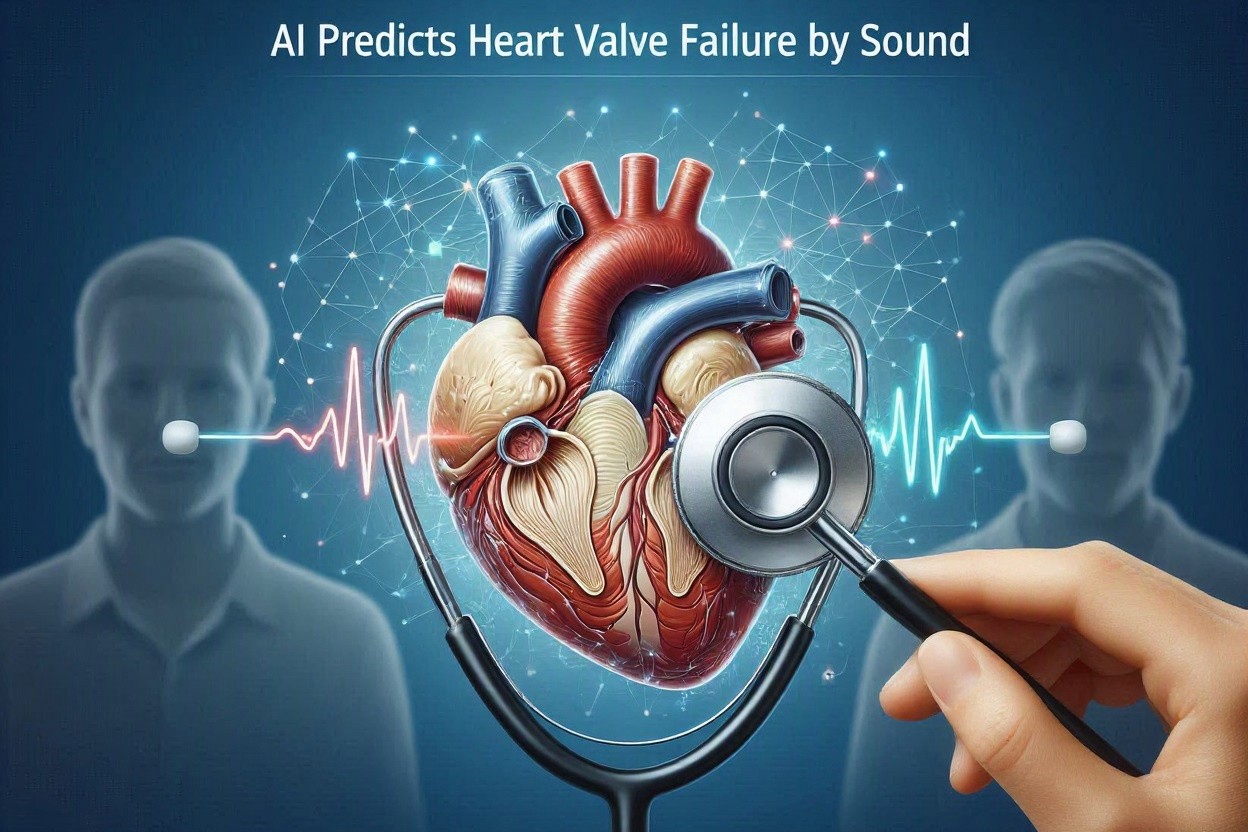
Heart valve disease often develops quietly. A person may feel only mild fatigue or shortness of breath while a valve is already narrowing, leaking, or forcing the heart to work harder than it should. Traditionally, clinicians detect these problems by listening with a stethoscope, ordering an echocardiogram, and interpreting changes in blood flow. Now, artificial intelligence is adding a new layer to that process: algorithms that can analyze the sound of a heartbeat and identify patterns linked to valve failure.
Why Heart Sounds Matter
Every heartbeat produces vibrations as valves open and close, blood moves through chambers, and pressure shifts inside the heart. In a healthy heart, these sounds follow a predictable rhythm. When a valve is damaged, stiff, narrowed, or unable to close properly, the acoustic signature can change. Murmurs, clicks, extra sounds, and subtle timing differences may reveal that blood is moving abnormally.
What Valve Failure Can Sound Like
Valve problems do not always produce obvious symptoms, but they often create measurable sound patterns. Aortic stenosis, for example, can generate a harsh systolic murmur. Mitral regurgitation may create a different murmur as blood leaks backward into the left atrium. Some of these signals are easy for experienced cardiologists to recognize, while others are faint, intermittent, or masked by body noise, breathing, or poor recording conditions.
How the Algorithm Works
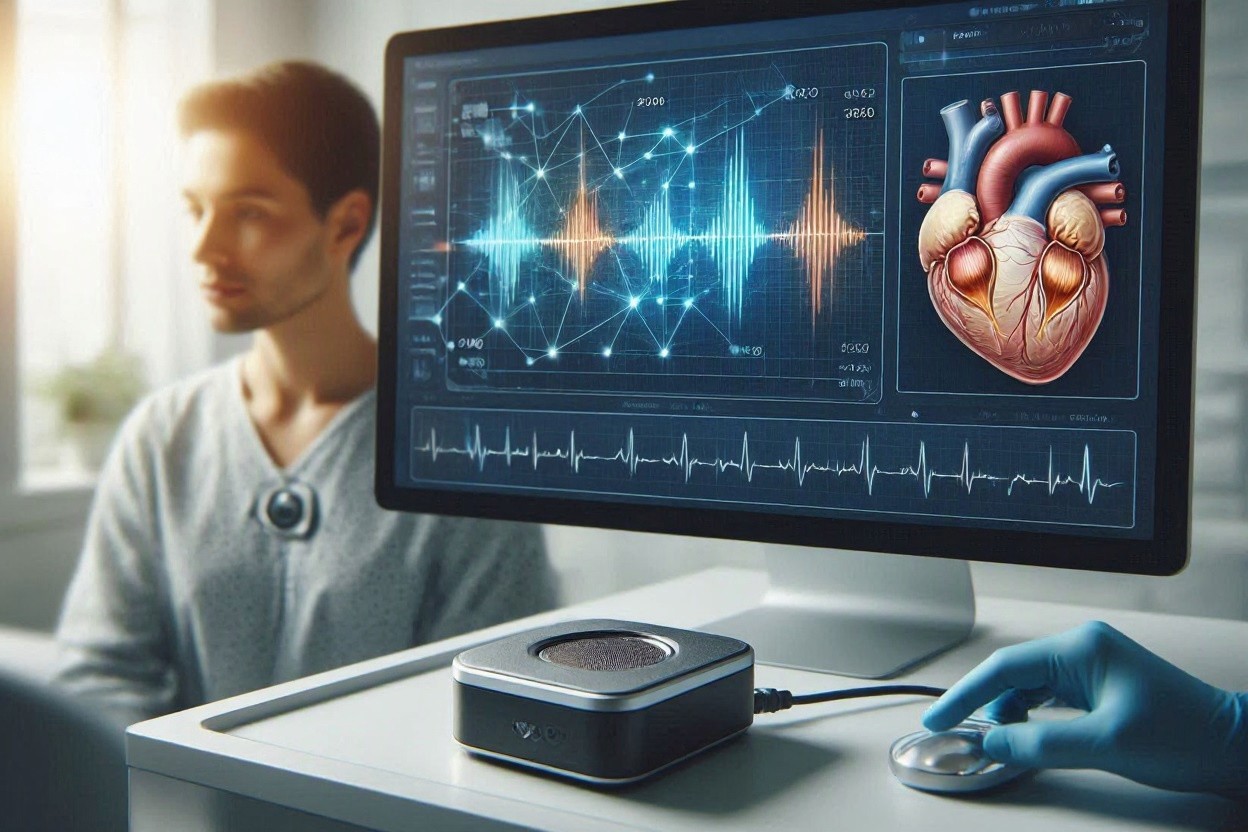
An AI system designed for cardiac sound analysis usually begins with a digital recording from an electronic stethoscope or wearable sensor. The audio is cleaned to reduce background noise, then converted into mathematical features that describe frequency, intensity, rhythm, timing, and waveform structure. Machine learning models compare these features with patterns learned from thousands of labeled recordings.
From Recording to Risk Score
The algorithm does not simply “hear” a murmur in the human sense. It identifies combinations of acoustic clues that may correspond to valve dysfunction. After analysis, the system can generate a probability score, flagging patients who may need further evaluation. In clinical use, this output should support decisions rather than replace them.
- Sound is captured using a digital stethoscope or sensor.
- Noise reduction improves the quality of the signal.
- The model extracts acoustic and timing features.
- The recording is compared with validated disease patterns.
- A risk estimate helps guide referral or testing.
Potential Benefits for Patients and Clinicians
The main promise of this technology is earlier detection. Many patients with valve disease are diagnosed only after symptoms become significant. If an algorithm can flag suspicious sounds during a routine checkup, pharmacy screening, home monitoring session, or primary care visit, patients may receive echocardiography sooner.
Expanding Access to Cardiac Screening
Access to cardiologists and advanced imaging is uneven. Rural clinics, low-resource health systems, and overloaded primary care practices may not be able to refer every patient immediately. AI-assisted auscultation could help prioritize those at higher risk. It may also reduce unnecessary referrals by distinguishing innocent murmurs from sounds more likely to represent structural disease.
For clinicians, the technology can serve as a second set of ears. It may be particularly useful for trainees, general practitioners, emergency clinicians, and telemedicine providers who need fast, objective support when assessing cardiovascular risk.
Limitations and Clinical Caution
Despite its potential, an algorithm cannot diagnose valve failure on its own. Echocardiography remains the standard tool for confirming valve anatomy, measuring severity, and planning treatment. Heart sounds can be affected by obesity, lung disease, arrhythmias, sensor placement, movement, and recording quality. A model trained on one population may also perform differently in another if age, ethnicity, comorbidities, or device type vary.
What Good Validation Requires
Before widespread adoption, these systems need rigorous testing in real-world settings. Developers must demonstrate high sensitivity for dangerous disease, acceptable specificity to prevent excessive false alarms, and consistent performance across diverse patient groups. Transparent reporting, independent validation, and regulatory oversight are essential.
- Compare algorithm results with echocardiography.
- Test performance in primary care, hospitals, and community settings.
- Evaluate outcomes such as earlier diagnosis and reduced complications.
- Monitor bias across age, sex, body type, and background conditions.
The Future of Listening to the Heart
AI-based heartbeat analysis represents a practical shift in cardiovascular screening. It takes one of medicine’s oldest tools, the stethoscope, and connects it with modern pattern recognition. The result could be faster triage, earlier specialist referral, and better monitoring of patients already known to have valve disease.
The most effective future will not be one where algorithms replace clinicians, but one where they make clinical listening more precise. When combined with medical judgment, patient history, physical examination, and imaging, heartbeat sound analysis could help identify valve failure before it becomes an emergency. For patients, that may mean timely treatment, fewer complications, and a better chance of preserving heart function.