
In recent years, there has been a significant advancement in the field of Artificial Intelligence (AI) and Augmented Reality (AR). These technologies have become increasingly popular and have the potential to enhance virtual experiences in various fields such as gaming, education, healthcare, and...
An Algorithm Selects the Optimal Irrigation Schedule for Vineyards
81
31.10.2026
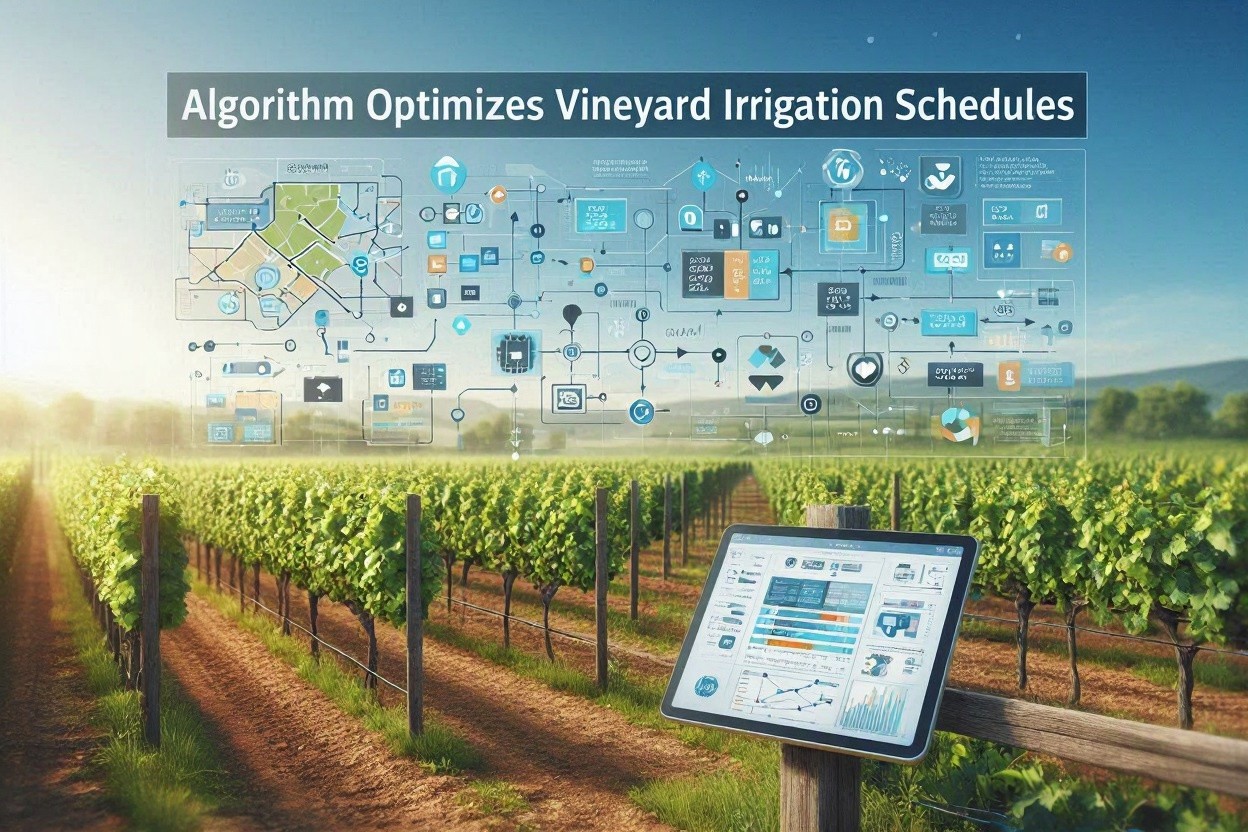
Efficient irrigation is now one of the most important decisions in modern viticulture. Too much water can dilute flavor, increase disease pressure, and waste energy. Too little water can reduce canopy function, slow berry development, and damage long-term vine health. A data-driven algorithm can help growers choose the optimal irrigation schedule by turning soil, weather, and vine measurements into timely, practical actions.
Why Irrigation Timing Matters in Vineyards
Vines do not need the same amount of water every day. Demand changes with temperature, wind, humidity, growth stage, soil texture, root depth, and crop load. A block with deep clay soil may store water for weeks, while a sandy slope may require shorter and more frequent irrigation events. Traditional scheduling based only on calendar dates often misses these differences.
An irrigation algorithm improves the process by estimating when the vine is approaching water stress and how much water is needed to keep stress within a target range. This is especially useful for premium wine production, where controlled water deficits can improve berry concentration without sacrificing yield.
What Data the Algorithm Uses
Soil Moisture and Root Zone Conditions
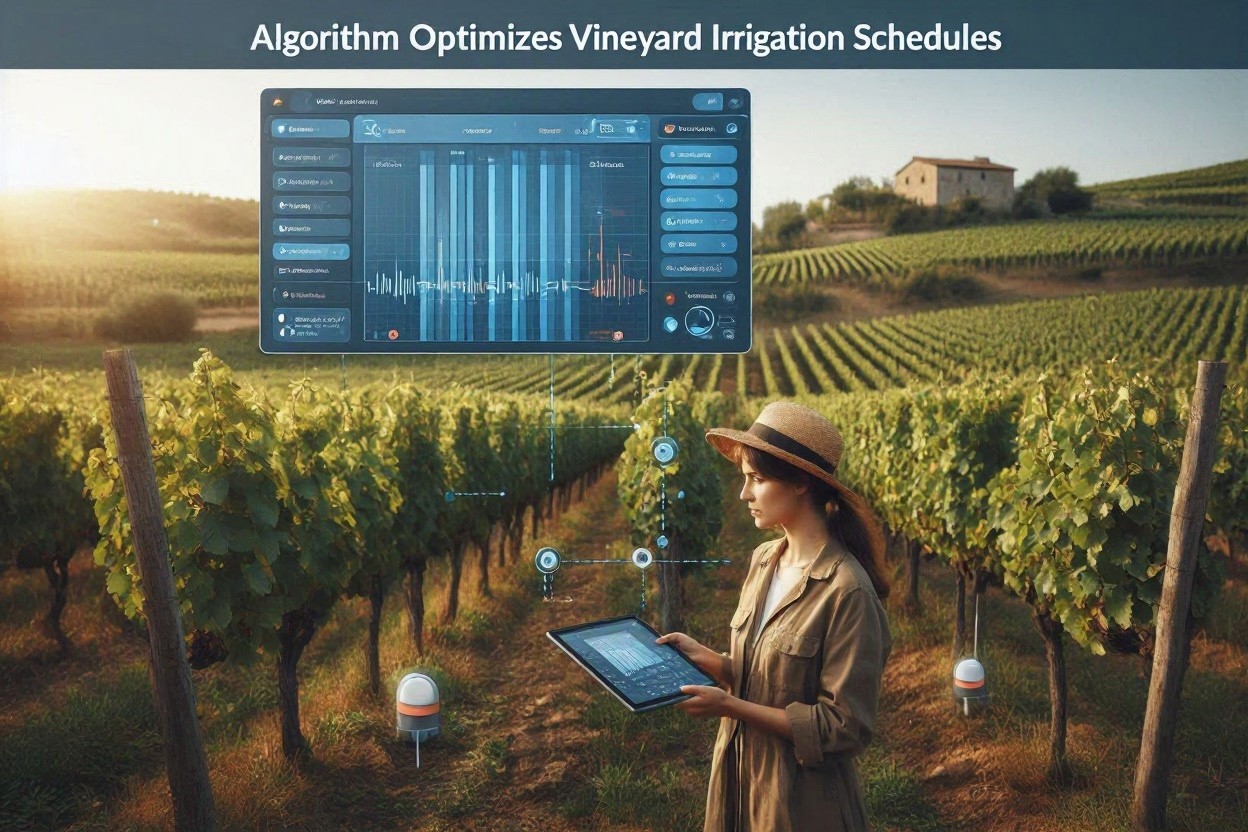
Soil sensors are a core input. They measure moisture at different depths, helping the system understand whether irrigation is reaching the active root zone or being lost below it. The algorithm can compare current water content with field capacity, wilting point, and management thresholds set for each vineyard block.
Weather and Evapotranspiration
Weather data helps estimate evapotranspiration, which is the combined water loss from soil evaporation and vine transpiration. Temperature, solar radiation, wind speed, and relative humidity all affect daily vine water demand. Forecasts allow the algorithm to prepare for heat waves or cool periods instead of reacting too late.
Vine Performance Indicators
Advanced systems may include canopy temperature, trunk diameter variation, leaf water potential, or remote sensing indices. These signals show how the plant is actually responding, not just how much water is in the soil. Combining plant-based and soil-based data makes recommendations more accurate.
How the Algorithm Selects a Schedule
The algorithm typically follows a decision model that balances water availability, vine stress targets, and operational limits. It may recommend the start time, duration, frequency, and total water volume for each irrigation event. In some systems, it also considers pump capacity, irrigation zone order, electricity pricing, and water allocation limits.
A practical workflow may include the following steps:
- Collect real-time data from soil sensors, weather stations, and vineyard records.
- Calculate current water balance and predicted water demand.
- Compare conditions with the desired stress level for the grape variety and growth stage.
- Test possible irrigation schedules against constraints such as water supply and system capacity.
- Select the schedule that meets vine needs with the least unnecessary water use.
Benefits for Growers and Winemakers
Better Water Efficiency
The most obvious benefit is reduced waste. Instead of irrigating because a block “usually needs water,” growers irrigate when the data shows a real need. This can lower pumping costs and help vineyards comply with regional water restrictions.
More Consistent Grape Quality
Water status influences berry size, sugar accumulation, acidity, phenolic development, and aroma potential. By keeping vines within a defined stress window, the algorithm supports more consistent fruit composition across blocks and seasons.
Improved Labor and Operational Planning
Automated scheduling gives vineyard managers clearer priorities. Crews can focus on maintenance, sensor checks, and block inspections rather than manually estimating irrigation needs every day. The result is not less expertise, but better use of expertise.
Implementation Considerations
For best results, the algorithm must be calibrated to local conditions. Soil maps, irrigation system performance, emitter uniformity, vine age, rootstock, variety, and production goals all matter. A model built for one vineyard may not work perfectly in another without adjustment.
Growers should also maintain data quality. A poorly placed soil probe or faulty weather sensor can lead to inaccurate recommendations. Regular sensor validation, pressure checks, and field observations remain essential. The algorithm should support decisions, not replace agronomic judgment.
- Install sensors in representative areas of each irrigation block.
- Define different water stress targets for growth stages such as flowering, veraison, and ripening.
- Review recommendations after major weather changes or irrigation system repairs.
- Compare algorithm outputs with visual vine observations and yield results.
The Future of Precision Irrigation
As climate variability increases, vineyards need irrigation strategies that are flexible, measurable, and efficient. Algorithms that select optimal irrigation schedules can help growers protect vine health, conserve water, and improve fruit quality. The strongest systems will combine machine learning, local agronomy, and human experience, creating irrigation plans that are both precise and practical.
In the vineyard of the future, water will not be applied by habit. It will be scheduled according to evidence, adjusted to each block, and aligned with the style of wine the grower wants to produce.