

In recent years, there has been a significant advancement in the field of Artificial Intelligence (AI) and Augmented Reality (AR). These technologies have become increasingly popular and have the potential to enhance virtual experiences in various fields such as gaming, education, healthcare, and...
An Algorithm Selects the Optimal Lighting Schedule in a Greenhouse for Each Crop
54
16.09.2026
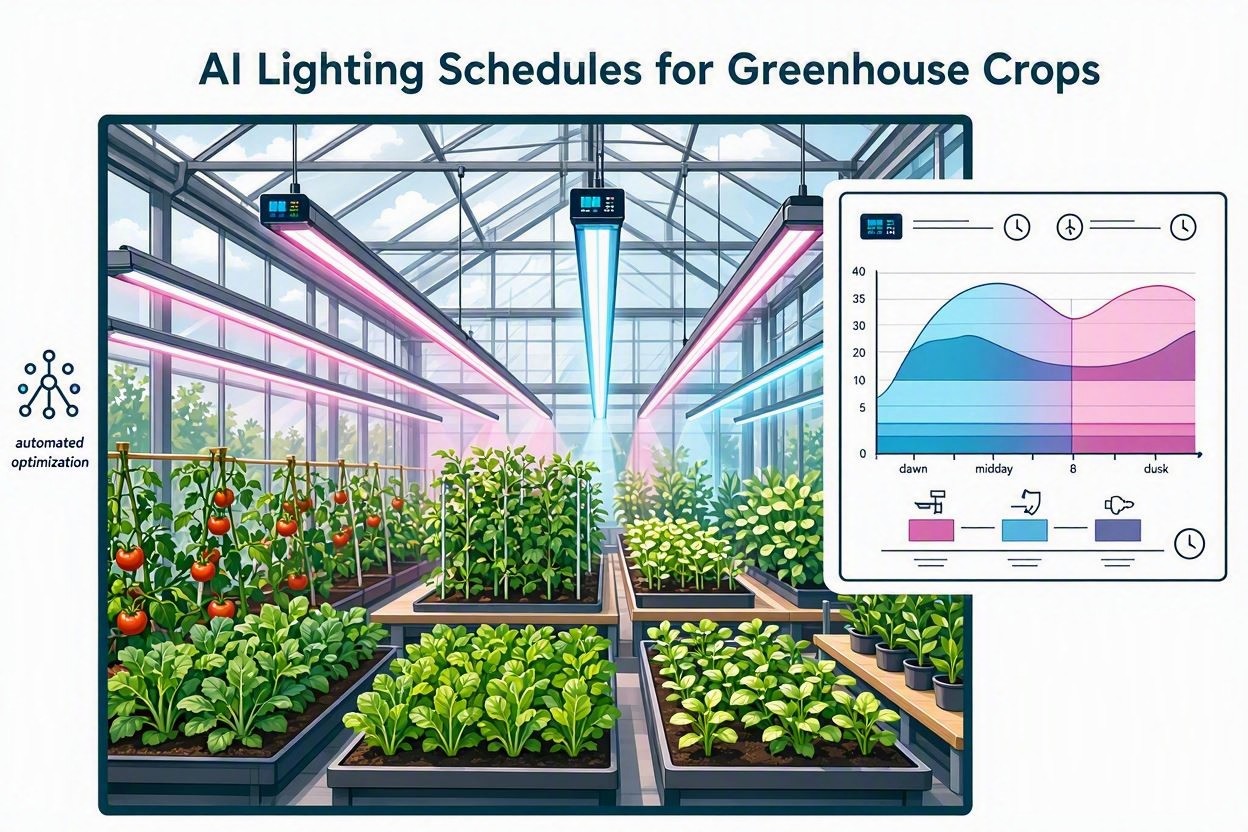
Modern greenhouses are no longer managed by fixed timers and guesswork alone. As energy costs rise and crop quality standards become stricter, growers need lighting strategies that match the biological needs of each plant. An algorithm that selects the optimal lighting schedule for every crop can improve productivity, reduce electricity waste, and create more consistent harvests throughout the year.
Why Greenhouse Lighting Needs Precision
Light is one of the most powerful growth factors in controlled environment agriculture. It affects photosynthesis, flowering, leaf expansion, stem length, pigment formation, and even flavor. However, different crops respond differently to light intensity, spectrum, and duration. Lettuce may benefit from long, moderate light periods, while tomatoes often need a different balance between daily light intake and recovery time.
A single lighting program for all crops is rarely efficient. It can lead to excessive energy use, uneven growth, delayed flowering, or reduced nutritional quality. Precision lighting solves this problem by adjusting schedules according to crop species, growth stage, climate conditions, and production goals.
How the Algorithm Works
The algorithm evaluates plant requirements and greenhouse conditions to determine when lights should turn on, how long they should remain active, and what intensity or spectrum should be used. Instead of applying a static schedule, it continuously adapts based on data.
Key Data Inputs
To make accurate decisions, the algorithm can analyze several categories of information:
- Crop type and variety
- Growth stage, such as seedling, vegetative growth, flowering, or fruiting
- Daily light integral, often called DLI
- Natural sunlight levels measured by sensors
- Temperature, humidity, and carbon dioxide concentration
- Electricity prices and peak tariff periods
- Target yield, quality, or harvest date
By combining these inputs, the system can avoid both under-lighting and over-lighting. For example, if a sunny morning already provides enough natural radiation, the algorithm may reduce supplemental lighting in the afternoon. If cloudy weather persists, it can extend lighting hours to maintain the desired DLI.
Decision-Making Logic
Many systems use a combination of crop models, sensor feedback, and machine learning. A crop model defines the expected response of a plant to light. Sensor data shows what is actually happening in the greenhouse. Machine learning can refine recommendations over time by comparing predicted outcomes with real harvest results.
The algorithm may also consider economic optimization. The best schedule is not always the one that provides the maximum amount of light. In many cases, the optimal plan is the one that delivers the highest marketable yield per kilowatt-hour while keeping crop quality within target specifications.
Benefits for Growers
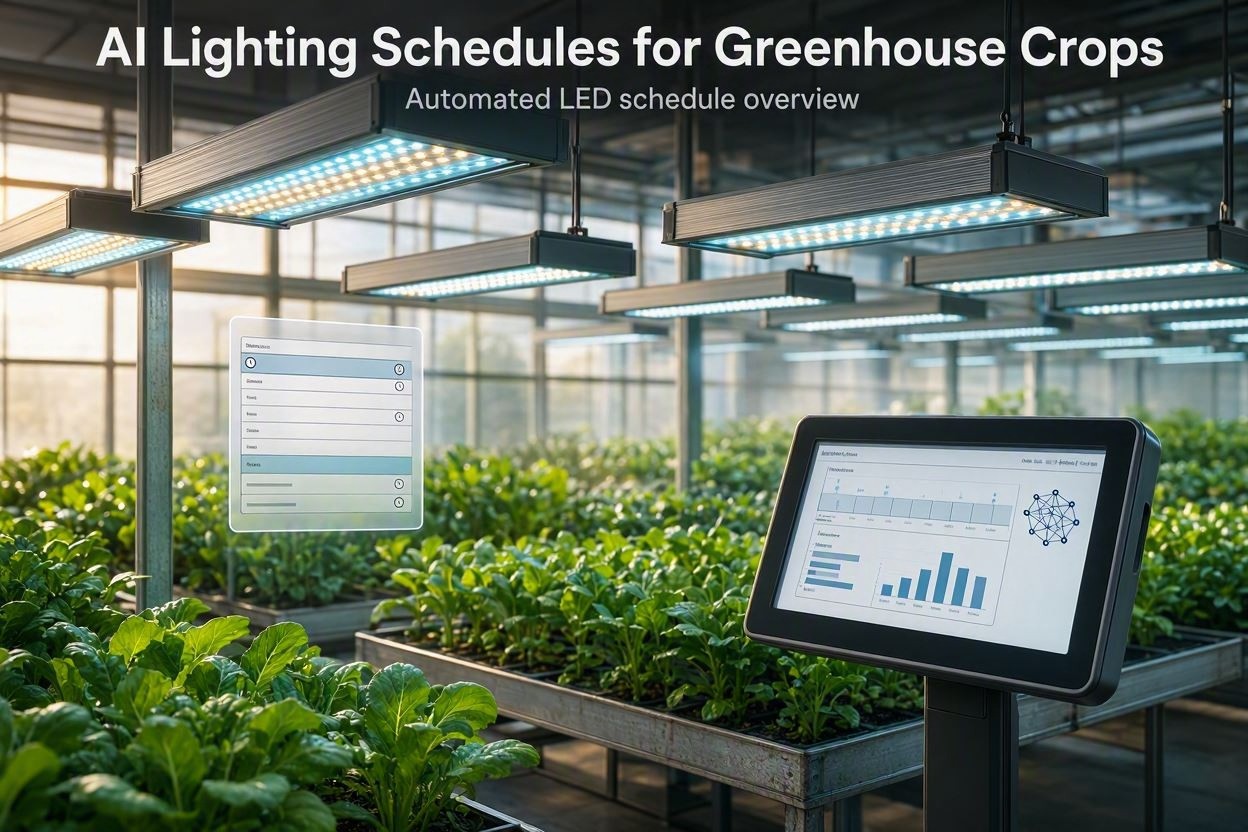
Automated lighting optimization provides practical advantages for commercial greenhouse operations. It helps growers move from reactive management to data-driven production planning.
Higher Yield and Better Quality
When crops receive the right amount of light at the right time, photosynthesis becomes more efficient. This can improve biomass accumulation, fruit set, leaf color, and uniformity. For leafy greens, optimized lighting can enhance compactness and texture. For fruiting crops, it can support consistent flowering and fruit development.
Lower Energy Costs
Supplemental lighting is one of the largest operating expenses in many greenhouses. An algorithm can reduce unnecessary lamp operation by using natural sunlight more effectively and avoiding lighting during high-cost electricity periods when possible. This is especially valuable for facilities using LED systems with dimming and spectral control.
More Predictable Production
Retailers and food service buyers often require reliable delivery dates and consistent quality. Adaptive lighting helps stabilize crop development despite seasonal changes. By maintaining target light levels, growers can better estimate harvest timing and reduce production variability.
Practical Implementation
Introducing an algorithmic lighting system does not require replacing the entire greenhouse infrastructure. Many farms start by connecting existing LED fixtures, climate sensors, and control platforms. The most important step is collecting accurate data and defining clear production goals.
- Identify the crop groups and their lighting requirements.
- Install or calibrate sensors for light, temperature, humidity, and carbon dioxide.
- Set target DLI values for each crop and growth stage.
- Connect lighting controls to the optimization software.
- Monitor crop responses and adjust the model with real production data.
Growers should also maintain human oversight. Algorithms are powerful tools, but experienced crop managers can recognize stress symptoms, pest pressure, or market changes that may not be fully reflected in sensor data.
The Future of Crop-Specific Lighting
As greenhouse technology advances, lighting algorithms will become more precise and more crop-specific. Future systems may integrate plant imaging, nutrient data, weather forecasts, and real-time energy markets. Instead of simply asking when lights should turn on, growers will be able to ask which lighting strategy produces the best economic and biological result for a particular crop.
An algorithm that selects the optimal greenhouse lighting schedule for each crop is not just a convenience. It is a practical step toward more efficient, resilient, and profitable controlled environment agriculture.