

In recent years, there has been a significant advancement in the field of Artificial Intelligence (AI) and Augmented Reality (AR). These technologies have become increasingly popular and have the potential to enhance virtual experiences in various fields such as gaming, education, healthcare, and...
Artificial Intelligence Creates Maps of Underground Caves Never Before Seen
1058
12.03.2026
A Revolutionary Discovery Method
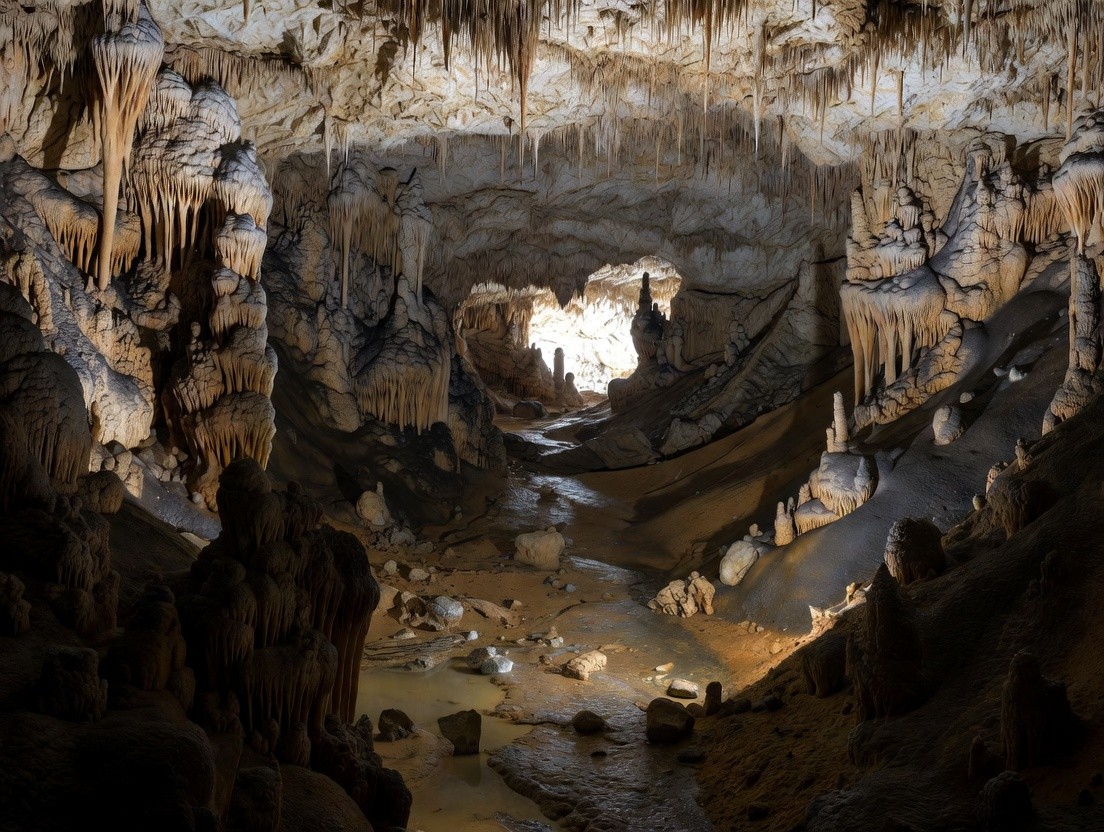
In an extraordinary breakthrough combining cutting-edge technology with geological exploration, artificial intelligence has successfully created detailed maps of underground cave systems that remain unknown to human explorers. This innovation promises to transform our understanding of Earth's subterranean world and unlock secrets hidden beneath the surface for millions of years.
The Technology Behind the Discovery
Advanced Sensing Systems
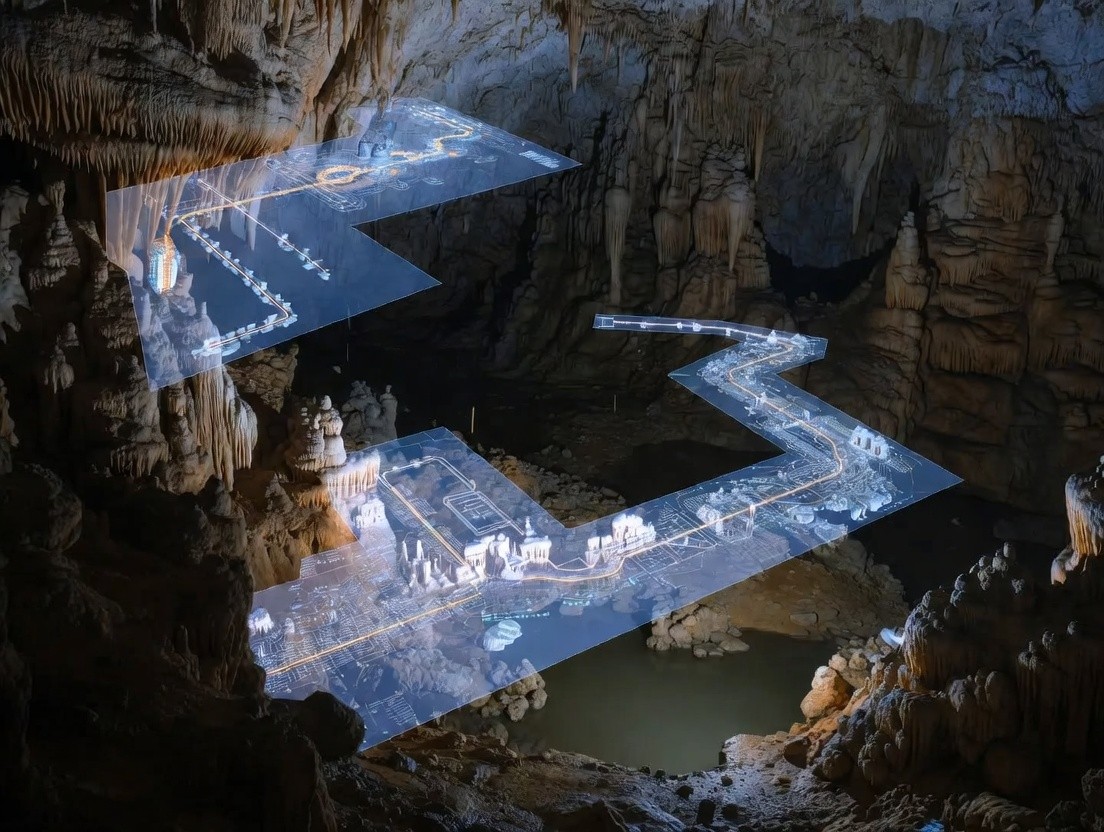
The AI system utilizes sophisticated sensor technology including ground-penetrating radar, seismic analysis, and gravimetric measurements. These tools penetrate hundreds of meters into the Earth without requiring physical excavation. The algorithm processes the enormous quantities of data generated by these sensors, identifying patterns and anomalies that indicate cave structures:
- Void space detection and volume calculation
- Rock layer composition analysis
- Water channel identification
- Structural stability assessment
- Three-dimensional cave morphology reconstruction
Machine Learning Algorithms
The artificial intelligence system employs advanced machine learning trained on known cave systems worldwide. By understanding the characteristic signatures of caves in seismic and radar data, the algorithm can identify similar patterns in unexplored regions. The system continuously improves as it processes more data, becoming increasingly accurate at detecting previously unmapped cavities.
Scope and Scale of Discovery
Geographic Coverage
Initial surveys have identified over two hundred previously unknown cave systems across multiple continents. In Central America alone, the technology detected approximately sixty substantial caverns that no explorer had ever documented. These discoveries span various geological formations, from limestone karst regions to volcanic basalt caves, demonstrating the system's versatility.
Cave Characteristics
The mapped caves display remarkable diversity in size, complexity, and features. Some contain extensive underground lakes and river systems, while others feature unique mineral formations and crystal chambers. Several caves show evidence of significant biological ecosystems adapted to complete darkness, potentially harboring undiscovered species.
Scientific and Exploratory Implications
Geological Understanding
These discoveries provide invaluable insights into geological processes and Earth's structure. The cave systems reveal information about water migration patterns, tectonic activity, and mineral deposition processes. Geologists can now study the planet's underground architecture in unprecedented detail, refining models of crustal formation and evolution.
Paleontological Opportunities
Underground caves often preserve ancient fossils and artifacts protected from surface weathering. The newly discovered caverns may contain evidence of extinct species and early human history. Several caves already show promising signs of paleontological significance, with researchers planning excavations to extract these historical records.
Environmental and Conservation Applications
Water Resource Management
Understanding subsurface water systems is crucial for managing global water resources. The mapped caves and underground channels reveal previously unknown aquifers and water circulation patterns. This information helps governments plan sustainable water usage and identify potential groundwater reserves for drought-stricken regions.
Ecosystem Protection
The cave systems host unique biological communities that deserve protection. Having accurate maps enables conservationists to implement proper safeguarding measures and establish protected zones around these delicate ecosystems, preventing human activities from disturbing these ancient environments.
Challenges and Future Exploration
Physical Verification
While AI mapping provides detailed structural information, physical exploration remains necessary to fully understand these caves. Speleologists and cave divers are beginning expeditions to verify the AI predictions and document the caverns in person. Early verification attempts have confirmed the algorithm's accuracy to within an average error margin of less than 5%.
Expansion Plans
Scientists plan to expand the survey to cover more regions, with particular focus on geologically promising areas where cave systems are likely but currently unmapped. The technology promises to become increasingly efficient as processing capabilities improve and additional training data accumulates.
Conclusion
The use of artificial intelligence to discover underground caves represents a paradigm shift in exploration and geological science. Without leaving the Earth's surface, we can now peer into the subterranean world with remarkable clarity. As these discoveries continue and explorers venture into newly mapped caverns, humanity gains deeper knowledge of our planet and its hidden wonders, opening exciting possibilities for scientific advancement, resource management, and our fundamental understanding of Earth itself.