

In recent years, there has been a significant advancement in the field of Artificial Intelligence (AI) and Augmented Reality (AR). These technologies have become increasingly popular and have the potential to enhance virtual experiences in various fields such as gaming, education, healthcare, and...
Artificial Songwriter Creates Hit Songs That Get Stuck In Your Head
501
14.01.2026
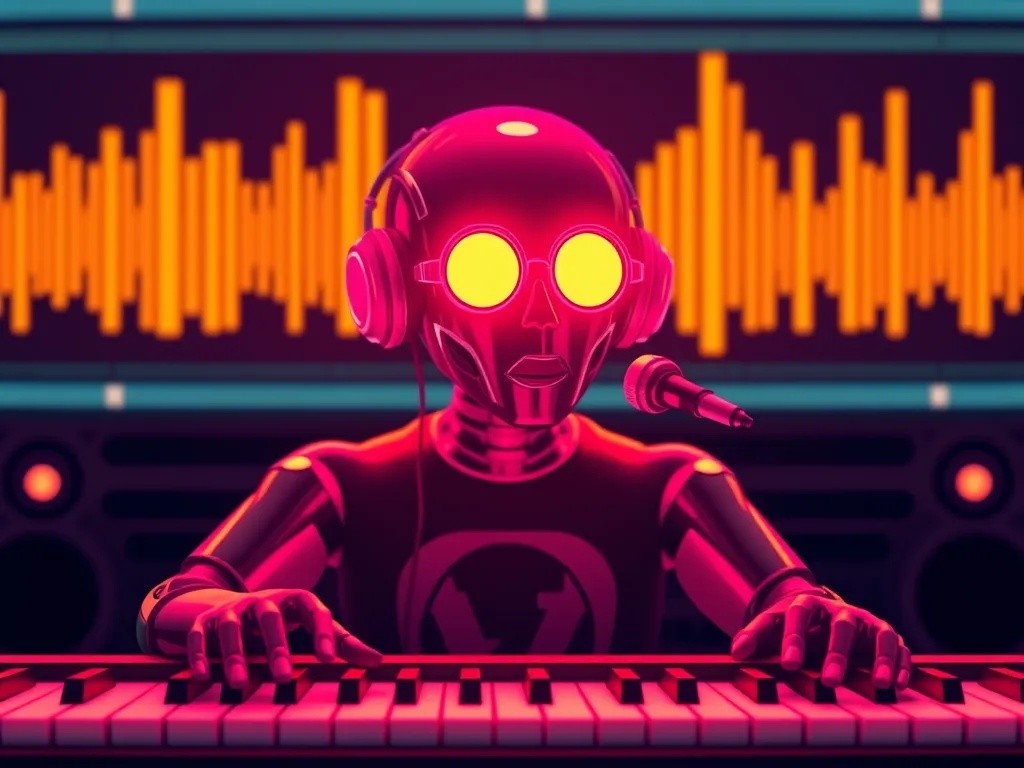
Introduction to AI Music Composition
The music industry has witnessed transformative technological disruptions throughout history, from electric instruments to digital recording. Artificial intelligence now represents the latest revolution, with AI songwriting systems capable of composing original, catchy songs that rival human-created hits. These sophisticated programs analyze millions of successful songs to understand what makes melodies memorable, which chord progressions resonate emotionally, and how to structure lyrics that stick in listeners' minds. The result is AI-generated music that achieves the earworm effect—songs people cannot stop humming long after hearing them.
How AI Songwriting Technology Works
AI music composition systems operate through complex machine learning algorithms trained on vast databases of existing music. Understanding the technical process reveals how computers create surprisingly human-sounding compositions.
Training on Musical Patterns
AI songwriters begin by analyzing enormous collections of music across all genres and time periods. The systems break down songs into fundamental components including melody, harmony, rhythm, structure, and lyrics. By processing millions of tracks, the AI identifies patterns that appear consistently in hit songs versus less successful releases.
The technology examines specific elements that contribute to catchiness:
- Melodic contours and note patterns that create memorable hooks
- Chord progressions that evoke specific emotional responses
- Rhythmic patterns that encourage physical response and dancing
- Song structures that balance repetition with variation
- Lyrical themes and word choices that resonate with audiences
- Production techniques and instrumental arrangements
Generating New Compositions
Once trained, AI songwriters can create original music by combining learned patterns in novel ways. Users typically provide input parameters such as desired genre, mood, tempo, and lyrical themes. The AI then generates multiple composition options, each featuring unique melodies, chord structures, and arrangements that fit specified criteria.
Advanced systems employ neural networks that simulate how human brains process music. These networks develop intuitive understanding of what sounds good together, enabling creation of harmonically pleasing progressions and emotionally impactful melodic movements. The AI doesn't simply copy existing songs but synthesizes learned principles to produce genuinely original compositions.
The Science of Catchiness
AI songwriters excel at creating earworms because they scientifically optimize for memorability factors that humans might employ intuitively. Research into musical cognition has identified specific characteristics that make songs stick in memory, and AI exploits these principles deliberately.
Repetition and Variation Balance
Successful earworms balance repetition with novelty. Repeated melodic phrases help songs lodge in memory, but excessive repetition causes boredom. AI songwriters calculate optimal repetition ratios, typically repeating core hooks three to four times while introducing subtle variations that maintain interest. This balance keeps listeners engaged while ensuring melodies become familiar quickly.
Melodic Simplicity and Intervallic Movement
The most memorable melodies feature relatively simple note patterns with easily singable intervals. AI analysis reveals that hit songs predominantly use steps and small leaps between notes rather than large jumps that challenge vocalists. Computer-generated melodies typically stay within comfortable vocal ranges and feature intuitive note progressions that listeners can easily reproduce mentally.
Applications Across Music Industry
AI songwriting technology serves diverse purposes throughout the music business, from assisting professional songwriters to enabling complete novices to create quality music. Commercial applications include background music for videos, podcasts, and advertisements where custom compositions must fit specific moods and durations.
Collaborative Tools for Musicians
Professional musicians increasingly use AI songwriters as creative partners rather than replacements. Composers facing writer's block can generate AI suggestions that spark new ideas or provide alternative directions for problematic song sections. The technology excels at quickly producing numerous variations on musical themes, allowing human artists to select and refine the most promising options.
Some musicians use AI to compose specific song elements while handling other components personally. For instance, a vocalist might generate instrumental backing tracks through AI while writing original lyrics, or a producer might create melodic content algorithmically while arranging and producing tracks conventionally.
Democratizing Music Creation
AI songwriting tools enable people without formal musical training to create professional-quality compositions. Content creators need custom music for YouTube videos, podcasts, or social media but lack composition skills or budgets for licensing commercial tracks. AI platforms let these users generate unlimited original music tailored to their specific needs, royalty-free and instantly customizable.
Quality and Authenticity Considerations
While AI-generated songs can sound remarkably professional, important questions persist regarding creativity, originality, and emotional authenticity. Music created by algorithms lacks the personal experiences and genuine emotions that inspire great human-written songs. AI cannot draw from heartbreak, joy, or life experiences that give music its deepest resonance with listeners.
The Homogenization Concern
Critics worry that AI songwriting might homogenize music by optimizing excessively for mainstream appeal. If all music follows formulas derived from hit song analysis, musical diversity and innovation might suffer. Truly groundbreaking music often violates conventions rather than following them, yet AI systems trained on existing hits naturally favor proven patterns over radical experimentation.
However, proponents argue that AI merely provides tools that humans can use conventionally or experimentally. Musicians retain control over creative direction and can deliberately push AI systems toward unusual or innovative outputs rather than accepting generic suggestions.
Copyright and Legal Questions
AI-generated music raises complex copyright issues. Traditional copyright law protects human creative expression, but legal frameworks remain unclear regarding machine-generated works. Questions include whether AI outputs can receive copyright protection, who owns rights to AI-composed music, and whether training AI on copyrighted songs constitutes infringement.
Different jurisdictions approach these questions differently. Some countries grant copyright to whoever operates the AI system, treating it as a tool similar to music software. Others deny copyright protection entirely for non-human-created works. The music industry continues grappling with these issues as AI composition becomes increasingly prevalent.
Impact on Professional Musicians
The rise of AI songwriting creates both opportunities and concerns for music professionals. On one hand, AI tools can enhance productivity, inspire creativity, and handle routine composition tasks. On the other hand, if AI can generate acceptable background music cheaply, demand for human composers in commercial contexts might decline.
Most experts believe AI will transform rather than eliminate musical careers. Live performance, artistic interpretation, and genuine creative vision remain distinctly human capabilities. Musicians who embrace AI as a collaborative tool rather than viewing it as competition will likely find new opportunities in this evolving landscape.
Future Developments in AI Music
Ongoing research promises increasingly sophisticated AI music systems. Future developments may include AI that better captures emotional nuance, generates music in response to visual inputs like films or artwork, or creates interactive compositions that adapt in real-time to listener responses. Integration with virtual reality might enable immersive musical experiences where AI generates responsive soundscapes.
Conclusion
AI songwriting technology represents a powerful new tool in music creation, capable of generating catchy, memorable songs through sophisticated analysis of musical patterns. While these systems cannot replicate the emotional depth and lived experience behind great human-composed music, they offer valuable capabilities for commercial applications, creative collaboration, and democratized music creation. As the technology matures, its role will likely expand, fundamentally changing how music is created while highlighting the enduring value of human creativity and artistic vision.